
TL;DR: A scramble has every player hit, then the team plays from the best shot each time. Best ball has every player finish the hole with their own ball, and the lowest score counts. A shamble combines both: the team picks the best drive, then each player finishes with their own ball.
Table of Contents
- What Is a Scramble in Golf?
- What Is Best Ball in Golf?
- What Is a Shamble in Golf?
- Shamble vs Scramble: How They Differ
- Scramble vs Best Ball: Key Differences
- Best Ball vs Scramble vs Shamble Side by Side
- When to Choose Each Format
- Handicaps and Fairness in Each Format
- Strategy Tips for Each Format
- How Mountain Golf Changes These Formats
- Organizing a Golf Event Around These Formats
- Quick Recap
- Frequently Asked Questions
What Is a Scramble in Golf?
A scramble is the most team-oriented format in recreational golf: every player hits, the group picks the best shot, and everyone plays their next shot from that same spot, repeating the process until the ball is in the hole. One score per hole goes on the card, and that score belongs to the whole team.
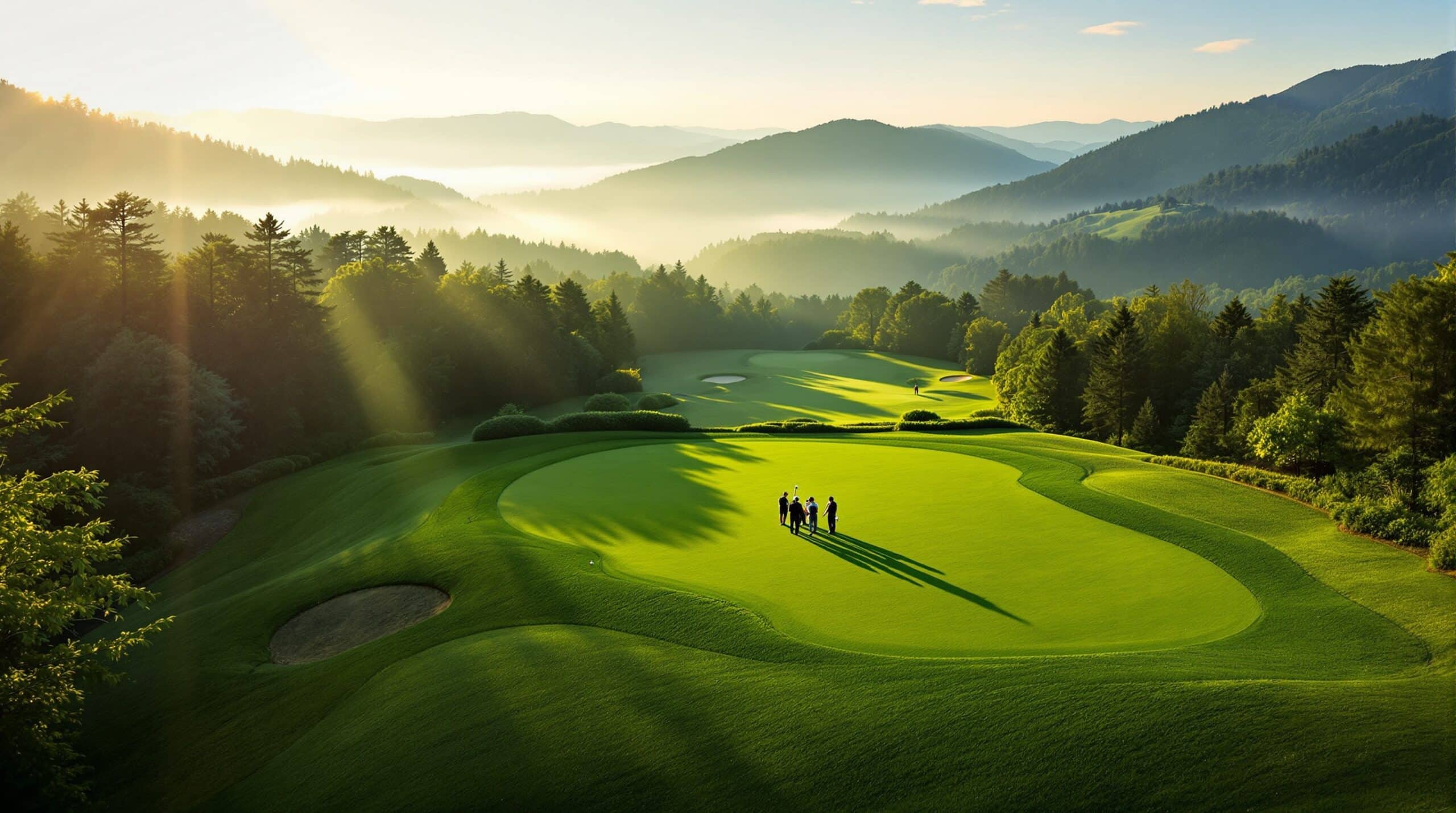
This format is beloved for charity tournaments, corporate outings, and any round where your foursome includes players of wildly different abilities. The scratch golfer’s 280-yard drive becomes the launching pad for the 24-handicapper to make a confident approach. Nobody gets left behind, and the social energy is its own reward. When four players converge on a single ball and one of them drains a 15-foot putt, the celebration is loud and it belongs to everyone.
Common Scramble Variations
- Florida Scramble: the player whose shot was selected sits out the next shot
- Ambrose: scores are adjusted using a combined handicap formula
- Bramble: scramble off the tee only, then each player plays their own ball
- Dropout Scramble: the player who hit the chosen shot is eliminated from the next selection
- Two-Person Scramble: same concept with a two-player team, often used in couples events
What Is Best Ball in Golf?
Best ball means every player in the group plays their own ball for the entire hole, and the team records the lowest individual score on that hole. Sometimes called “four-ball” in match play contexts, it rewards personal consistency rather than collective decision-making.
This is the format you see in the Ryder Cup four-ball sessions: two players, each playing their own ball, with the team’s score being whichever player performed better on that hole. It is individual golf wrapped inside a team structure, which makes it appealing to players who want genuine accountability alongside companionship.
Best ball demands more from each player. You cannot coast on a teammate’s birdie every hole. If two players in your group are struggling at the same time, the score suffers. That tension is part of what makes it so rewarding when it comes together.
Best Ball vs Four-Ball: Are They the Same?
Technically, “best ball” can refer to a single player’s best score across a round, while “four-ball” describes the multi-player team format. In everyday course conversation and club events, though, most golfers use best ball to mean the format where each person plays their own ball and the lowest score counts. Confirm the meaning with your group before the first tee.
What Is a Shamble in Golf?
A shamble in golf is a format where all players tee off, the team selects the best drive, everyone moves to that spot, and then each player finishes the hole with their own ball, with the best individual score counting for the team. It is an elegant middle ground between a scramble and best ball.
High-handicap players get a reliable launching pad from a good drive, but they still have to make something of the hole on their own. That combination keeps the format competitive across ability levels without turning the round into pure team charity. The shamble is growing in popularity at club events because it compresses pace of play while still honoring individual performance. If your group has debated scramble versus best ball for years without resolution, a shamble might actually settle the argument.
Shamble vs Scramble: How They Differ
The core difference between a shamble and a scramble is what happens after the tee shot: in a scramble the team continues playing from one shared spot all the way to the hole, while in a shamble each player finishes the hole independently after the best drive is chosen. Both formats start the same way with all players hitting from the tee and the group selecting the best drive, but a scramble keeps everyone together on every subsequent shot while a shamble releases each player to play their own ball from that point forward.
This distinction shapes the entire feel of the round. A scramble creates a flowing, communal experience where individual mistakes vanish into the team effort. A shamble creates shared momentum off the tee and then asks something real of every player. The scramble is lower pressure. The shamble is more personal.
Scramble vs Best Ball: Key Differences
The clearest difference between scramble and best ball is that a scramble has the entire team playing from one chosen shot on every stroke, while best ball has each player playing their own ball from tee to hole and the team counting only the lowest score per hole. A scramble is a fully shared experience; best ball is individual golf within a team wrapper.
In a scramble, no single player’s poor shot costs the team anything. In best ball, a player who has a bad hole simply does not contribute to the team score on that hole. Both formats can be played by groups of two, three, or four players, and both allow for handicap adjustments. But the strategic feel is entirely different. A scramble rewards boldness because the safety net is always there. Best ball rewards steady, consistent play because the team relies on individual peaks, not collective averages.
The difference between best ball and scramble also shows up in pace of play. A scramble tends to move faster because the team converges on one ball. Best ball can slow down when multiple players are searching for their own balls in the rough at the same time.
Best Ball vs Scramble vs Shamble Side by Side
When you compare best ball vs scramble vs shamble together, the shamble sits in the middle: it shares the scramble’s tee-shot selection and the best ball’s individual play from that point, making it the most versatile format of the three for groups with mixed skill levels who still want personal accountability.
| Feature | Scramble | Best Ball | Shamble |
|---|---|---|---|
| Tee shots | All hit, best selected | Each plays own ball | All hit, best selected |
| After the drive | Team plays from one spot | Each plays own ball | Each plays own ball |
| Score recorded | One team score | Lowest individual score | Lowest individual score |
| Best for | Mixed abilities, social rounds | Competitive, consistent players | Mixed abilities who want accountability |
| Pace of play | Fastest | Slowest (potentially) | Moderate |
| Individual pressure | Low | High | Moderate |
When to Choose Each Format
Picking the right format depends more on your group’s goals than on any official hierarchy, and each one creates a genuinely different day on the course.
Choose a scramble when the priority is fun and inclusion. It is the format that makes a weekend with three close friends and one golfer who just started playing this year actually work. No one feels like a liability, and the round moves quickly enough that you are at the 19th hole while the sun is still up.
Choose best ball when you have four players of reasonably similar ability who want honest competition. Member-guest events and club competitions often use best ball because it surfaces real individual performance and makes handicap adjustments more meaningful.
Choose a shamble when you want the energy of a scramble tee box combined with personal investment in the rest of the hole. Club events at courses like Burlingame Country Club often use this format for seasonal tournaments because it keeps pace manageable while still creating individual storylines worth talking about over dinner.
Format Fit by Group Type
- Corporate outing with mixed skill levels: scramble
- Member-guest tournament: best ball or shamble
- Couples event: two-person scramble or mixed shamble
- Charity fundraiser: scramble with closest-to-pin and long-drive contests
- Serious club competition: best ball stroke play or match play
- Casual Saturday foursome with friends: shamble, because you get the best of both
Handicaps and Fairness in Each Format
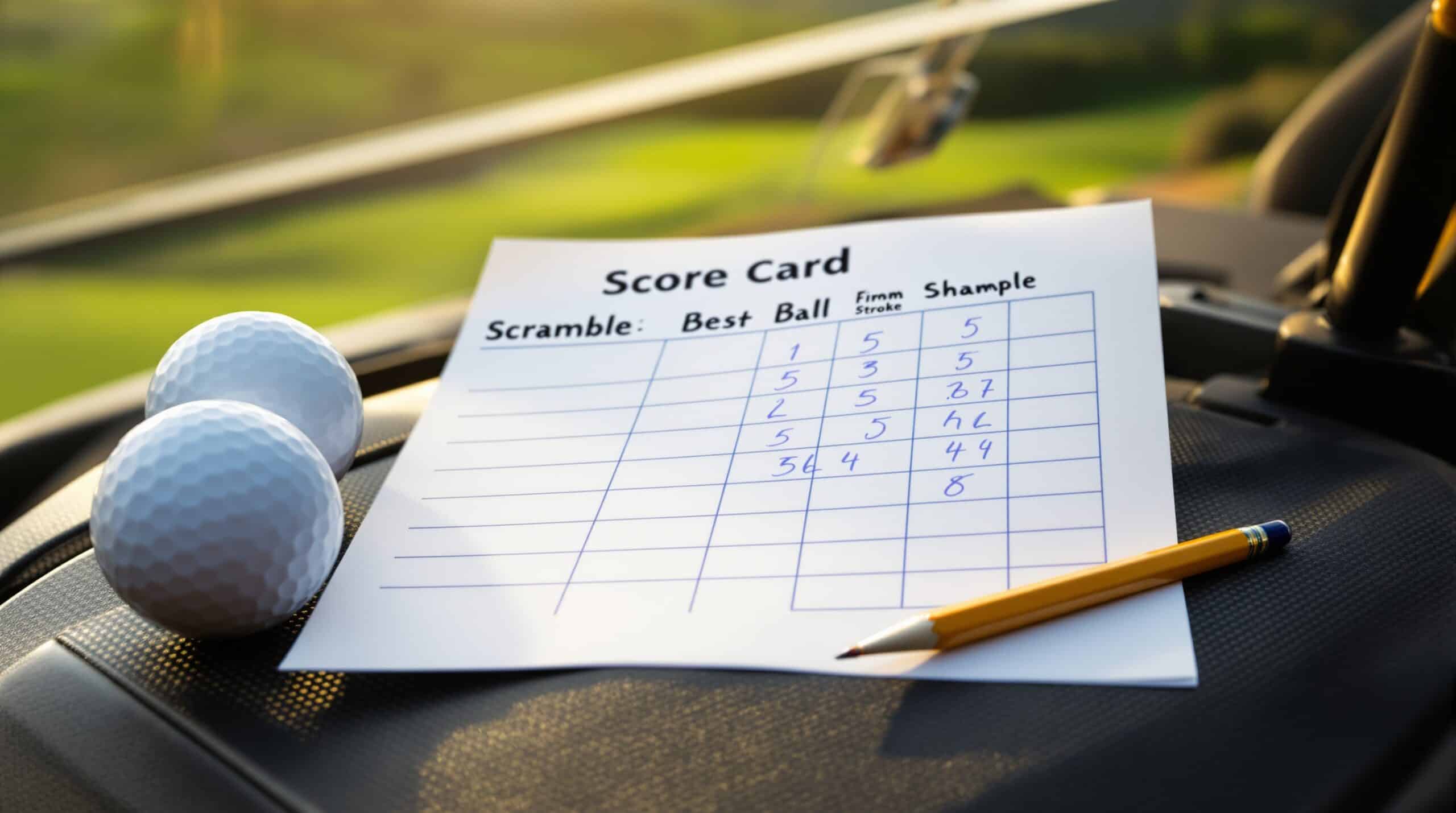
Handicap adjustments work differently depending on the format, and getting this right matters if you want a fair round. The USGA provides specific guidance through its Handicap System for tournament play, and it is worth consulting those guidelines before running a club event.
In scramble formats, teams typically use a percentage of each player’s handicap strokes combined. A common formula uses 20% of the lowest handicap, 15% of the second, 10% of the third, and 5% of the fourth. This prevents scratch players from dominating while giving higher-handicap teams a fair shot.
In best ball, each player uses their full individual handicap applied to the course. The team’s advantage comes from having multiple players covering different holes, so the full handicap reflects real individual performance rather than an artificial blend.
In a shamble, handicaps are typically applied only to the approach and putting portion of the hole since the drive is shared. Some events apply a partial handicap to account for the drive advantage. Always confirm the formula with your tournament director before the first tee.
Strategy Tips for Each Format
Knowing the format before you arrive changes how you approach every shot, not just the dramatic ones. Smart format-specific strategy is what separates a strong team round from a forgettable one.
Scramble Strategy
- Have your longest hitter go first on drives so others know the distance to beat
- Save the steadiest putter for last on the green to reduce pressure
- Take aggressive lines on approach shots since teammates provide a safety net
- Position balls on opposite sides of the fairway from the selected drive to open up angles
- On par-3s, stagger clubs so at least one player lands below the pin
- Communicate before each shot so players know whether to attack or play safe
Best Ball Strategy
- When your partner is safely on the green, feel free to attack a tucked pin
- Identify which two players are the most reliable on any given hole type and let the others be bold
- Manage your own game first and trust that your partner will contribute on their stronger holes
- Use the full handicap system correctly so every hole has a genuine contest
Shamble Strategy
- Treat the tee shot like a scramble: send your longest hitter first and calibrate from there
- Once everyone is at the chosen drive, shift your mindset to individual best ball thinking
- Players with shorter games should take measured approaches rather than trying to overpower the hole
- A strong drive placement can open up angles that make the individual approach much more manageable
How Mountain Golf Changes These Formats
Playing golf at elevation in the Cashiers and Sapphire Valley area means the ball travels farther than it does at sea level, which changes club selection and strategy in every format. At courses like Burlingame Country Club, sitting between 3,000 and 3,500 feet above sea level, you can expect the ball to fly noticeably farther than you are used to at lower elevations.
In a scramble, that extra distance means the team’s best drive covers even more ground, which amplifies the format’s boldness. In best ball, it means every player needs to recalibrate their stock distances before the round, or they will be flying greens consistently. In a shamble, the tee shot advantage is even more pronounced because a well-struck drive in thin mountain air can leave the whole team with a short iron into the green.
The Blue Ridge foothills also bring elevation changes within holes, not just above sea level. Uphill approaches play longer and downhill approaches play shorter, which stacks on top of the altitude effect. Getting familiar with how a course like Burlingame plays across its terrain before tournament day gives your team a real edge in any format.
Organizing a Golf Event Around These Formats
Whether you are planning a multi-generational family reunion round, a member event, or a friendly weekend competition, the format you choose sets the tone for everything that follows. A scramble invites people in. Best ball creates stakes. A shamble does a little of both.
At Burlingame Country Club, the setting itself does some of the work. Rounds that end with the sun dropping behind the mountains and a group gathered at the dining room to replay every shot have a rhythm that is hard to find anywhere else in Western North Carolina. The format matters, but the place matters just as much.
For larger organized events, a few practical steps help everything run smoothly. Settle the handicap formula before players arrive. Communicate the format clearly on the scorecard. Designate someone per group who understands the rules so disputes do not slow the field. And if you are running a fundraiser or charity event, a scramble with bonus contests like closest to the pin and long drive remains the most universally enjoyable structure for mixed groups.
If you are interested in planning a member event or a private group round at Burlingame, exploring the membership options is a good place to start. The course, the community, and the mountains make any format feel like a special occasion.
Quick Recap
- A scramble has the whole team play from one best shot on every stroke, tee to hole.
- Best ball has each player finish the hole with their own ball, and the team counts the lowest individual score.
- A shamble picks the best drive for the team, then each player finishes the hole independently.
- Scrambles work best for mixed abilities and social rounds.
- Best ball rewards individual consistency and works well for competitive events.
- Shambles offer a balance of shared momentum off the tee and personal accountability on each hole.
- Mountain elevation at courses like Burlingame (3,000 to 3,500 feet) means the ball flies farther, which changes club selection in all three formats.
- Handicap formulas differ by format: confirm the method before the first tee.
- According to the National Golf Foundation, scrambles are the most commonly reported casual competition format in the U.S.
- The right format depends on your group’s goals, not on any ranking of which format is best.
Frequently Asked Questions
What is the difference between a scramble and a shamble in golf?
In a scramble, the team selects the best shot on every stroke from tee to hole and everyone plays from that one spot each time. In a shamble, only the tee shot is shared: all players hit, the best drive is chosen, and then each player finishes the hole with their own ball. The shamble adds individual accountability that the scramble removes.
What is the difference between scramble and best ball?
A scramble has the team play from one chosen ball on every shot, producing one team score per hole. Best ball has each player play their own ball for the entire hole, and the team records only the lowest individual score. A scramble is a fully collective experience; best ball is individual golf inside a team structure.
What is a shamble in golf?
A shamble is a golf format where all players hit their tee shots, the team selects the best drive, every player moves to that spot, and then each player completes the hole with their own ball. The team records the best individual score from that point forward. It blends the tee-shot advantage of a scramble with the personal play of best ball.
Is a shamble easier than a scramble?
A shamble is generally considered slightly more demanding than a scramble because each player must complete the hole on their own after the best drive is chosen. In a scramble, poor shots after the tee can be absorbed by better teammates on every subsequent stroke. In a shamble, each player is fully responsible for their own ball once the drive is set.
What is the difference between best ball and scramble for handicaps?
In best ball, each player applies their full individual handicap to the course. In a scramble, teams typically use a blended percentage formula, such as 20% of the lowest handicap, 15% of the second, 10% of the third, and 5% of the fourth. A shamble usually applies handicap strokes only to the portion of the hole played individually after the drive. Always confirm the method with your tournament director before the round.
Which golf format is best for beginners?
A scramble is the most beginner-friendly format because no single player’s poor shot affects the team score. Beginners can contribute positively without the pressure of their individual score appearing on the card. A shamble is a good next step once a beginner gains enough confidence to play their own ball after the tee shot.
Can you play a shamble with two players?
Yes. A two-person shamble works the same way: both players hit their tee shots, the team picks the better drive, and then each player finishes the hole with their own ball. The best individual score from that point counts for the team. It is a compact and competitive format well suited to couples or partner events.
Ready to play in the Blue Ridge mountains? Whether you prefer the camaraderie of a scramble, the competition of best ball, or the balance of a shamble, Burlingame Country Club in Cashiers, NC offers the kind of setting that makes every format feel like something worth remembering. Please Contact Jennifer Webb, Membership Director, for more information. Please use the form below or call 828.966.9200.