
TL;DR: A scramble has every player hit, then the whole team plays from the best shot. Best ball has every player finish each hole individually, and only the lowest score counts for the team. Stroke play counts every single stroke you take from the first tee to the final putt.
Table of Contents
- What Is Stroke Play and Why It Is the Foundation
- How the Scramble Format Works
- Best Ball: The Format That Rewards Individual Brilliance
- What Is the Difference Between Scramble and Best Ball
- Best Ball vs Scramble: Which One Is More Competitive
- Golf Scramble vs Best Ball: Which Is Better for Beginners
- Handicaps and How They Fit Each Format
- Which Format Is Best for Your Group
- Tournament Golf: When Format Matters Most
- How Altitude and Terrain Change the Game at Cashiers
- Golf at Burlingame Country Club
- Quick Recap
- Frequently Asked Questions
What Is Stroke Play and Why It Is the Foundation
Stroke play counts every shot you take across all 18 holes, and the golfer with the fewest total strokes at the end wins. It is the format professional tournaments use, the format most golfers learn first, and the foundation from which every other format grows. A double bogey on hole four follows you straight to the 18th green. That is both the beauty and the honest weight of it.
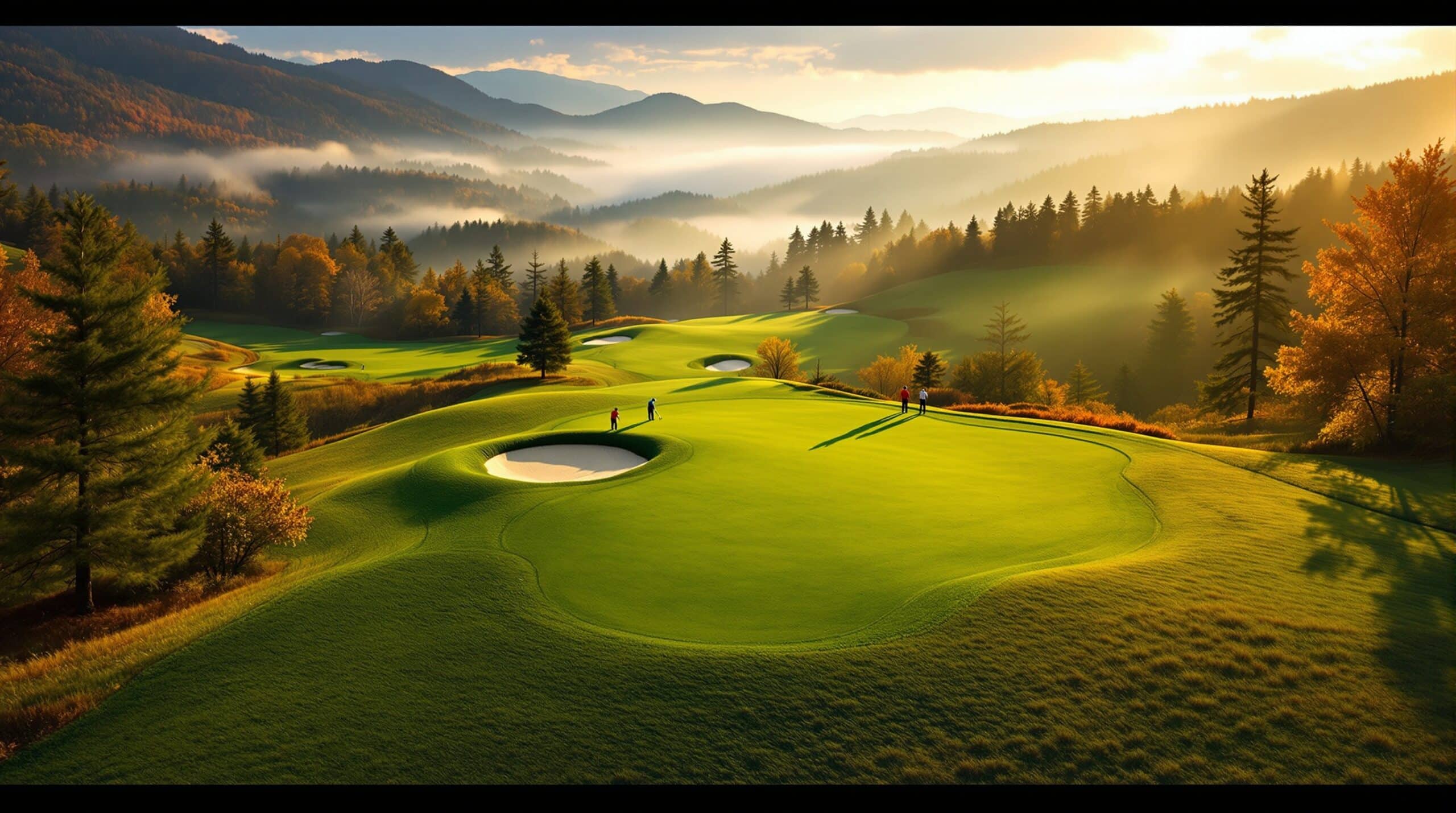
Stroke play rewards consistency, course management, and the quiet mental toughness that keeps a round from unraveling. It is also how handicaps are calculated, which makes it the root system beneath every other format you will ever play. If you want to understand scramble vs best ball vs stroke play at a real level, this is where the conversation starts.
Basic stroke play rules to know:
- Every shot taken counts toward your score, including penalty strokes
- You must complete every hole before moving to the next
- Scores are recorded hole by hole and totaled at the end
- Handicap stroke play adjusts scores based on course handicap
- Ties are broken by scorecard comparison or a playoff
- The USGA Rules of Golf apply in full unless a local rule modifies them
How the Scramble Format Works
In a scramble, every player on the team tees off, the group picks the best shot, and everyone plays their next shot from that spot, repeating the process until the ball is holed. One team score gets recorded per hole, not one per person. The result is a round that moves with warmth and forward momentum, where a newcomer can contribute a solid drive and a seasoned player can save the team with a clutch chip, and everyone walks off the green feeling like they belonged.
Scrambles are the format of choice for charity tournaments, corporate outings, and casual member events because they level the playing field without erasing skill. A team of four mid-handicappers can regularly post a score that would be impossible for any one of them playing alone. The format removes the fear that one bad shot will ruin an entire afternoon, and that freedom changes how people play and how much they enjoy it.
Scramble Scoring Variations
Not all scrambles run the same way. A Florida scramble requires the player whose shot was selected to sit out the next shot. Some tournaments add a required number of drives per player so teams cannot always rely on their strongest hitter off the tee. Know the specific rules before you step onto the first tee so nothing catches you off guard mid-round.
Best Ball: The Format That Rewards Individual Brilliance
In best ball, sometimes called four-ball in formal rules language, every player completes every hole individually and the team records only the lowest score among all players for that hole. You play your own ball all the way to the cup. Your partner’s birdie only helps the team if your own score is worse. This distinction matters because best ball asks each player to actually execute, not just show up.
The format is popular at member-guest tournaments, club championships, and weekend events because it is competitive without being punishing. One player can have a rough hole while the other steadies the team, and the round stays alive and worth fighting for.
Best Ball vs Four-Ball: Are They the Same
They are often used interchangeably, but four-ball is the official USGA term for two-player teams playing best ball. When you see four-ball on a tournament bracket, that is best ball with two golfers per team. Larger groups sometimes play best ball of four, where the lowest score among four individual rounds counts for the team on each hole.
What Is the Difference Between Scramble and Best Ball
The core difference between scramble and best ball is this: in a scramble everyone plays from the same chosen spot on every shot, while in best ball every player plays their own ball individually from tee to hole and only the lowest score counts for the team. That one distinction changes everything about how you approach the round, how pressure is distributed, and how much any single bad shot actually matters.
In a scramble, a poor drive disappears the moment a teammate hits a better one. In best ball, your poor drive is yours to deal with all the way to the green. Your partner can rescue the team’s score for that hole, but you still play out your own ball. Stroke play goes further still: every stroke you take is permanent, and there is no teammate to soften the blow.
| Feature | Scramble | Best Ball | Stroke Play |
|---|---|---|---|
| Play your own ball? | No, team selects best shot | Yes, every shot individually | Yes, every shot individually |
| Score recorded | One team score per hole | Lowest individual score per hole | Every individual stroke |
| Best for beginners? | Yes | Moderate | No, most demanding |
| Pace of play | Fastest | Moderate | Depends on group |
| Handicaps applied | Team average or formula | Individual, per hole | Full course handicap |
| Social dynamic | High, team-first energy | Balanced individual and team | Primarily individual |
Best Ball vs Scramble: Which One Is More Competitive
Best ball is the more individually competitive format because every player must execute their own shots across all 18 holes, with no option to abandon a bad ball in favor of a teammate’s better one. A scramble is built for inclusion and social energy. Best ball is built for golfers who want genuine individual accountability alongside the cushion of a team score.
Think of it this way. In a scramble, your worst shot of the day likely disappears and is never spoken of again. In best ball, your worst shot on any given hole still lives in your own score, even if the team uses your partner’s better number. That added layer of personal responsibility is exactly what makes best ball a satisfying format for more experienced players who still want the warmth of playing alongside someone they trust.
Both formats have their place in a well-rounded season of golf. Scrambles open the door. Best ball deepens the game. Stroke play, when you are ready, tells you the truth.
Golf Scramble vs Best Ball: Which Is Better for Beginners
A golf scramble is better for beginners because no individual player’s score is ever recorded, which removes the anxiety of a bad hole and lets newer golfers focus on making contact and contributing to the team rather than protecting a scorecard. Best ball asks every player to complete every hole on their own, which can be discouraging for someone still building consistency.
If you are new to competitive club golf, playing a scramble event first is a sensible entry point. It introduces you to the pace and the social rhythm of tournament play without the exposure of a full individual score. Once you feel comfortable with the course and the format, best ball gives you a meaningful next step toward the personal accountability that stroke play eventually demands.

Handicaps and How They Fit Each Format
Handicaps work differently in each format, and getting this right separates a fair, memorable competition from a frustrating afternoon. The USGA Handicap System provides specific guidance for all three formats.
In stroke play, you receive your full course handicap and subtract it from your gross score to get your net score. It is simple and well understood by most club golfers.
In best ball, each player applies their individual handicap on a per-hole basis according to the course stroke index. A higher handicap player receives strokes on the hardest holes, giving them a legitimate shot at contributing a net birdie even when their gross score is a bogey. This per-hole allocation is what makes best ball feel genuinely fair across a wide range of skill levels.
Scramble handicaps are more varied. Many events use a formula based on a percentage of the combined team handicap, often 20 to 25 percent of each player’s handicap added together, though local tournament committees adjust this formula regularly. Always confirm the handicap calculation method before you play in any scramble event so there are no surprises at the scoring table.
Which Format Is Best for Your Group
The right format depends on who is in your group and what you want from the day. Some rounds call for a scramble. Others earn a stroke play card. Best ball lives comfortably in between and suits more combinations than people often expect.
- Mixed group with significant handicap gaps: scramble keeps everyone engaged and contributing
- Two-person match between friends with similar handicaps: best ball is an ideal fit
- Solo round or individual improvement focus: stroke play, always
- Club tournament with competitive members: best ball or stroke play, depending on the format sheet
- Corporate outing or charity event: scramble is the near-universal choice
- Weekend regular foursome with friends: best ball adds a little competitive edge without the full pressure of stroke play
- New golfer joining an established group: scramble removes performance anxiety and lets them find their rhythm and their place
If you are playing a mountain course like Burlingame’s 18-hole championship layout at 3,000 to 3,500 feet of elevation, the terrain itself will shape how you think about format. Hilly lies, elevation changes, and the particular silence of the Southern Appalachians reward shot selection and course management, skills that stroke play rewards most directly and that best ball makes genuinely satisfying to develop.
Tournament Golf: When Format Matters Most
At the club level, knowing your format before the first tee separates golfers who compete effectively from those who simply show up. Most club tournaments post their format in advance. You should be preparing your game and your mindset accordingly before you arrive.
Stroke play tournaments demand that you build a full round, not just save one hole from disaster. Best ball events reward the ability to apply quiet pressure when your partner is struggling. Scramble events reward the player who can produce one great shot exactly when the team needs it most, even if the rest of the round is ordinary and imperfect in the best human way.
Check the events calendar at Burlingame Country Club to see which formats are scheduled throughout the season. The variety across a full year of member activities is one of the quiet pleasures of belonging to a community where golf is woven into daily life rather than treated as a separate pursuit.
How Altitude and Terrain Change the Game at Cashiers
Golf at elevation in Western North Carolina plays differently than anywhere else most golfers have stood. The air is thinner, and balls carry farther than the yardage markers suggest. What looks like a 150-yard shot from the fairway might play like 140. That extra carry rewards accurate ball striking and punishes the kind of overpowered swing that flat-course habits can build.
The terrain at courses like Burlingame adds elevation change and slope that make every format feel more like an adventure than a calculation. In a scramble, the team benefits when at least one player has learned to read mountain lies and trust their landing zones. In best ball, the player who manages these conditions consistently will contribute more often and carry the partnership on the holes that matter. In stroke play, every decision about club selection and shot shape gets amplified by the landscape itself.
The Cashiers and Sapphire Valley area of North Carolina sits in one of the most beautiful stretches of the Southern Appalachians, and the golf here is inseparable from that beauty. You are not just playing a round. You are moving through a place that asks something of you and rewards you generously when you give it your full attention.
Golf at Burlingame Country Club
Burlingame Country Club sits in the Sapphire Valley of Western North Carolina, where the mountains hold the morning mist a little longer and the fairways feel like something the landscape offered rather than imposed. The golf program here runs across all three formats throughout the season, and whether you are playing a member scramble on a warm summer afternoon or competing in a best ball tournament with your family, the course meets you where you are.
This is a place where multi-generational groups find their footing together. A grandparent and a grandchild can share the same scramble cart and still both matter to the outcome. A couple of empty nesters can quietly build a best ball partnership over years of Saturday mornings. These rounds become stories that get told at the dining room table long after the scorecards are signed.
The community at Burlingame is built around shared outdoor life, and golf is one of the threads that runs through all of it. The membership is intentionally kept at a size where people know each other’s games and their children’s names. That is a different kind of luxury than a rankings list can measure. Learn more about Burlingame and what makes this mountain community unlike any other in Western North Carolina.
Quick Recap
- In a scramble, everyone plays from the team’s best shot on every stroke and one team score is recorded per hole
- In best ball, every player finishes each hole individually and only the lowest individual score counts for the team
- Stroke play counts every shot every player takes across all 18 holes, with no team cushion of any kind
- Scramble is the most beginner-friendly format and the best choice for mixed-skill groups
- Best ball rewards consistent individual play and suits competitive groups who still want a team element
- Stroke play is the truest individual measure and the basis for all handicap calculations
- Handicaps apply differently in each format, so always confirm the method before you play
- At elevation in Cashiers, NC, terrain and altitude influence strategy across all three formats
- Burlingame Country Club offers all three formats throughout the season within a close-knit mountain community
Frequently Asked Questions
What is the difference between best ball and scramble?
In best ball, every player plays their own ball from tee to hole on every hole, and only the lowest individual score counts for the team that hole. In a scramble, the team selects the best shot after every stroke and all players hit from that spot, so no single player ever completes a hole with their own ball from start to finish.
What is the difference between a scramble and best ball in golf specifically?
Golf scramble vs best ball comes down to individual accountability. A scramble eliminates individual scoring entirely because everyone plays from the chosen best shot. Best ball keeps individual scoring alive because each player completes the hole on their own, even though only the best score among the group gets counted for the team.
What is best ball vs scramble when it comes to pace of play?
Scrambles generally play faster because the team only tracks one ball at a time once a shot is selected. Best ball takes longer because every player completes every hole with their own ball. Stroke play pace varies by group, but competitive stroke play tends to be the most deliberate of the three formats.
What is the difference between best ball and scramble for mixed skill groups?
A scramble handles mixed skill groups better because a less experienced player can contribute a good shot without the pressure of completing every hole individually. Best ball asks every player to finish each hole on their own, which can be discouraging for higher handicap players if the gap between teammates is wide.
What is a Florida scramble and how is it different from a regular scramble?
A Florida scramble is a variation where the player whose shot was selected must sit out the very next shot. This prevents teams from always relying on their strongest player and requires all team members to contribute at specific moments throughout the round.
How do handicaps work differently in scramble vs best ball?
In best ball, each player uses their individual course handicap applied hole by hole based on the course stroke index. In a scramble, most tournaments calculate a team handicap using a formula based on a percentage of each player’s handicap added together, often 20 to 25 percent per player, though individual tournament committees set their own formulas.
Which format should a new golfer play first?
A scramble is the right first format for a new golfer because no individual score is ever recorded, which removes the pressure of a bad hole and lets beginners contribute meaningfully to a team without the exposure of playing their own ball all the way to the cup on every hole.
Ready to find your format and your place on a mountain course that feels like it was made for mornings like this one? Please Contact Jennifer Webb, Membership Director, for more information. Use the form below or call 828.966.9200.