
What Is Average Golf Course Slope Rating? Cashiers, NC Guide
If you’ve ever handed your scorecard to someone and had them ask “what’s the slope?” you already know this number matters. Slope rating shapes how you track your handicap, how you choose which tees to play, and whether a course is actually giving you a fair fight. This guide breaks down what slope rating means, how averages work, and what it looks like in practice at a mountain course in the western North Carolina highlands.
Essential Overview
- The average golf course slope rating in the United States is 113, set as the standard for a “scratch golfer” baseline by the USGA.
- According to the USGA Handicap System, slope ratings range from 55 (minimum) to 155 (maximum), with most courses falling between 100 and 140.
- Mountain courses often carry higher slope ratings because elevation changes, narrow corridors, and natural terrain add difficulty for bogey golfers.
- Slope rating is not a measure of how hard a course plays for scratch golfers; it specifically measures difficulty for the average recreational player.
- Understanding your course’s slope rating helps you calculate a more accurate handicap and pick the right tee box for your game.
Table of Contents
- What Slope Rating Actually Means
- How the USGA Calculates Slope Rating
- What Counts as an Average Slope Rating
- Course Rating vs. Slope Rating: The Real Difference
- Why Mountain Courses Play Differently
- How Slope Rating Affects Your Handicap
- Choosing the Right Tees Based on Slope
- What to Expect from a Highland Course
- Playing Smart on High-Slope Terrain
- Frequently Asked Questions
- Summary
What Slope Rating Actually Means
Slope rating measures how much harder a golf course plays for a bogey golfer compared to a scratch golfer. That’s the whole idea. A course with a higher slope isn’t necessarily harder across the board; it’s specifically harder for players who don’t consistently hit greens in regulation, miss fairways, and make double bogeys.
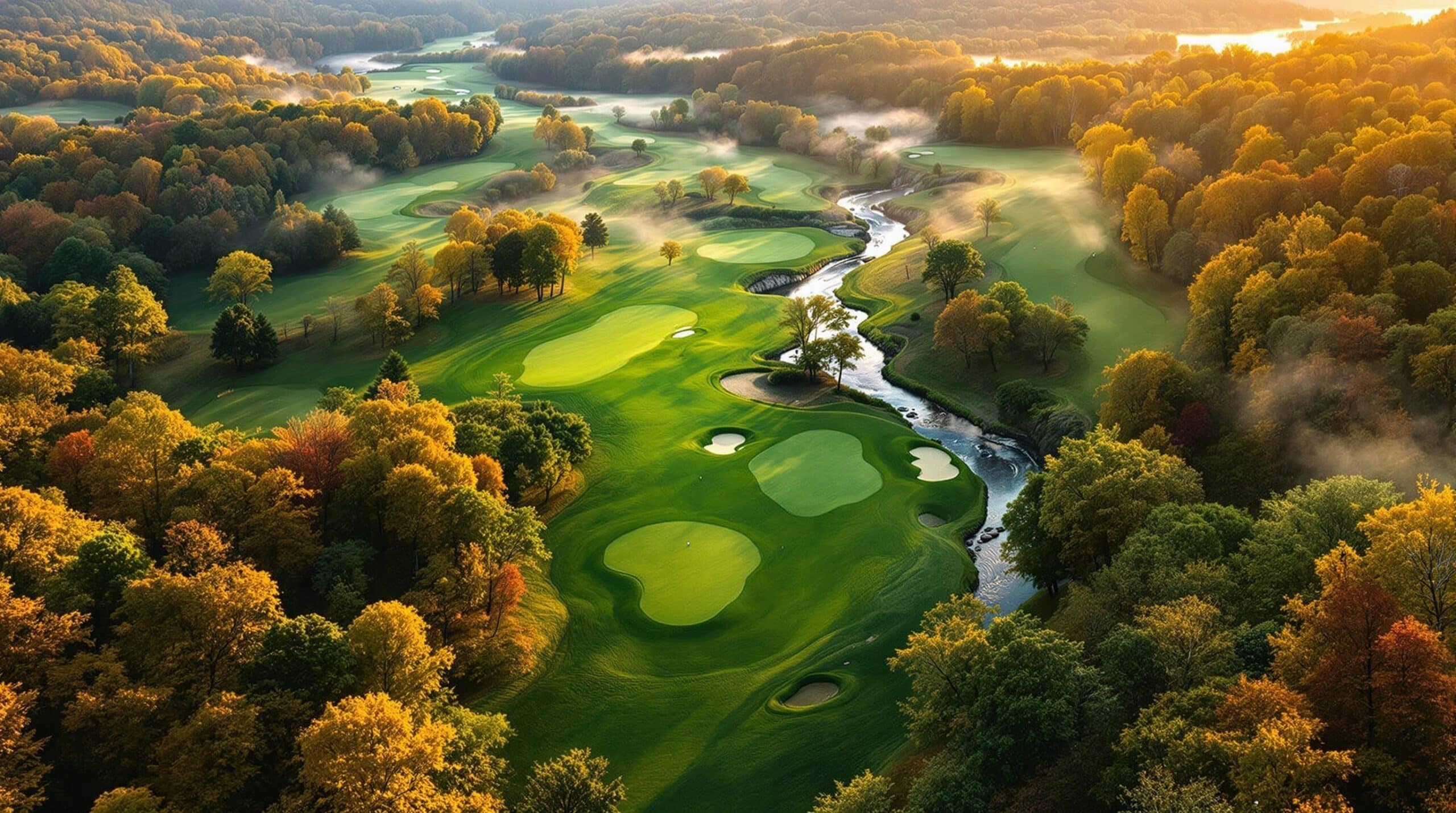
The USGA established 113 as the neutral baseline. A slope of 113 means the gap between how a scratch player and a bogey player performs is exactly average. A slope of 130 means that gap is significantly wider, usually because the course punishes inconsistent ball-striking far more than a flatter, more forgiving layout would.
Think of it this way: a scratch golfer can carry a bunker or play a precise draw around a tree. A 15-handicapper facing that same shot has a different problem entirely. Slope rating is the number that accounts for that difference in a mathematically consistent way.
How the USGA Calculates Slope Rating
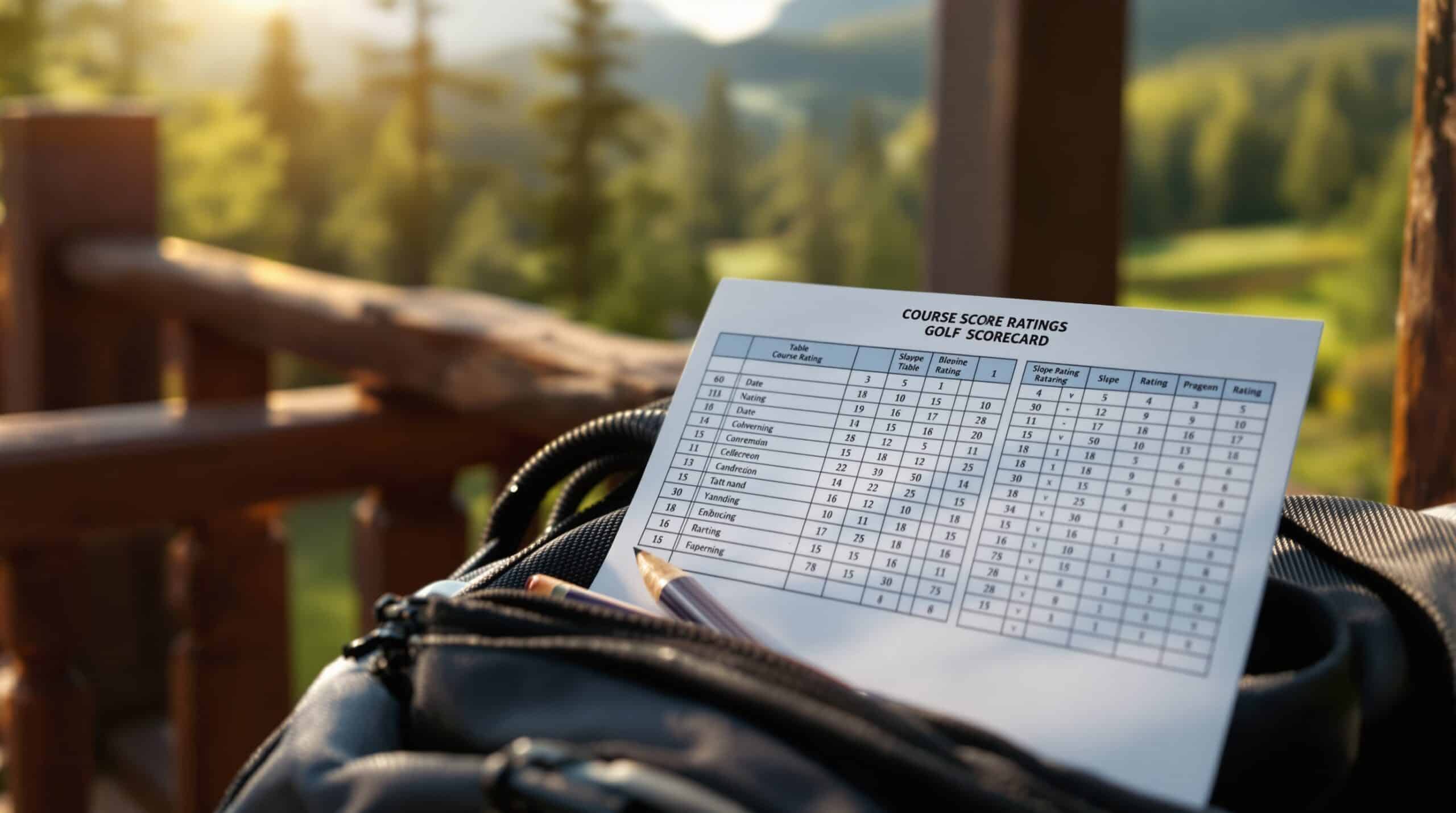
The USGA Course Rating and Slope System uses a trained team of course raters to evaluate every rated course in the country. They measure obstacle factors, effective playing length, and conditions from each set of tees. Two separate calculations come out of that process: one for a scratch golfer (the course rating) and one for a bogey golfer (the bogey rating).
The slope formula is: (Bogey Rating minus Course Rating) multiplied by 5.381 for men, or 4.240 for women. That calculation produces the slope number you see on the scorecard. The USGA requires re-rating when significant course changes occur, so the number stays current and reliable.
What the Rating Team Actually Looks At
- Effective playing length from each tee
- Roll and ground conditions
- Obstacle values including bunkers, water, rough, and trees
- Green target size and firmness
- Psychological factors like blind shots or forced carries
- Topography and elevation changes between tee and green
- Prevailing wind and altitude adjustments
What Counts as an Average Slope Rating
The average slope rating in the United States is 113, and that number serves as the denominator in every handicap index calculation. Most courses you’ll play fall somewhere between 100 and 135. Anything below 105 is considered relatively forgiving. Anything above 130 starts separating the consistent ball-strikers from the rest of the field in a hurry.
| Slope Range | Difficulty Category | What It Typically Means |
|---|---|---|
| 55 to 90 | Very Easy | Flat, short, minimal hazards |
| 91 to 105 | Below Average | Forgiving layout, wider corridors |
| 106 to 120 | Average | Typical club course, moderate challenge |
| 121 to 135 | Above Average | Demanding for mid-handicappers |
| 136 to 155 | Very Difficult | Significant penalty for errant shots |
Courses in mountainous regions, particularly those designed to work with natural terrain rather than against it, tend to cluster in the 120 to 140 range. Elevation change, tight tree corridors, and dramatic green sites push slope ratings upward even when yardage seems manageable.
Course Rating vs. Slope Rating: The Real Difference
These two numbers appear side by side on every scorecard, but they measure different things. Course rating reflects the expected score for a scratch golfer under normal conditions. Slope rating reflects relative difficulty for everyone else.
A course can have a moderate course rating of 70.5 and still carry a slope of 130, which means it plays close to par for elite amateurs but punishes recreational players significantly. That combination is actually common on well-designed courses that reward precision without necessarily playing long.
Side-by-Side Comparison
- Course rating: single decimal number, usually between 67 and 77
- Slope rating: whole number between 55 and 155
- Course rating is player-independent for scratch golfers
- Slope rating adjusts handicap based on which course you’re playing
- Both numbers change by tee box and must be rated separately
- Course rating affects your gross score expectation; slope affects your net
Why Mountain Courses Play Differently
Mountain golf adds variables that flat parkland courses simply don’t have. At elevations between 3,000 and 3,500 feet, the air is thinner and the ball carries slightly farther, but that benefit comes with tradeoffs. Elevation change between tee and green can swing effective yardage by 20 to 40 yards depending on the hole. Uphill approaches play longer; downhill tee shots carry farther but leave awkward stances and angles.
Tree corridors in the southern Appalachian highlands are genuine obstacles, not decorative. Miss a fairway on a mountain course and you’re often dealing with root-exposed ground, pine straw lies, and sidehill angles to a green you can’t fully see. The USGA rating team accounts for all of this, which is why highland courses in western North Carolina and similar regions consistently carry higher-than-average slope ratings.
There’s also something worth acknowledging about the psychological factor. Standing on a tee box with a 400-foot elevation change visible in the background changes how people swing. That psychological pressure is a real variable in course rating, and it belongs in the slope calculation.
How Slope Rating Affects Your Handicap
Every time you post a score, the USGA World Handicap System uses both course rating and slope to calculate your score differential. The formula is: (Adjusted Gross Score minus Course Rating) multiplied by 113, then divided by Slope Rating. That result is your score differential for that round.
Your handicap index averages your best eight differentials from your last 20 rounds. When you carry that index to a new course, the course handicap calculation reverses the process using that course’s specific slope. Playing a course with a slope of 130 means your course handicap will be higher than your index; playing a course with a slope of 100 means it will be lower.
A Practical Example
Say your handicap index is 14.4. On a course with a slope of 113 (the national average), your course handicap is exactly 14. Move to a mountain course with a slope of 130, and your course handicap climbs to around 17. That’s not because you got worse; the math is recognizing that the course is harder for players at your skill level than a baseline track would be. The system is doing its job.
Choosing the Right Tees Based on Slope
Choosing tees based only on yardage is one of the most common mistakes recreational golfers make. A set of tees at 6,200 yards with a slope of 140 will play harder than a set at 6,600 yards with a slope of 118. Yardage tells you how far you’ll hit the ball. Slope tells you how much the course will punish the shots you don’t hit well.
A useful rule of thumb from the USGA and Golf Digest: choose tees where you can hit your approach shots with mid-irons to most greens. If you’re consistently hitting hybrids and fairway woods into par fours, you’re likely on the wrong tee, regardless of what the slope number says. Let both numbers inform your decision.
Tee Selection Checklist
- Check the course rating, not just the slope
- Estimate your average driving distance and apply it to the par fours
- Look at the slope of each tee option, not just the back and forward options
- Consider elevation change at mountain courses, which affects effective length
- Play where you’ll hit 14 or more greens per side with realistic club choices
- Adjust if you’re a guest playing an unfamiliar course for the first time
- Revisit tee selection as your game changes from season to season
What to Expect from a Highland Course
At Burlingame Country Club, the 18-hole championship course sits between 3,000 and 3,500 feet in the Cashiers, NC area, designed by Tom Jackson to work with the natural terrain of the southern Appalachian highlands rather than flatten it. The course follows the Horsepasture River corridor, moves through mature hardwood forests, and includes elevation changes that make club selection a genuine conversation on nearly every hole.
That kind of design produces a slope rating that reflects real mountain golf, not an approximation of it. Players who’ve only played lowland courses often underestimate how much the terrain changes shot strategy. A straight ball that works on a flat course becomes a starting-point requirement on a mountain layout where the ground beneath your feet is rarely level.
If you’re seriously evaluating clubs in the Cashiers, Sapphire Valley, or Lake Toxaway area, the course is worth playing before you decide. There’s a reason members who’ve played courses across the country find the highland setting genuinely different. You can explore the golf experience at Burlingame to get a feel for what the course offers before your first round.
Playing Smart on High-Slope Terrain
High slope ratings reward patience and penalize ambition more than most players expect. On a mountain course with a slope above 125, the golfer who consistently avoids penalty areas finishes well ahead of the golfer who tries to recover from trouble with hero shots. Course management becomes as important as ball-striking.
A few adjustments that pay off on high-slope mountain courses:
- Take one more club on uphill approaches; one less on sharp downhillers
- Aim for the fat part of the green rather than attacking tight pins
- Play away from trouble even when the angle looks playable
- Account for sidehill lies in your stance and ball position before addressing the shot
- Give yourself the full pre-shot routine on blind shots; rushing leads to poor alignment
- Accept bogey and move on; double bogeys on mountain courses often come in clusters
- Use the practice facilities to dial in your distance at elevation before you play
Burlingame’s practice facility gives members a place to work on exactly this kind of game before they take it to the course. Getting your distances right at 3,500 feet is a genuine competitive advantage when you’re playing with members who’ve been doing this for years.
Frequently Asked Questions
What is the average golf course slope rating in the United States?
The USGA sets 113 as the standard baseline for slope rating, representing an average course. Most courses in the country fall between 100 and 135. Mountain courses in regions like western North Carolina typically carry higher ratings, often between 120 and 140, because natural terrain adds consistent difficulty for recreational golfers.
Does a higher slope rating mean a course is harder for everyone?
Not exactly. Slope rating specifically measures how much harder a course is for bogey golfers compared to scratch golfers. A scratch golfer’s expected score is captured in the course rating, not the slope. A high slope course might not play that much harder for an elite amateur but will punish mid-to-high handicappers significantly more than a low-slope course would.
How does altitude affect slope rating on mountain courses?
Altitude affects ball flight and playing conditions, but the USGA rating process accounts for local conditions including elevation. The rating team applies altitude adjustments to effective playing length during the rating process. The resulting slope number already reflects what it’s actually like to play that course, including the thin air and elevation changes between tee and green.
Can slope rating change over time?
Yes. The USGA requires courses to be re-rated when significant changes occur, including new tee boxes, major renovation work, changes to water features or bunkers, and significant tree growth or removal. Courses in growing forested regions can see slope adjustments over time as tree corridors mature and tighten, which is worth noting for mountain club members.
What is a good slope rating to look for when choosing a course as a 15-handicapper?
A 15-handicapper will find courses in the 115 to 125 slope range genuinely challenging without being discouraging. Courses above 130 can be extremely punishing if you’re still working on consistency. Playing a high-slope course occasionally for the experience is worthwhile; playing it repeatedly while your handicap is still coming down can be frustrating rather than productive.
Why does my course handicap change depending on where I play?
Your course handicap adjusts based on the slope rating of whichever course you’re playing that day. The formula multiplies your handicap index by the course slope and divides by 113. On a high-slope course, you receive more strokes. On a low-slope course, you receive fewer. The system is designed to give every player a fair chance regardless of which course they bring their game to.
Is course rating or slope rating more important when picking a tee box?
Both matter and they work together. Course rating tells you the expected gross score for a scratch player, which helps calibrate absolute difficulty. Slope tells you how much the course amplifies the gap between skill levels. Consider both when choosing tees, and pair them with your average driving distance to find the set of tees where the course plays like a real challenge rather than an endurance test.
Do private mountain clubs typically have higher slope ratings than public courses?
Private clubs with designer courses built into natural terrain often do carry higher slope ratings, particularly in mountain regions. This is partly because they’re designed for replay value and strategic interest rather than pace-of-play accessibility. Courses designed by known architects like Tom Jackson, who designed the Burlingame course, tend to use terrain intentionally, which drives slope ratings upward in a way that rewards thoughtful play.
Summary
The average golf course slope rating in the United States is 113, but that number is a starting point, not a ceiling. Mountain courses in western North Carolina, designed into natural terrain at elevations between 3,000 and 3,500 feet, often carry slope ratings well above that baseline. Understanding slope helps you post accurate scores, choose the right tees, and play smarter on terrain that doesn’t forgive lazy decisions. According to the USGA, slope ratings range from 55 to 155, and where a course sits in that range tells you a lot about how prepared you need to be before you step on the first tee. If you’re ready to experience what a well-rated highland course actually plays like, the Burlingame golf experience is worth your time.
Come Play the Course and See for Yourself
If you’ve been thinking about what it would actually feel like to play a Tom Jackson-designed mountain course in the Cashiers highlands, the best way to find out is to come out and walk the fairways. Reach out to Jennifer Webb at (828) 966-9200 or Learn More about scheduling a personal tour and a round. No pressure, just good golf and good mountain air.