
TL;DR: If you are searching for public golf courses in Cashiers NC, the broader Cashiers and Sapphire Valley region offers semi-private, resort, and private options between 3,000 and 3,500 feet of elevation. Burlingame Country Club anchors the area with an 18-hole Tom Jackson-designed championship course tracing the Horsepasture River, built not just for a round of golf but for a life woven into the mountain itself.
Table of Contents
- What Golf Courses Are Available Near Cashiers NC?
- Top Golf Clubs to Play Near Highlands NC and Stay-and-Play Options
- What Makes the NC Mountains a Destination for Serious Golfers?
- What Does Playing Golf at 3,000 to 3,500 Feet Do to Your Game?
- Who Designed Burlingame’s Course and Why Does It Matter?
- When Is the Best Time to Play Mountain Golf Near Cashiers?
- What Does a Full Day at a Cashiers Mountain Club Look Like?
- What Membership Options Exist at Mountain Golf Clubs Near Cashiers NC?
- Quick Recap
- Frequently Asked Questions
What Golf Courses Are Available Near Cashiers NC?
The Cashiers NC area offers public golf courses, semi-private resort tracks, and private clubs within a short drive of Cashiers Village, with the Cashiers plateau sitting at roughly 3,500 feet at the intersection of Jackson, Macon, and Transylvania counties. Burlingame Country Club provides the region’s premier private 18-hole championship experience along the Horsepasture River, while semi-private and resort options extend through the Sapphire Valley and Lake Toxaway corridor, and additional courses reach west to Highlands and east to Brevard.
What unites these courses is the land they live on. The Appalachian highlands carry some of the oldest geology on earth, and that age shows in the grade changes, the rock faces, and the native forest that refuses to be merely background. You are not playing over sculpted turf here. You are playing inside a mountain landscape that has been here far longer than any of us, and that fact changes how the game feels from the very first tee.
Golfers who have worked through the major resort tracks at Pinehurst or the coast often arrive in the Cashiers NC mountains looking for something that feels less like a destination package and more like a homecoming. The Horsepasture River corridor and the surrounding Nantahala National Forest give this small geographic area a scenically concentrated golf experience unlike anything else in the Southeast.
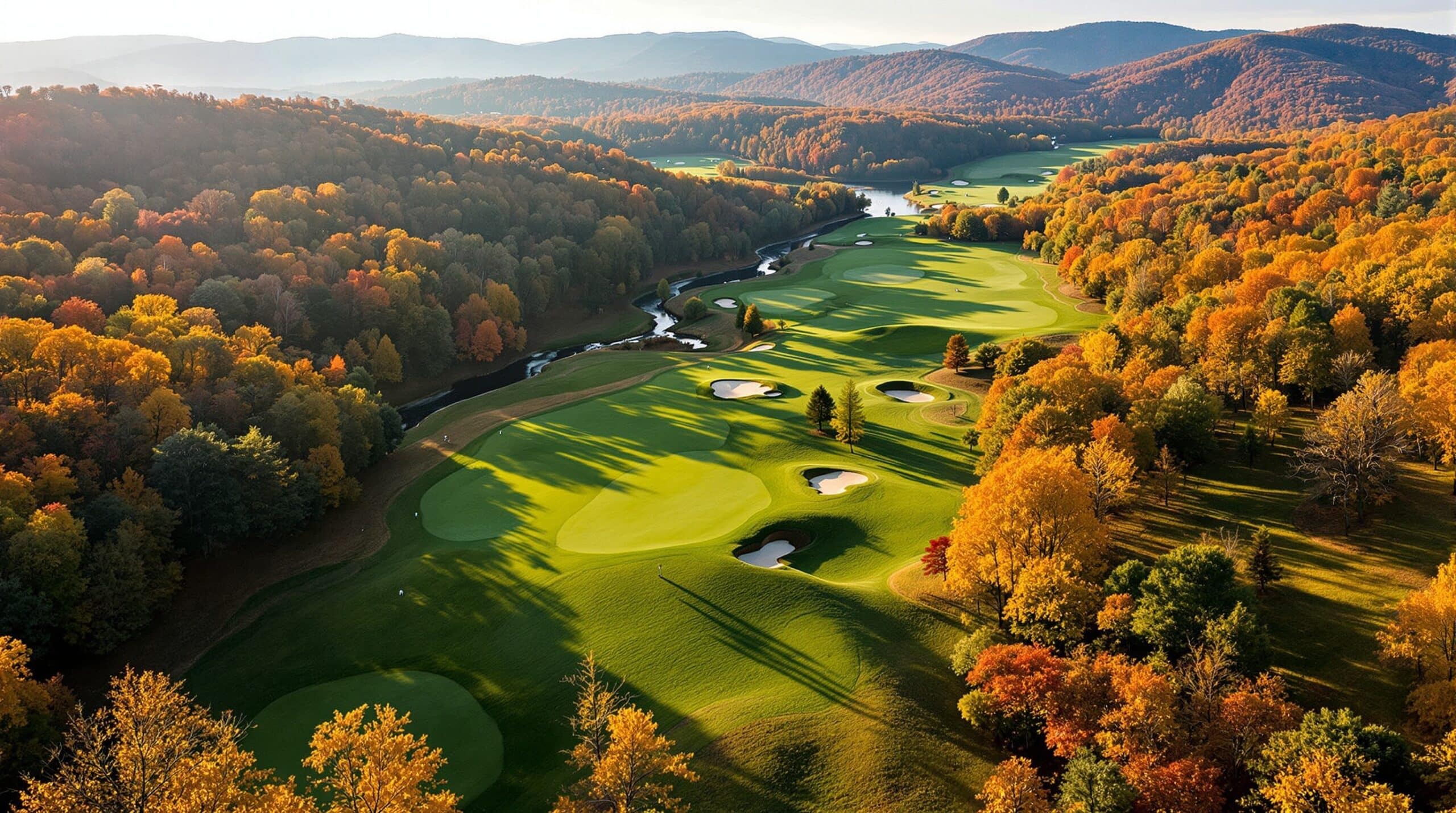
Burlingame Country Club stands at the center of that experience. Its 18-hole course runs between 3,000 and 3,500 feet, where the Horsepasture River traces the edges of several holes. The river is not decoration. It is part of how the course plays, part of how it breathes. You can explore the full golf program at Burlingame to understand how deeply the game is woven into daily life here.
Top Golf Clubs to Play Near Highlands NC and Stay-and-Play Options
The best golf clubs to play near Highlands NC and Cashiers sit within a compact mountain corridor that includes private clubs like Burlingame Country Club, semi-private resort options in the Sapphire Valley area, and additional courses accessible from both Highlands to the west and Brevard to the east, making multi-day golf itineraries genuinely achievable without leaving the mountains.
For those asking about stay-and-play options, the answer depends on what kind of stay you are imagining. A resort stay and a round booked through a semi-private track is one version of the experience. But the fuller version, the one families tend to come back for across decades, involves a home or homesite within a community like Burlingame, where your stay is not measured in nights but in seasons.
The Sapphire Valley amenity corridor and the Lake Toxaway community add social and recreational context that reaches well beyond the 18th hole. When you finish your round and the mountains are still lit gold in the late afternoon, you want somewhere to go that feels like yours. That is the distinction between a great public golf course in Cashiers NC and a private community built around the full arc of mountain life.
Golfers building a multi-day itinerary in this region have enough variety to play something different every day without ever navigating a highway or repeating a landscape. The mountain geography does that work for you. Every corridor opens onto a different face of the same ancient range.
You can read more about the full community picture on the About Burlingame page, which gives context for how the club sits within the broader Cashiers and Sapphire Valley region.
What Makes the NC Mountains a Destination for Serious Golfers?
The NC mountains rank among the top golf destinations in the Southeast because cooler summer temperatures, elevation-driven terrain, and a concentration of well-designed courses in a compact region reward golfers who want more than a single great round, offering an experience rooted in place rather than produced for visitors.
Summer temperatures in Cashiers and Sapphire Valley typically run 10 to 15 degrees cooler than Charlotte or Raleigh, according to the National Oceanic and Atmospheric Administration’s regional climate data. For golfers who want to play from May through October without battling heat index numbers that flatten the joy out of the game, that difference matters more than any amenity list.
The terrain itself is not something a course architect can manufacture elsewhere. Natural grade changes, rock outcroppings, and native grasses that behave differently than lowland Bermuda create a playing experience that is genuinely of this place. The Appalachian highlands are among the oldest mountains on earth, and that history is present in every uneven lie, every view from a raised tee, every fairway that bends around something the land refused to give up.
The region also offers something rarer than good golf. It offers a sense of belonging to a place. The mountain communities around Cashiers and Sapphire Valley have a rhythm that slows you down in the best possible way. The game feels different when you are not rushing back to a parking lot and a highway. It feels like it was always supposed to be played here, under these ridgelines, beside this river.
What Does Playing Golf at 3,000 to 3,500 Feet Do to Your Game?
Playing golf at 3,000 to 3,500 feet of elevation increases ball carry by roughly 5 to 10 yards on longer shots, makes downhill putts break more dramatically, and requires recalibrating club selection on approach shots into elevated greens, while the mountain terrain itself adds shot-shaping decisions that flat courses simply never ask of you.
A few things golfers notice quickly when they first play mountain courses near Cashiers NC:
- Ball carry increases by roughly 5 to 10 yards on longer shots due to lower air density at altitude
- Downhill putts break more dramatically and require a softer touch
- Tee shots into elevated greens demand more precise club selection
- Morning dew and cooler air slow the course considerably in early rounds
- Wind patterns in mountain valleys behave differently than open-course wind
- Recovery shots from native rough or forest edges reward creativity over power
- Walking the course builds a genuine cardio challenge that flat golf rarely offers
Experienced golfers often say it takes a few rounds to recalibrate, and that recalibration is part of what makes mountain golf addictive. You are not grinding the same swing on the same terrain over and over. You are solving a different puzzle every time you walk out. The mountains ask something of you, and answering that question round after round is one of the quiet pleasures of belonging to a course like Burlingame.
The Cashiers plateau sits at roughly 3,500 feet, at the intersection of Jackson, Macon, and Transylvania counties. That elevation shapes the game in ways both visible and subtle, from the way the ball leaves the club face to the way the air smells at six in the morning when the fog is still sitting in the river valley below you.
Who Designed Burlingame’s Course and Why Does It Matter?
Burlingame Country Club’s course was designed by Tom Jackson, a golf architect whose work across western North Carolina reflects a philosophy of following mountain terrain rather than flattening it, producing a course that rewards thoughtful play across all handicap levels while feeling genuinely native to its landscape.
Jackson understood that the land itself was the asset. His job was to find the golf course already hiding inside it. His courses across the Southeast are known for their playability across a wide range of skill levels. A course that punishes higher-handicap golfers while offering nothing new to low-handicap players misses the point of what golf at a private club is supposed to feel like. Burlingame’s routing reflects that balance.
When evaluating any mountain course in Cashiers NC or the surrounding region, these design elements separate the good from the genuinely lasting:
- Natural routing that follows the topography rather than overriding it
- Strategic use of water features native to the site, including the Horsepasture River
- Multiple tee options that make the course honest at different skill levels
- Clear sightlines that make navigation readable without being predictable
- Greens complexes that reward placement over pure distance
- Transitions between holes that feel intentional rather than incidental
Jackson’s work at Burlingame holds up to repeated play in a way that novelty-driven resort tracks do not. The first round introduces you to the course. The tenth round shows you what you missed. That depth is what a private club membership is built to reward, because you are not playing it once and moving on. You are playing it across years, across seasons, across the changing chapters of your family’s life in these mountains.
When Is the Best Time to Play Mountain Golf Near Cashiers?
The best overall window for mountain golf near Cashiers NC is late spring through early fall, with summer offering peak course conditions and fall delivering the most visually stunning rounds as the hardwoods surrounding the fairways turn from late September through October.
| Season | Average High in Cashiers | Course Conditions | Best For |
|---|---|---|---|
| Spring (April to May) | 55 to 68°F | Lush, soft fairways; morning dew common | Morning rounds, practice sessions |
| Summer (June to August) | 68 to 78°F | Peak conditions; firm and fast greens | Member events, competitive play |
| Fall (September to November) | 50 to 68°F | Foliage backdrop; crisp and quiet | Walking rounds, unhurried play |
| Late Fall (November to December) | 35 to 55°F | Variable; frost delays possible | Early morning play on clear days |
Summer temperatures in Cashiers run 10 to 15 degrees cooler than Charlotte or Raleigh, according to NOAA regional climate data, which means the peak season here is genuinely comfortable when lowland courses are sweltering. You finish your round in late afternoon and the air already carries the first suggestion of evening cool coming down off the ridge.
Fall is something else entirely. The hardwoods surrounding Burlingame’s fairways move through their color in a sequence that begins in late September and runs through October. If you have only played mountain courses in summer, a fall round here reads like a different course. The light changes angle, the air carries the smell of leaves and cold stone, and the fairways look like something painted rather than grown. Golfers evaluating membership should plan to see both seasons. Summer shows you the course alive. Fall shows you what it becomes when the world turns gold around you.
What Does a Full Day at a Cashiers Mountain Club Look Like?
A full day at Burlingame Country Club begins on the course and extends into dining along the Horsepasture River corridor, outdoor recreation across the club’s mountain setting, and the kind of unhurried time with people who feel less like fellow members and more like family, something no public golf course in Cashiers NC can replicate.
The club’s dining program means real options after your round. A casual lunch at the grille, a longer family dinner as the light drops behind the ridgeline, or simply coffee on a porch with the mountains sitting quiet in front of you. The dining experience at Burlingame is designed to extend your time in the club, not move you through it.
Beyond the fairway, the amenity network opens up. Tennis, swimming, fitness, and outdoor programming that takes full advantage of the surrounding landscape are all part of membership. Children find their own version of the club here, separate from but woven into the same story their parents and grandparents are living. That layering of experience across generations is one of the things that makes Burlingame genuinely different from a resort golf property or a public course with a nice view.
The full amenities and the community life pages give a fuller picture of what that day actually looks like across different seasons and family configurations. The honest answer is that the day looks different for everyone, and that flexibility is the point. Some members are on the first tee at dawn. Others arrive for dinner and stay until the stars come out over the Horsepasture valley. Both are right.
What Membership Options Exist at Mountain Golf Clubs Near Cashiers NC?
Mountain golf clubs near Cashiers NC typically offer private club memberships with full golf and social privileges, real-estate-linked membership for property owners within the community, and in some cases semi-private or resort access for seasonal visitors, with Burlingame Country Club built around a private, relationship-based model designed for multi-generational family life rather than transactional access.
At Burlingame, membership is the gateway to everything. The club is shaped around the idea of families who return season after season, children who grow up knowing each other on the same fairways their parents walked, and a shared experience of the land that holds people together across generations. That is a very different thing than buying a single round at a public golf course in Cashiers NC.
| Amenity Category | Burlingame Country Club | Typical Resort or Public Course Nearby |
|---|---|---|
| Golf | 18-hole championship course, practice facility, instruction, member events | 18-hole course, limited member programming |
| Dining | Full-service dining, casual grille, member social events | Clubhouse bar and grill, limited hours |
| Community | Multi-generational member community, curated events, family programming | Visitor-focused, limited repeat-guest culture |
| Nature Access | Horsepasture River corridor, preserved forests, outdoor programming | Scenic views, limited structured access |
| Real Estate | Homesites and residences within the community | Not typically available |
| Membership Model | Private, relationship-based, multi-generational | Public or semi-private, transactional |
For families considering a second home or a primary mountain residence, real-estate-linked membership connects property ownership to full club access. The real estate options at Burlingame range from homesites to existing residences, all within the community’s natural mountain setting. Owning here means your membership is rooted in place, not just in a fee structure. Your grandchildren will one day remember the same swimming dock and the same 7th hole that you do.
The Burlingame membership page outlines current options in detail. Golfers evaluating membership seriously should plan to visit during both peak season and shoulder months, because the club reveals different parts of itself in summer and in fall, and both are worth knowing before you decide.
Quick Recap
- Public golf courses near Cashiers NC exist alongside semi-private, resort, and private club options, all sitting between 3,000 and 3,500 feet of elevation.
- Burlingame Country Club offers the region’s premier private 18-hole championship course, designed by Tom Jackson along the Horsepasture River.
- The Cashiers plateau sits at roughly 3,500 feet at the intersection of Jackson, Macon, and Transylvania counties.
- Summer temperatures in Cashiers run 10 to 15 degrees cooler than Charlotte or Raleigh, according to NOAA regional climate data.
- Ball carry increases by 5 to 10 yards at elevation, greens break more dramatically, and mountain wind patterns require a recalibrated game.
- Tom Jackson’s course design at Burlingame follows the terrain rather than reshaping it, producing a course that rewards repeated play across all skill levels.
- Fall is the most visually spectacular season, with hardwood color peaking along the fairways from late September through October.
- Burlingame’s amenity network extends well beyond golf to dining, tennis, swimming, outdoor recreation, and a member community built around lasting family connections.
- Real-estate-linked membership connects property ownership to full club access, making Burlingame a genuine second-home destination rather than a golf club alone.
Frequently Asked Questions
Are there public golf courses in Cashiers NC?
The Cashiers NC area includes semi-private and resort course options accessible to visiting golfers, with additional public and semi-private tracks within a short drive through the Sapphire Valley corridor and toward Highlands and Brevard. Burlingame Country Club is a private membership club and not a public golf course in Cashiers NC, but it represents the most complete golf and community experience in the region for those considering membership or real-estate-linked access.
What are the top golf clubs to play near Highlands NC, and what stay-and-play options are available?
The top golf clubs near Highlands NC and the adjacent Cashiers area sit within a compact mountain corridor that includes private clubs, semi-private resort options in the Sapphire Valley region, and courses accessible from both Highlands and Brevard. Stay-and-play options range from short resort visits to longer-term arrangements within private communities like Burlingame Country Club, where real-estate-linked membership connects property ownership to full club access, including the 18-hole Tom Jackson-designed championship course along the Horsepasture River.
How does mountain golf near Cashiers NC differ from playing in the Piedmont or on the coast?
Mountain golf near Cashiers NC involves significantly greater elevation changes, thinner air that increases ball carry by roughly 5 to 10 yards on longer shots, downhill putts that break more dramatically, and summer temperatures that average 10 to 15 degrees cooler than Charlotte or Raleigh, according to NOAA regional climate data. The terrain itself, shaped by some of the oldest geology in North America, produces shot decisions and course conditions that flat-land or coastal courses simply cannot replicate.
What factors should I consider when evaluating a luxury mountain golf community in Cashiers NC?
When evaluating a luxury mountain golf community near Cashiers NC, the most meaningful factors are course design quality and how well it integrates with the natural terrain, the depth of the amenity network beyond golf, the membership model and whether it connects to real estate ownership, the community culture and whether it supports multi-generational family life, and the long-term stewardship values of the club toward the surrounding landscape. Burlingame Country Club’s private model, Tom Jackson course design, Horsepasture River setting, and real-estate-linked membership structure address each of those considerations directly.
What is the best season to play golf near Cashiers NC?
Summer, from June through August, offers peak course conditions with firm and fast greens and the full advantage of Cashiers’ 10 to 15 degree temperature difference over lowland courses. Fall, from late September through October, provides the most visually striking rounds as the hardwood forests surrounding the fairways move through their full color sequence. Golfers evaluating membership at a club like Burlingame should plan visits in both seasons, because the course and the community reveal different and equally compelling qualities at each time of year.
How do I learn more about Burlingame Country Club or inquire about membership?
You can explore the community, the golf program, and current membership options through the membership page and the real estate page at Burlingame’s website. To speak directly with someone who knows this community the way a neighbor knows a neighbor, reach out to Jennifer Webb, Membership Director, using the contact form below or by calling 828.966.9200.
There is a particular kind of afternoon that only mountain golf can produce. You finish your round as the shadows grow long across the fairway. The air carries the smell of the river and the forest. The people you played with feel less like fellow members and more like family. That afternoon is what Burlingame Country Club is built around, and it is waiting for you in the mountains above Cashiers and Sapphire Valley whenever you are ready to find it.
Please Contact Jennifer Webb – Membership Director for more information. Please use the form below or call 828.966.9200.