
Best Time to Play Golf in Sapphire Valley, NC
Sapphire Valley sits in a corner of western North Carolina where the elevation does something interesting to ordinary time: mornings feel cooler than they should, afternoons open up with generous light, and the seasons arrive and leave on their own schedule. If you’re planning a round at altitude, knowing when to show up matters as much as knowing which clubs to bring. This page walks through every season, the weather patterns that shape playability, and what the course at Burlingame Country Club actually feels like at different points in the year.
Essential Overview
- Late spring through early fall offers the most consistent playing conditions in Sapphire Valley, NC.
- Cashiers, NC sits at roughly 3,500 feet elevation, where summer highs average in the low 80s, far cooler than the piedmont and coast.
- The Burlingame Country Club course, designed by Tom Jackson, plays between 3,000 and 3,500 feet, which affects ball flight and club selection year-round.
- Fall brings some of the most visually striking rounds of the year, with hardwood color peaking through October and into early November.
- Contact Jennifer Webb at (828) 966-9200 to ask about member tee times and arrange a course tour before your first round.
Table of Contents
- Why Elevation Changes Everything in Sapphire Valley
- Spring Golf: April and May on the Mountain
- Summer Golf: The Season That Brings Everyone North
- Fall Golf: The Best-Kept Secret in Western NC
- Winter Golf: What to Expect from November Through March
- Morning vs. Afternoon Tee Times at This Elevation
- How the Tom Jackson Course Design Plays Through the Seasons
- Packing Right: What to Bring for Mountain Golf
- Beyond the Fairway: What to Do Between Rounds
- Frequently Asked Questions
- Summary
Why Elevation Changes Everything in Sapphire Valley
Playing golf at elevation isn’t the same sport you play at sea level, and Sapphire Valley makes that clear from your very first tee shot. The air is thinner at 3,000 to 3,500 feet, which means the ball carries a little farther, temperatures stay cooler even in peak summer, and afternoon thunderstorms build and pass faster than they do in the valleys below.
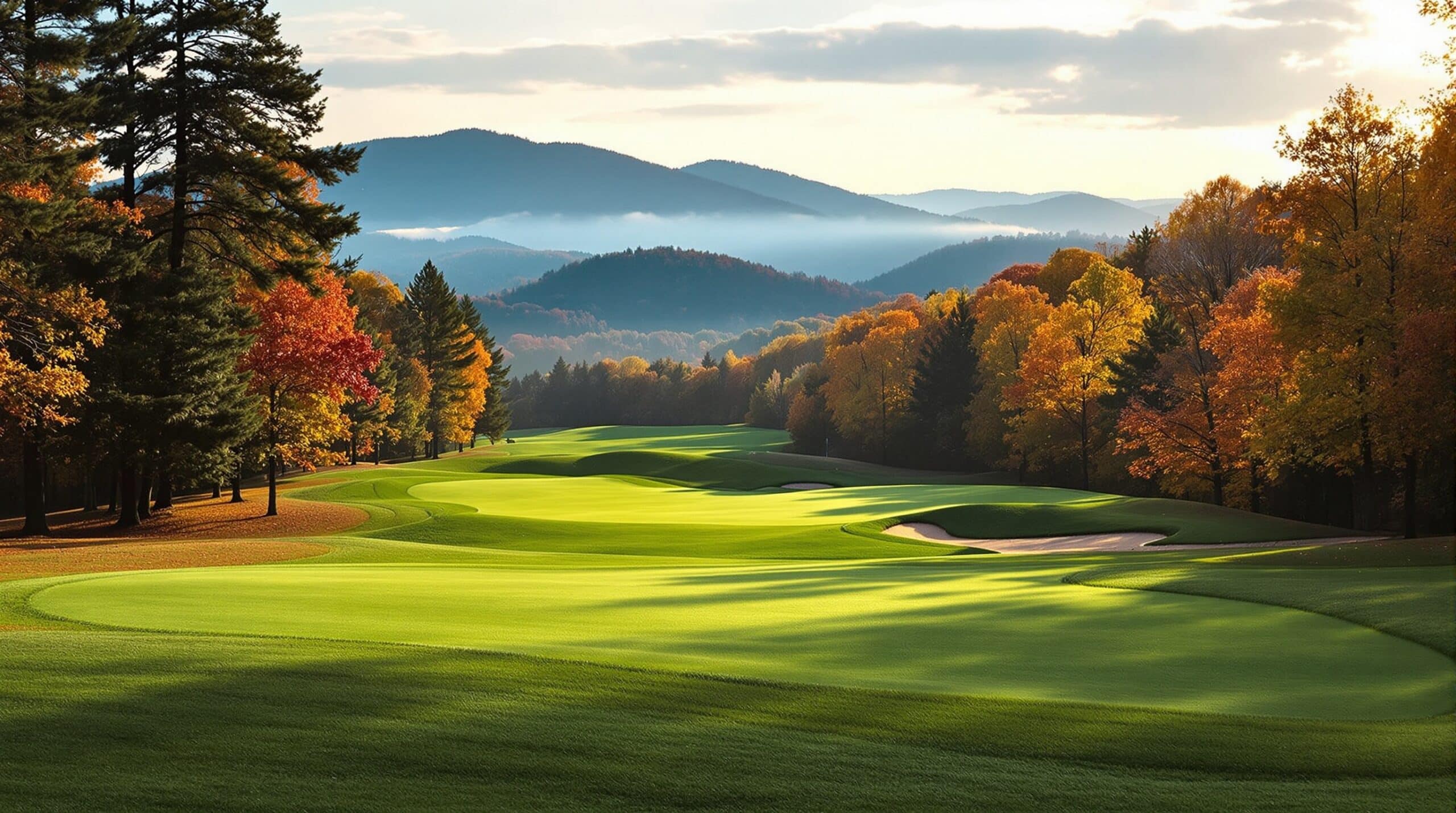
According to the National Oceanic and Atmospheric Administration, western North Carolina’s mountain communities run 10 to 15 degrees cooler than surrounding lower elevations on most summer days. For golfers who’ve suffered through humid, 95-degree rounds in Charlotte or Atlanta, that number is practically a selling point on its own.
The Sapphire Valley and Cashiers area specifically sits in a bowl formed by the Blue Ridge and Nantahala ranges. That geography creates a microclimate worth understanding before you book a tee time.
- Summer highs rarely exceed the low 80s, even in July and August
- Morning fog is common in June and July but typically burns off by 9 a.m.
- Afternoon thunderstorms can roll in quickly between 2 and 4 p.m. in summer months
- Fall temperatures cool faster here than in the piedmont, sometimes dropping 20 degrees between sunrise and noon
- Winter brings occasional frost and rare but real snowfall that can close the course for short windows
- Spring is the most variable season, with warm days and cold nights well into May
Spring Golf: April and May on the Mountain
Spring in Sapphire Valley is genuinely beautiful and genuinely unpredictable. April can hand you a 70-degree afternoon followed by a 38-degree morning, and the course knows it. Fairways green up gradually, and the mountain flora, redbuds, wild azaleas, and dogwoods, blooms in waves rather than all at once.
Late April through May is when the course begins to show its best early-season form. Greens recover from any winter stress, the rough fills in, and the ridgeline views open back up as deciduous trees start leafing out. If you can handle the occasional brisk morning, these are wonderful rounds to play.
What to Expect in Spring
Early April can still feel like late winter at this elevation. By mid-April, most days are playable, though you’ll want layers for morning tee times. May is reliable, warm enough to be comfortable, cool enough that you won’t mind the walk between shots. Spring rounds at Burlingame tend to be quieter than summer, and the pace of play reflects that.
If you’re a golfer considering membership, spring is a particularly good time to visit because you see the course in transition, which tells you more about its character than any single perfect day would.
Summer Golf: The Season That Brings Everyone North
Summer is the reason people move to Cashiers and Sapphire Valley. When Charlotte is sitting at 95 degrees with matching humidity, the mountain is breezy and 78, and the fairways at Burlingame are genuinely green. This is the season that fills the tee sheet and defines the social rhythm of the club.
June through August delivers the most consistent playing conditions of the year. Mornings are crisp and clear. Midday is comfortable in ways that feel almost unfair compared to the rest of the Southeast. The tradeoff is afternoon weather, which deserves real respect at elevation.
Managing Summer Afternoon Storms
Mountain thunderstorms in the Sapphire Valley area can build fast. Experienced mountain golfers book early tee times in summer for exactly this reason. A 7:30 or 8 a.m. start gives you a full round in comfortable conditions before the sky starts making decisions for you. The club’s staff monitors conditions throughout the day, but building your schedule around a morning start is simply the smarter play from June through August.
For golfers who want the full Burlingame membership experience, summer delivers everything at once: active social events, great playing conditions, and the kind of afternoons that make you wonder why you waited this long to get out of the heat.
Fall Golf: The Best-Kept Secret in Western NC
Ask anyone who has played the Cashiers area in October and they’ll tell you: fall golf here is something different. The hardwood forest that surrounds the course goes from green to gold to red to rust across a six-week window, and playing through it feels less like sport and more like something you’ll talk about for a while.
September through early November brings stable temperatures, low humidity, and reliably clear skies. According to the Highlands-Cashiers Chamber of Commerce, peak foliage in the Cashiers area typically arrives between mid-October and early November, though it varies year to year with rainfall and temperature patterns.
Why Fall May Be the Best Season to Play
The air is dry. The greens are fast. The crowds thin out after Labor Day, which means you’re not squeezing into a tee time. Morning temperatures in October can drop into the 40s, but by 10 a.m. you’re comfortable, and the afternoon light that comes through hardwoods in full color is unlike anything you’ll find on a lowland course.
Fall is also when the Burlingame dining program shifts into its seasonal mode. Chef Fong’s kitchen leans into autumn ingredients in a way that makes the 19th hole feel like a destination rather than a formality. A morning round followed by a proper fall meal is a combination worth planning around.
Winter Golf: What to Expect from November Through March
Winter golf in Sapphire Valley is real, but it requires flexibility. The course sits high enough that frost and occasional snow will close play for short stretches. November and early December can still offer excellent rounds; the trees are bare, which opens up sightlines you don’t get the rest of the year, and the air is sharp and clean.
January and February are the most variable months. Some winters are mild enough for regular play; others bring ice and closures. If you’re visiting specifically to golf in winter, call ahead. The club’s staff can tell you what the course is doing in real time better than any seasonal guide can.
March signals the beginning of the transition back, and by mid-March most weeks include at least a few playable days. Winter members who stick around for the quiet season talk about it the way fishing people talk about the off-season on a good river: fewer people, more presence, a different relationship with the place.
Morning vs. Afternoon Tee Times at This Elevation
The short answer: morning is almost always better, and in summer it’s not close. Here’s how the day actually breaks down across the playing season.
| Season | Best Tee Time Window | Watch Out For |
|---|---|---|
| Spring (April-May) | 9 a.m. to noon | Cold mornings, variable conditions early April |
| Summer (June-August) | 7:30 a.m. to 10 a.m. | Afternoon thunderstorms, 2 to 4 p.m. window |
| Fall (September-October) | 9 a.m. to 1 p.m. | Cold snaps in late October, early frost possible |
| Winter (November-March) | 10 a.m. to 1 p.m. | Frost delays, potential closures after snow |
The mountain burns frost off quickly once the sun gets up, which is why winter and spring tee times skew later than you might expect. In summer, the logic reverses entirely: the earlier you go, the more of the day you keep.

How the Tom Jackson Course Design Plays Through the Seasons
Tom Jackson designed the Burlingame course to work with the mountain terrain rather than against it, and you feel that across every season. Elevation changes on individual holes mean your yardage calculations shift depending on uphill or downhill lies, and the natural contours of the land create situations that a flat-land course simply can’t replicate.
In spring, the course plays softer and longer as fairways are still absorbing winter moisture. In summer, firmer conditions mean more run on approach shots. Fall tends to produce the fastest greens of the year as the turf hardens and thatch diminishes. Winter, when the course is open, plays firm and runs long, with reduced spin on shots into cold air.
Adjusting Your Game for Mountain Conditions
- At 3,000 to 3,500 feet, expect 5 to 8 percent more carry on full shots compared to sea level
- Uphill holes play longer than the yardage suggests; downhill holes play shorter
- Cold morning air reduces ball compression, so factor that into club selection early in the round
- Green speeds vary more by season here than on flatter, lower-altitude courses
- Wind direction on ridgeline holes can shift between the front and back nine
- Morning dew on bentgrass greens in summer affects early putting significantly
Learning how to play the Burlingame course well across different seasons is one of the quiet pleasures of membership. The course rewards repeat play.
Packing Right: What to Bring for Mountain Golf
The single most common mistake visitors make is underpacking for morning temperatures and overpacking for afternoon warmth. Mountain weather at this elevation moves fast. The right kit for a Sapphire Valley round is flexible by design.
- A lightweight waterproof layer that folds into your bag without bulk
- Pants or convertibles for spring and fall mornings, even if shorts seem appropriate by afternoon
- Gloves: one for play, one spare, because mountain moisture surprises people
- Sunscreen, because UV intensity increases with altitude even when temperatures feel moderate
- A hat that works in wind, not just sun
- An extra sleeve of balls if you’re new to the elevation and course layout
- A small umbrella or rain cover for the bag in summer months
The pro shop at Burlingame carries gear appropriate for mountain conditions if you arrive underprepared. But the better move is showing up ready so your first hole is already good.
Beyond the Fairway: What to Do Between Rounds
One of the things that makes a Burlingame membership different from a golf-only club is the life that surrounds the sport. Cashiers and Sapphire Valley offer serious options when the course is closed or when you want a day between rounds.
The Horsepasture River, which runs near the property, is a designated National Wild and Scenic River and worth a morning if you fish or just want to walk alongside moving water. Whiteside Mountain offers a trail with views that explain why people have been coming to this corner of the state for over a century.
Back at the club, the full range of amenities covers the gaps between rounds well. There’s the Rejuvenate Spa for the day after a long walking round, tennis and pickleball for those in the group who want competition that doesn’t require a handicap, and swimming that the younger members of a family will appreciate on a warm July afternoon.
The dining venues at Burlingame give the day a shape. Breakfast before a round, a proper lunch after the turn, dinner on the porch when the evening cools down. That rhythm is one of the things people mean when they talk about mountain living at Burlingame.
Frequently Asked Questions
What months are best for golf in Sapphire Valley, NC?
Late May through October is the most reliable window for golf in Sapphire Valley. Summer offers the most comfortable temperatures in the Southeast, and fall delivers dry air, stable skies, and foliage that makes every round feel like it belongs on a calendar. Early spring is playable but variable, and winter brings closures during frost and snow events.
How much cooler is it in Cashiers and Sapphire Valley compared to Charlotte or Atlanta?
The NOAA reports that mountain elevations in western North Carolina typically run 10 to 15 degrees cooler than surrounding lower regions. In July, when Charlotte sits at 95 degrees, Cashiers may be hovering around 78 to 80 degrees with significantly lower humidity. That difference is the main reason the area fills with golfers from the Carolinas and Georgia all summer long.
Does altitude affect my golf game in Sapphire Valley?
Yes, in a noticeable way. At 3,000 to 3,500 feet, the reduced air density gives your ball a slightly longer carry than you’d get at sea level. Most golfers find their full shots travel 5 to 8 percent farther. Club selection, especially on approach shots, should account for this. The effect is most pronounced on warm, dry days when the air is at its thinnest relative to sea level.
Are afternoon thunderstorms a real concern for summer golf at Burlingame?
They are, and experienced mountain golfers take them seriously. Summer storms in the Sapphire Valley area can build quickly, especially between 2 and 4 p.m. Booking an early tee time in June, July, and August is the practical solution. The club monitors conditions and will communicate with players on the course if weather becomes a safety consideration.
Is the Burlingame course open year-round?
The course operates year-round when conditions allow, but winter brings frost delays and occasional closures after snowfall. November through mid-March is the most variable period. Calling the club before a winter visit is genuinely worth doing. The staff knows what the course looks like today better than any general seasonal forecast can tell you.
What should I wear for a spring or fall round at this elevation?
Layers are the right answer. Morning temperatures in spring and fall can feel 15 to 20 degrees colder than afternoon conditions. A lightweight waterproof layer that fits easily in your bag handles both a cold start and a warm finish. Pants for morning tee times, the option to shift to shorts by the back nine in fall. Don’t assume the forecast high temperature represents the whole round.
How does the Tom Jackson course design affect seasonal playability?
Jackson designed the course to move with the natural terrain, which means elevation changes within individual holes are a constant factor in both strategy and seasonal playability. The course plays softer and longer in spring, firmer and faster in fall. Winter rounds on open days produce the firmest conditions of the year, with less spin and more roll than most visitors anticipate.
What makes Burlingame Country Club a good choice for mountain golf specifically?
The combination of a well-designed championship course, a location at 3,000 to 3,500 feet in the Cashiers area, and a full membership program that extends well beyond golf makes Burlingame a natural fit for golfers who want more than just a tee time. The membership experience is built around the whole of mountain living, with golf at the center of it.
Summary
The best time to play golf in Sapphire Valley, NC depends on what you want from the experience. Summer delivers reliably cool temperatures and the most active club atmosphere, with early morning tee times as the strategic move around afternoon weather. Fall rewards patience with clear skies, dry air, and scenery that justifies the drive from anywhere in the Southeast. Spring offers quiet rounds and genuine beauty at a price of variable conditions. Winter is real but limited. The NOAA’s data on mountain temperature differentials, 10 to 15 degrees cooler than surrounding low elevations, explains why golfers from across the Carolinas and Georgia have been coming to this corner of the mountains for generations. If you’re evaluating whether Burlingame fits the mountain lifestyle you’re building, any season is a reasonable time to come see it for yourself.
Plan Your First Round at Burlingame
If you want to know what the course is playing like right now, or you’d like to walk it before committing to a tee time, reach out to Jennifer Webb at (828) 966-9200. She can tell you what the conditions look like this week, what’s coming up on the social calendar, and what a visit actually involves. You can also Learn More and set up a personal tour that fits your schedule.