
Croquet is a lawn strategy game where players use wooden mallets to hit colored balls through metal hoops called wickets in a set sequence. Standard games use six or nine wickets depending on format, rewarding patience and planning — which makes it one of the best multi-generational outdoor games a family can share.
What Is Croquet?
Croquet is a lawn game where players use wooden mallets to strike colored balls through a series of metal hoops called wickets, following a specific sequence, with the goal of completing the course before your opponents. Think of it as chess played on grass, where every tap of the mallet opens or closes possibilities three moves ahead. The game whispers rather than shouts, drawing families together on emerald lawns the way a favorite porch always does at the end of a long summer day.
At its heart, croquet is about patience and precision. You are not racing a clock. You are reading the land, reading your opponent, and making decisions that reward experience just as generously as they reward youth. That balance is exactly why the rise of croquet as a sport for everyone has continued well into 2026.
What Is the Croquet Game and How Does It Work?
The croquet game is a turn-based outdoor lawn competition in which each player or team advances colored balls through a set course of wickets using a wooden mallet, earning additional strokes by successfully passing through each wicket or striking specific posts. A turn begins with one stroke. If your ball passes through the next wicket in the correct sequence, you earn a continuation stroke and keep going. Miss, and play passes to your opponent. Strategy enters the moment you realize you can also use your continuation strokes to reposition your opponent’s ball, not just advance your own.
The court, the balls, the stakes at either end, and the wickets in between form a world that is simple to enter and rich to explore. Equipment is modest: mallets, balls, wickets, stakes, and a reasonably flat grass surface. The same afternoon that introduces a seven-year-old to the basics can simultaneously challenge a seasoned player who has spent decades reading subtle slopes and wind shifts. After a long afternoon on the lawn, the celebration continues naturally with farm-to-table dining and Chef Gerry Fong’s seasonal menu philosophy.
What Game Is Played With Balls, Mallets, and Wickets?
Croquet is the game played with balls, mallets, and wickets, making it one of the most recognizable lawn games in the world. Each player receives an assigned colored ball and a mallet sized to their grip and height. The wickets, slim metal hoops pressed into the turf, mark the course the ball must travel. Stakes anchor each end of the field and mark the starting and finishing points of the game.
In doubles play, the classic pairing sets blue and black against red and yellow. Each color tells its own story across the lawn. The balls do not merely travel a course. They converse with the terrain, gathering speed on a downhill run, slowing in thick grass, curling on a hidden slope the way a mountain stream bends around an old root. The mallets rest in your hands like a trusted walking stick, their weight as personal as a favorite chair on a well-loved porch.
How Many Wickets in Croquet?
Croquet uses either six wickets or nine wickets depending on the format you are playing. Nine-wicket croquet, the version most families encounter in backyards and casual club settings, arranges its hoops in a double-diamond figure-eight pattern that players navigate out and back from the same stake. Six-wicket croquet, used in American competitive and Golf Croquet formats, tightens the course into a rectangle and raises the strategic stakes considerably.
The table below shows the key differences at a glance.
| Format | Wickets | Court Shape | Best For | Typical Game Length |
|---|---|---|---|---|
| Nine-Wicket (Backyard) | 9 | Double diamond | Families, casual gatherings | 45 to 60 minutes |
| Six-Wicket American | 6 | Rectangle | Competitive club play | Up to 2 hours |
| Golf Croquet | 6 | Rectangle | Newcomers and tournaments | 30 to 45 minutes |
Choosing your wicket count is really choosing your pace. Nine wickets invite conversation and laughter. Six wickets invite focus. Both invite the kind of afternoon that becomes a story people still tell at Thanksgiving ten years later.
What Is a Croquet Shot?
A croquet shot is the specific stroke you play after your ball has struck another ball on the court, placing your ball in contact with the other ball and then hitting your own ball so that both balls move. It is one of the game’s most powerful and strategic moments. Instead of simply advancing along the course, a croquet shot lets you send an opponent’s ball to a less favorable position while launching your own ball toward the next wicket.
Mastering the croquet shot is where the game deepens from pleasant pastime into genuine craft. You must judge angle, force, and terrain all at once. The best players use croquet shots not just to disrupt opponents but to set up multi-shot sequences called breaks, where one well-placed stroke opens a chain of wickets like a key turning in a lock. That satisfaction, the quiet click of a perfectly struck ball traveling exactly where your mind sent it, is the poetry at the center of this gentle game.
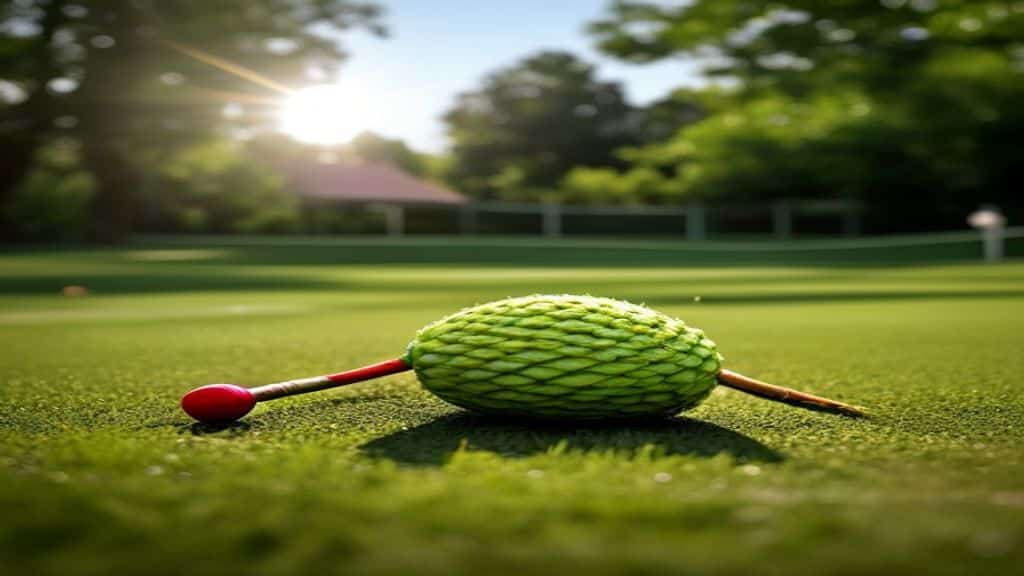
Three Formats, Three Rhythms
Croquet offers three main formats, each carrying its own tempo, the way different trails through the same mountain forest lead to entirely different views.
Nine-wicket croquet is the version that greets most families first. Its double-diamond layout encourages leisurely play and the kind of gentle competition where nobody feels left behind. Players begin and end at the same stake, navigating nine wickets in a figure-eight pattern that keeps everyone close and conversation easy. Just as playing in the mountains requires reading wind, weather, and smart decisions, nine-wicket play rewards those who pay attention to the terrain beneath their feet.
Six-wicket American croquet concentrates the game into a rectangle where blocking shots and precise positioning matter as much as accuracy. It transforms the garden stroll into something approaching outdoor chess, where every stroke has consequences two turns ahead.
Golf croquet is the newest of the three formats to gain wide American popularity. It simplifies scoring while preserving tactical depth, making it ideal both for tournament play and for guests who want to feel confident their first time on the court. Each player competes for each wicket individually, and the first ball through wins that wicket for its side. Games move quickly, which makes Golf Croquet perfect for families with a wide range of ages and attention spans gathered on the same afternoon.
How Croquet Strategy Works
Croquet strategy grows the way a well-tended garden grows: slowly, deliberately, and with more depth than the casual eye notices at first glance. The game rewards players who think beyond the next stroke and consider how each decision shapes the opportunities available two and three turns ahead.
Reading the terrain is the first lesson. Gentle slopes that seem insignificant to the eye can redirect a ball by several feet across a long shot. Morning dew, afternoon heat, and mountain breezes each alter how the grass carries the ball. Experienced players study the lawn the way seasoned hikers study a trail map before setting out on Burlingame’s most scenic trails.
The second lesson is balance between advancing your own ball and placing your opponent’s ball somewhere inconvenient. Blocking shots become an art form when used with restraint and timing. Aggressive play wins some games. Patient play wins more of them. The best croquet players move between those two modes with the ease of someone who has spent enough time on the lawn to know when the moment calls for boldness and when it calls for quiet precision.
For families new to the game, this strategic depth is exactly what keeps grandparents competitive alongside grandchildren. A child may have quick eyes and an easy swing, but a grandparent who has learned to read a slope and place a blocking shot wins more afternoons than raw energy alone ever could.
Croquet in the Mountains of Western North Carolina
Western North Carolina’s mountain communities give croquet a setting that deepens everything the game already offers. Sunlight moves differently at elevation, filtering through ancient hardwoods onto lawns that roll gently with the land’s natural contours. The air carries the kind of clarity that makes every color brighter, the yellow ball more vivid against green grass, the blue sky a backdrop that no photograph ever quite captures.
In Sapphire Valley, the afternoons that build around a croquet lawn tend to become the afternoons families remember longest. It is the kind of gathering that earns the description of a family reunion where everybody actually likes each other. Children learn patience from a game that will not be rushed. Adults rediscover playfulness in competition that does not demand peak physical condition. Grandparents find themselves the most valuable players on the court, their experience with angles and strategy more powerful than a younger player’s strength.
Mountain croquet carries its own seasonal magic. Late spring through early fall offers ideal conditions, when morning dew adds subtle weight to the grass and afternoon breezes off the ridgelines create the kind of variable conditions that turn every game into its own story. When the season shifts and the trails call louder than the lawn, winter hiking in Western North Carolina carries that same spirit of purposeful outdoor movement into the colder months.
For families considering what it means to invest in a place like this, the question is not just about the amenities listed on a page. It is about the kind of afternoons those amenities make possible. Understanding what it means to buy into a private golf club community helps frame croquet not as a footnote but as one of the gentle, lasting reasons families return year after year to places where the pace is their own to set.
Quick Recap
- Croquet is a lawn strategy game using wooden mallets, colored balls, metal wickets, and stakes.
- Six-wicket formats are used in competitive and Golf Croquet play; nine-wicket formats suit casual and family games.
- A croquet shot is a specific stroke played after your ball contacts another ball, moving both simultaneously.
- Three formats exist: nine-wicket backyard, six-wicket American, and Golf Croquet, each with its own pace and strategic depth.
- Strategy centers on advancing your own ball while using blocking shots to limit your opponent’s progress.
- Croquet rewards experience over raw athleticism, making it one of the most genuinely multi-generational games available.
- Mountain settings in Western North Carolina add natural variables like terrain, breeze, and morning dew that make every game its own story.
- The game pairs naturally with the wider outdoor life of mountain communities, from dining to hiking to the unhurried rhythm of days well spent together.
Frequently Asked Questions
How long does a croquet game usually take?
Casual nine-wicket games typically last 45 minutes to an hour. Competitive six-wicket matches can run up to two hours. Golf Croquet games usually finish in 30 to 45 minutes, making them a natural fit for gatherings with players of varying ages and energy levels.
What equipment do you need to start playing croquet?
You need mallets (one per player), colored balls, wickets, stakes, and a reasonably flat grass surface. Complete beginner sets range from $50 to $200. Many clubs provide equipment so new players can enjoy the game before investing in their own gear.
Can children play croquet alongside adults?
Yes. Croquet’s handicap system allows players of different skill levels to compete fairly. Children often grasp the strategic elements quickly, while adults may hold advantages in power and shot accuracy. The game’s natural pace creates room for coaching and shared decision-making that genuinely strengthens family bonds.
Is croquet difficult to learn?
The basic mechanics take only a few minutes to understand. The fundamental stroke is straightforward. Strategic depth, including precise wicket running, break play, and blocking, develops over time. Most players find real enjoyment from their very first game and improve naturally the more afternoons they spend on the lawn.
What makes a good croquet playing surface?
Short, dense grass with minimal slopes and irregularities is ideal for competitive play. Family games flourish on any reasonably flat lawn. Slight variations in terrain add character and create the memorable shots that become part of a game’s story.
Can you play croquet year-round in the mountains?
Mountain climates in Western North Carolina typically support croquet from late spring through early fall. Winter play depends on snow cover and ground conditions. When the season turns, outdoor life continues naturally through activities like winter hiking in Western North Carolina, carrying the same spirit of purposeful time spent outside.
What is the difference between American and British croquet?
American croquet typically uses nine wickets in a double-diamond layout with more relaxed rules suited to casual play. British or Association croquet uses six wickets with stricter rules and is the format most common in formal club and international competition. Golf Croquet, which is popular in both countries, uses six wickets with simplified scoring that makes it accessible to newcomers while still offering genuine strategic depth.
Croquet at Burlingame is one afternoon in a long life of afternoons worth remembering. If you are ready to learn more about what life in this mountain community looks like across every season, we would love to talk. Please contact Jennifer Webb, Membership Director, for more information. Please use the form below or call 828.966.9200.