Experience nearly a century of golfing excellence at Hampshire Country Club, from Devereux Emmet’s original 1927 masterpiece to the celebrated course that continues to challenge and delight golf enthusiasts in Westchester County.
_______________________________
The Rich History of Hampshire Country Club: Mamaroneck’s Premier Golf Destination Since 1927
Nestled in the picturesque landscape of Mamaroneck, Hampshire Country Club stands as a testament to golfing excellence, having graced Westchester County for nearly a century. Since its establishment in 1927, this prestigious club has offered members and guests an exceptional golfing experience amid rolling hills and stunning vistas. The club’s rich heritage, architectural brilliance, and commitment to preserving its historical significance have cemented its place as one of the region’s most revered golfing destinations.
What began as the vision of renowned golf course architect Devereux Emmet has evolved through thoughtful renovations and enhancements, each maintaining the integrity of the original design while adapting to the changing needs of the modern golfer. From championship tournaments to memorable rounds shared among friends, Hampshire Country Club has been the backdrop for countless “best of times” in Westchester’s golfing community.
Join us as we explore the fascinating journey of Hampshire Country Club from its founding days to its current status as a golfing treasure, celebrating the people, events, and architectural brilliance that have shaped this remarkable institution for generations.
A Legacy Begins – The Founding Story (1927)
In the golden age of golf course construction, as America embraced the sport with unprecedented enthusiasm, Hampshire Country Club was born. The year was 1927—the same era that saw the completion of iconic courses across the nation. Against this backdrop of golfing fervor, Hampshire emerged as a jewel in Westchester County’s crown.
The club’s founding was inspired by a growing desire among Mamaroneck’s residents for a premier golfing destination that would capitalize on the area’s natural beauty. Local business leaders and golf enthusiasts came together with a shared vision: to create a club that would honor the traditions of the game while providing a welcoming community for families.
The selection of the property was no accident. The rolling terrain, with its natural elevation changes and scenic vistas overlooking Long Island Sound, provided the perfect canvas for a championship golf course. What made the location particularly special was its proximity to New York City—accessible enough for weekend visits yet feeling worlds away from urban life.
From the beginning, Hampshire was conceived not merely as a golf course but as a complete country club experience. The founding members emphasized a warm, unpretentious atmosphere where the focus remained on the joy of the game and the relationships formed on and off the course—a philosophy that continues to guide the club today.
The name “Hampshire” was chosen to evoke the pastoral elegance of the English countryside, reflecting the Anglo-American golfing traditions that influenced the club’s original design and ethos. This connection to golfing heritage established an identity that balanced respect for tradition with a distinctly American approach to the game.
Devereux Emmet’s Masterpiece – Original Design Philosophy
When the founding members sought an architect for their ambitious project, they turned to one of the most respected names in American golf course design: Devereux Emmet. Already renowned for his work on courses like Garden City Golf Club and St. George’s Golf and Country Club, Emmet brought a wealth of experience and a distinctive design philosophy to Hampshire.
Emmet’s approach was deeply influenced by his studies of the great Scottish links courses. He believed that a truly great golf course should work with the natural landscape rather than against it. At Hampshire, this philosophy manifested in a layout that followed the natural contours of the land, creating holes that felt as if they had always belonged there.
What set Emmet’s work apart was his remarkable ability to create strategic challenges for skilled players while keeping the course playable for the average golfer. He accomplished this through thoughtful placement of bunkers, subtle green contours, and careful routing that rewarded thoughtful shot-making over mere power.
The greens at Hampshire showcased Emmet’s genius for creating putting surfaces with character. Rather than relying on severe slopes or tricky undulations, he crafted greens with subtle breaks that required careful reading and precise execution. These greens became one of the signature elements of Hampshire’s design, demanding attention from even the most accomplished players.
Perhaps most impressively, Emmet designed a course that revealed itself gradually to the player. Each hole presented a unique challenge, with no two playing quite the same way. This variety ensured that members would continue to find new nuances in the course even after years of play—a testament to the depth and thoughtfulness of Emmet’s original design.
Evolution Through the Decades – Key Developments
The 1930s marked Hampshire’s first full decade, a period when the young club established its identity amidst the challenges of the Great Depression. While many country clubs struggled during this era, Hampshire’s dedicated membership worked to ensure its survival, sometimes through personal sacrifice. The course matured during this time as the original plantings took root, and the layout began to realize Emmet’s vision.
The post-World War II boom of the 1950s brought new prosperity to the club. Membership grew significantly during this period, reflecting the broader economic expansion and the growing popularity of golf. The club responded with its first major improvements to the facilities, enhancing the clubhouse and expanding amenities to accommodate growing families.
By the 1960s and 1970s, changing standards in golf course maintenance and player expectations prompted the club to consider thoughtful updates to Emmet’s original design. This era saw the first significant course renovations, with architect Ed Ault brought in to modernize certain elements while respecting the integrity of the original layout. New tee boxes extended some holes, and bunkers were repositioned to account for advances in equipment technology.
The 1980s and 1990s witnessed Hampshire adapting to evolving environmental considerations. The club implemented new water conservation measures and more sustainable maintenance practices, positioning itself as a responsible steward of its beautiful property. During this period, Frank Duane contributed his expertise to further refine the course, particularly focusing on drainage improvements that enhanced playability.
The turn of the millennium brought fresh challenges and opportunities. Golf was changing rapidly with technological advances in equipment, and courses everywhere needed to adapt. Hampshire’s leadership made the forward-thinking decision to bring in architect Stephen Kay for a comprehensive course evaluation. His sensitive updates helped prepare the course for modern play while honoring its historical significance.
Architectural Brilliance – The Clubhouse and Facilities
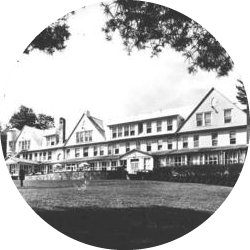
While the golf course has always been Hampshire’s crown jewel, the clubhouse has served as its heart. The original clubhouse, completed shortly after the course opened in 1927, embodied the gracious architectural styles popular during the period. With its traditional design elements and welcoming spaces, it immediately established itself as a gathering place for members.
The clubhouse’s location was strategically chosen to provide panoramic views of the course and Long Island Sound beyond. Large windows and covered porches allowed members to take in these vistas regardless of the weather, creating a sense of connection to the landscape that enhanced the overall club experience.
Inside, the clubhouse featured warm wood paneling, comfortable furnishings, and thoughtfully designed spaces that balanced privacy with opportunities for social interaction. The main dining room quickly became known for both its cuisine and its atmosphere, while smaller rooms offered settings for card games, business discussions, and family gatherings.
Over the decades, the clubhouse underwent several renovations to meet changing needs while preserving its character. A significant expansion in the 1960s added more dining options and improved locker facilities. More recently, updates have incorporated modern amenities and technology while maintaining the clubhouse’s traditional ambiance.
Beyond the clubhouse, Hampshire’s facilities expanded thoughtfully over time. Tennis courts were added in the 1930s, followed by a swimming pool complex that became a summer hub for families. Practice facilities for golf were continuously improved, with a state-of-the-art short game area added in recent years to help members refine their skills. Throughout these additions, the club maintained a commitment to architectural cohesion, ensuring that new structures complemented both the natural landscape and existing buildings.
Course Transformation – The Architects Who Shaped Hampshire
While Devereux Emmet’s original design provided Hampshire with a strong foundation, the course has benefited from the vision of several accomplished architects over the decades. Each brought their unique perspective while respecting the integrity of Emmet’s masterpiece.
Ed Ault’s work in the 1970s represented the first significant update to Hampshire’s layout. Known for his practical approach to golf architecture, Ault focused on improving playability while addressing issues that had developed over time. His contributions included rebuilding several greens that had suffered from drainage problems and reconfiguring bunkers to better challenge the modern golfer. Ault’s sensitive work preserved the strategic elements of Emmet’s design while enhancing the overall condition of the course.
Frank Duane, who had worked under the legendary Robert Trent Jones Sr., brought a refined eye for detail to Hampshire in the 1980s. Duane’s expertise in water management resulted in significant improvements to the course’s drainage systems, allowing play to resume more quickly after rainfall. He also redesigned several fairway bunker complexes, positioning them to challenge the longer hitters who were beginning to dominate the game with metal woods and improved ball technology.
The most comprehensive renovation came under the guidance of Stephen Kay in the early 2000s. Kay, known for his historical research and respect for classic architecture, approached the project with particular sensitivity to Emmet’s original intent. His work included restoring green sizes and contours that had changed over time, reestablishing strategic elements that had been lost, and creating new tee positions that allowed the course to challenge players of all abilities.
Throughout these transformations, certain principles remained constant: respect for the natural terrain, strategic rather than penal design, and the belief that a great golf course should reveal its challenges gradually to the player. The result is the Hampshire of today—a course that honors its rich architectural heritage while meeting the expectations of the modern golfer.
Championship Moments – Notable Tournaments and Events
Throughout its storied history, Hampshire Country Club has hosted numerous prestigious tournaments that have contributed to its reputation as a premier test of golf. The club’s first major competition came in the 1930s when it hosted a qualifying round for the U.S. Open, validating the quality and challenge of Emmet’s design just a few years after the course opened.
The Metropolitan Golf Association recognized Hampshire’s excellence early on, bringing several MGA events to the club. The Met Amateur, one of the oldest and most respected amateur championships in the country, has visited Hampshire multiple times over the decades. These events brought some of the region’s finest players to test their skills against Emmet’s challenging layout.
Women’s golf has always held an important place at Hampshire, reflected in the prestigious women’s tournaments hosted over the years. The Women’s Metropolitan Golf Association has conducted several championships at the club, showcasing the course’s appeal to skilled players regardless of gender.
One particularly memorable championship occurred in the late 1970s when Hampshire hosted a prominent professional event that attracted several PGA Tour players. Though not a regular tour stop, this special exhibition showcased Hampshire to a wider audience and demonstrated that the course could challenge even the game’s elite players.
Beyond external competitions, Hampshire’s club championships have created their own rich history of memorable moments. Multi-generation families have seen their names engraved on championship trophies, creating legacies that span decades. The annual Member-Guest tournament has become a highlight of the club’s social and competitive calendar, fostering friendships and good-natured rivalries that define the Hampshire experience.
Hampshire’s Golf Legends – Famous Visitors and Members
Over its nearly century-long history, Hampshire Country Club has welcomed numerous luminaries from the world of golf and beyond. These distinguished visitors and members have added to the club’s rich tapestry of stories and traditions.
In its early years, Hampshire attracted attention from some of golf’s greatest players. Golf professionals of the era would occasionally visit to play exhibition matches, testing their skills against Emmet’s strategic layout. These exhibitions drew large galleries of members eager to see the game’s best talents navigate their home course.
The proximity to New York City naturally led to a membership that included prominent figures from business, entertainment, and politics. While Hampshire has always maintained a discreet atmosphere that respects members’ privacy, the club has welcomed its share of celebrities who found respite in the peaceful setting and challenging golf.
More significant than famous names, however, are the legendary characters who have shaped Hampshire’s identity from within. Every club has its cast of colorful members whose personalities become intertwined with the club’s story – the member who never missed a day on the course for fifty years; the club champion who defended her title for a decade straight; the generous mentor who helped countless juniors develop their games.
Hampshire’s caddie program has also produced its own legends. Several caddies who started as youngsters carrying bags at Hampshire went on to successful careers in golf, including club professionals at other prestigious courses and even a few who qualified for major championships. Their success stories remain a point of pride for the club and inspiration for young caddies following in their footsteps.
The Signature Experience – The 18-Hole Challenge
Hampshire Country Club’s 18-hole layout presents a journey through varied terrain that challenges every aspect of a golfer’s game. The course opens with a relatively gentle handshake—a straightaway par 4 that allows players to settle their nerves before the more demanding holes to come. This thoughtful routing, beginning with an accessible opening hole, reflects Emmet’s player-friendly approach to course design.
The front nine weaves through gently rolling terrain, with strategic bunkering that guides players toward the optimal line of play. The 5th hole, a downhill par 3 with views of Long Island Sound, has become one of Hampshire’s most photographed spots. Players must negotiate swirling winds and judge the elevation change perfectly to find the putting surface.
As players make the turn, the character of the course subtly shifts. The back nine features more dramatic elevation changes and requires a greater variety of shots. The 12th hole, a risk-reward par 5 that tempts players to challenge a water hazard for a chance at eagle, epitomizes the strategic choices that make Hampshire so engaging round after round.
The finishing stretch at Hampshire provides a memorable conclusion to the round. The 16th, a challenging par 4 that plays uphill to a well-guarded green, begins a three-hole finish that can make or break a score. The 17th, with its narrow landing area and subtly contoured green, demands precision from tee to cup. Finally, the 18th brings players back to the clubhouse with a testing par 4 that provides a fitting end to the Hampshire experience—challenging yet fair, with the clubhouse veranda often filled with members watching the conclusion of matches.
What makes Hampshire’s layout particularly special is how it rewards thoughtful play rather than mere power. Emmet’s original routing, enhanced by later architects, creates a course where strategy, course management, and a deft touch around the greens matter more than distance. This design philosophy ensures that Hampshire remains relevant and challenging despite advances in equipment technology.
Hampshire’s Place in Westchester Golf – Regional Influence
Westchester County has long been recognized as one of America’s most distinguished golf regions, home to legendary clubs like Winged Foot, Quaker Ridge, and Sleepy Hollow. Within this illustrious community, Hampshire Country Club has established its unique identity and made significant contributions to the area’s rich golfing heritage.
Hampshire’s influence can be seen in how it has helped shape golfing traditions in the region. As one of the earlier Emmet designs in Westchester, the club showcased his distinctive approach to strategic golf course architecture, influencing later developments in the area. Hampshire demonstrated that a course could be both challenging for accomplished players and enjoyable for the average golfer—a balance that many clubs subsequently sought to achieve.
The club has also played an important role in fostering competitive golf throughout Westchester. Hampshire’s participation in inter-club matches and Westchester Golf Association events has helped strengthen the bonds between clubs while raising the standard of play throughout the region. Junior golfers from Hampshire have gone on to represent the club in collegiate golf and beyond, carrying the club’s traditions to a wider audience.
Hampshire’s approach to course maintenance has influenced standards throughout the area. The club’s early adoption of certain environmental practices, including responsible water management and reduced chemical use, provided a model that other Westchester clubs could follow. This leadership in environmental stewardship reflects the club’s commitment to preserving the natural beauty that makes golfing in Westchester so special.
Perhaps most importantly, Hampshire has contributed to the social fabric that makes Westchester golf unique. The club’s emphasis on family participation, intergenerational connections, and a welcoming atmosphere aligns with the best traditions of Westchester golf. While maintaining its distinctive identity, Hampshire has helped reinforce the values that unite the region’s diverse clubs in a shared appreciation for the game.
Preserving a Golfing Treasure – Tradition Meets Innovation
As Hampshire Country Club approaches its centennial, the balance between honoring tradition and embracing necessary innovation remains at the heart of its ongoing story. The club’s leadership has consistently demonstrated a thoughtful approach to preservation that recognizes both the historical significance of Hampshire and the evolving needs of its membership.
Course maintenance practices offer a clear example of this balanced approach. While the club honors Emmet’s design intent and the contributions of subsequent architects, it has incorporated modern agronomy techniques that ensure superior playing conditions. Advanced irrigation systems, improved turf varieties, and data-driven maintenance decisions have enhanced the playing experience while preserving the strategic elements that make Hampshire special.
Technology has been integrated throughout the club in ways that complement rather than detract from its traditional character. The pro shop utilizes cutting-edge club-fitting technology to help members improve their games. Reservation systems and communication tools have been modernized for member convenience. Yet these innovations have been implemented with sensitivity to the club’s atmosphere, enhancing rather than disrupting the Hampshire experience.
Environmental stewardship represents another area where Hampshire has balanced tradition with forward-thinking approaches. The club has implemented sustainable practices that reduce water usage, limit chemical applications, and protect natural habitats on the property. These initiatives not only align with contemporary environmental values but also ensure that the natural beauty that has always defined Hampshire will be preserved for future generations.
Perhaps most importantly, Hampshire continues to nurture the intangible elements that have defined the club since its founding: the sense of community, the respect for the game’s traditions, and the creation of lasting memories for members and their families. By carefully balancing preservation with thoughtful evolution, Hampshire Country Club ensures that it will remain a cherished golfing destination for the next century and beyond.
Frequently Asked Questions
Who designed the original Hampshire Country Club golf course?
The original Hampshire Country Club golf course was designed by renowned architect Devereux Emmet in 1927. Emmet was one of the most influential golf course architects of the early 20th century, known for his strategic designs that emphasized natural terrain and thoughtful shot values. His work at Hampshire reflected his philosophy of creating courses that challenged skilled players while remaining enjoyable for golfers of all abilities.
How has Hampshire Country Club’s golf course changed since its original design?
While Hampshire’s course has maintained the integrity of Devereux Emmet’s original design concept, it has evolved through thoughtful renovations by several noted architects. Ed Ault made significant improvements in the 1970s, focusing on playability and addressing maintenance issues. Frank Duane enhanced the course’s drainage systems and updated bunker positioning in the 1980s. Most recently, Stephen Kay conducted a comprehensive renovation in the early 2000s that restored many original design elements while adapting the course to modern play. Throughout these changes, the club has balanced respect for tradition with necessary improvements.
What notable tournaments has Hampshire Country Club hosted?
Hampshire Country Club has hosted numerous prestigious events throughout its history, including U.S. Open qualifying rounds, Metropolitan Golf Association championships, and Women’s Metropolitan Golf Association tournaments. While not a regular PGA Tour stop, the club has also welcomed professional exhibition matches featuring prominent tour players. These events have showcased Hampshire’s challenging layout and cemented its reputation as a course that can test golfers of all skill levels, from club members to professionals.
What Members and Guests Say About Hampshire
“What a treat to play this course! Conditions were fantastic! Challenging but fair. Greens rolling smoothly. Bring your camera and shoot for an afternoon round to get that sunset pic in Fall. Over the next couple of weeks the colors will be spectacular as the leaves will be changing colors. Bring a range finder with slope and enjoy! Thank you to Beth for allowing us to play your beautiful course. 17 and 18 may be 2 of the best framed greens.”
“Can’t speak more highly of this club and course! Really enjoyed our round of golf. Guys in the pro shop were great. Members were fun and kind. Will come back again!”
“Absolutely beautiful and challenging mountain golf club. Perfect condition. friendly staff.”
“This golf course is incredible. A true mountain golf experience. The greens roll true. The fairways are perfect. The food is excellent and the service is amazing. Everyone waives and says hello. Truly a great place.”
Continuing the Legacy – Hampshire Country Club’s Next Chapter
As Hampshire Country Club approaches its centennial celebration, it stands as a testament to the enduring appeal of traditional golf in a rapidly changing world. The club’s nearly hundred-year journey reflects both remarkable continuity and thoughtful evolution—a balance that has allowed Hampshire to maintain its distinctive character while meeting the expectations of each new generation of members.
Looking ahead, Hampshire remains committed to the values that have guided it since 1927: excellence without pretension, respect for the game’s traditions, and the creation of a welcoming community where lasting relationships form naturally around a shared passion for golf. These principles will continue to inform decisions about course enhancements, facility improvements, and membership experiences in the years to come.
The future of Hampshire Country Club will be shaped by the same careful stewardship that has preserved its special character through nearly a century of change. Environmental sustainability, technological integration, and evolving member preferences will present both challenges and opportunities. Yet the club’s leadership remains guided by a simple question: What will best serve the Hampshire community while honoring the club’s rich heritage?
For golf enthusiasts interested in experiencing Hampshire’s unique blend of challenge, beauty, and tradition, the club continues to welcome inquiries about membership opportunities. Those seeking to become part of Hampshire’s next chapter can connect with the club’s membership team to learn more about joining this historic golfing community.
To inquire about membership or to schedule a visit to Hampshire Country Club, contact the membership office at (828) 966-9200 or visit our website for more information.