
The mountains of Western North Carolina draw golfers seeking something different from the typical rounds they play at home. In the Highlands area, golf takes on a distinct character shaped by elevation, terrain, and a landscape that refused to be tamed. This guide breaks down what you need to know about playing golf in this mountain region—from understanding which courses fit your game to navigating rates and booking procedures that vary significantly between private clubs, semi-private facilities, and resort courses.
Whether you’re planning a dedicated golf trip, adding rounds to a mountain vacation, or researching potential membership options, understanding the landscape of Highlands Ranch golf helps you make decisions that match your budget, skill level, and expectations.
Understanding the Highlands Golf Landscape

The term “Highlands Ranch golf” encompasses courses across several mountain communities in Western North Carolina. The Highlands plateau sits at over 4,000 feet elevation, while nearby Cashiers and Sapphire Valley range from 3,000 to 3,500 feet. These communities form a golf corridor within 20-30 minutes of each other, giving visiting golfers access to multiple quality courses.
The courses here divide into three general categories: private clubs requiring membership or member sponsorship, semi-private facilities offering limited public access, and resort courses open to guests and daily-fee players. Understanding these distinctions helps set expectations for access and rates.
Private clubs typically offer the most challenging golf and highest conditioning standards, but require connections to play. Semi-private clubs balance member play with outside access during specific times or days. Resort courses prioritize accessibility and provide the easiest booking process, though they may see higher traffic during peak season.
The elevation affects every aspect of play. Your ball flies farther in thinner air—typically 8-15 percent depending on the club and conditions. But more significantly, the mountain terrain creates elevation changes on individual holes that demand constant adjustment in club selection. A 150-yard shot might need a 135-yard club if you’re hitting uphill, or a 165-yard club if you’re hitting downhill.
Burlingame Country Club: Championship Mountain Golf in Sapphire Valley
Located in nearby Sapphire Valley, just 15-20 minutes from Highlands, Burlingame Country Club represents mountain golf at its most thoughtful. Tom Jackson’s design works with dramatic natural terrain between 3,000 and 3,500 feet elevation, creating an 18-hole championship course that rewards strategic play.
The course measures approximately 6,800 yards from the tips, though the elevation changes and mountain conditions make it play differently than a flat course of similar length. Multiple tee boxes accommodate different skill levels, with forward tees bringing the course down to manageable yardages for recreational players.
Jackson’s routing follows the natural contours of the land, incorporating the Horsepasture River, mature forests, and elevation changes that create strategic interest on every hole. The front nine introduces the demands of mountain golf—uneven lies, strategic bunkering, and approach shots where club selection becomes a puzzle. The back nine increases the challenge with more dramatic elevation changes and water hazards that come into play on several holes.
The greens at Burlingame are generous in size but feature subtle contours influenced by the surrounding terrain. Reading putts requires attention to the slopes beyond the green as well as on it, since mountain terrain affects break patterns in ways that surprise golfers accustomed to flat courses.
Rates and Access: Burlingame operates primarily as a member club, though opportunities for play exist through membership at various levels and guest play sponsored by members. The club offers several membership categories designed to provide access appropriate to how frequently you’ll play and use other club amenities.
For those considering membership, the investment includes not just golf but access to the full country club experience—six dining venues with mountain views, tennis and pickleball courts, the Rejuvenate Spa and Wellness complex, and a 600+ member community that balances exclusivity with genuine warmth.
Booking: Contact the golf shop directly at (828) 966-9200 or reach out through the club contact page to inquire about membership options or guest play opportunities. The professional staff led by Director of Golf John Griffith can answer questions about the course, membership structure, and playing opportunities.
Reviews: Members consistently praise the course conditioning, strategic design, and the way Jackson’s routing showcases the natural beauty of Sapphire Valley. The challenge level attracts serious golfers while remaining playable from appropriate tees for recreational players. The combination of championship golf and comprehensive club amenities makes Burlingame a standout in the mountain golf landscape.
Highlands Country Club: Historic Mountain Golf
Since 1929, Highlands Country Club has anchored the area’s golf tradition. This semi-private club welcomes non-member play during designated times, making it one of the more accessible quality courses in the immediate Highlands area.
The course plays approximately 6,000 yards from the back tees, shorter than modern championship courses but don’t let the yardage fool you. The mountain terrain and strategic design create plenty of challenge. The original architects worked with severe elevation changes, routing holes up mountainsides, down into valleys, and across hillsides where level lies are rare.
What Highlands CC offers is authentic mountain golf with nearly a century of history. The course has matured over decades, with trees, greens, and strategic elements that have evolved through constant refinement. Playing here gives you a sense of what mountain golf was like in its early days, adapted with modern maintenance standards and improved conditioning.
The layout rewards accuracy over distance. Fairways aren’t overly wide, and the mountain terrain means errant shots often end in difficult positions. Course management becomes more important than pure ball-striking ability—knowing when to play conservatively, which angles provide the best approach to greens, and how to use the terrain to your advantage.
Rates and Access: As a semi-private club, Highlands Country Club offers both membership options and public play during specific times. Daily green fees typically range from $75-$150 depending on the season and day of week, with cart fees additional. Peak summer rates run higher than shoulder season rates in spring and fall.
Booking: Call the pro shop directly to inquire about tee time availability and current rates. During peak season (July-August), booking several days in advance is advisable. Shoulder season typically offers more flexible availability.
Reviews: Golfers appreciate the historic character and traditional mountain golf experience. The course conditioning receives positive marks, though it maintains a more natural aesthetic than heavily manicured modern courses. The challenge level and interesting holes keep players coming back, and the clubhouse atmosphere reflects nearly a century of golf tradition.
High Hampton Resort Golf Course
High Hampton provides the most resort-focused golf experience in the immediate Highlands-Cashiers area. Located on Cashiers-Highlands Road, the course serves resort guests and welcomes outside play, making it highly accessible for visitors.
The layout runs approximately 6,000 yards through rolling terrain around Hampton Lake. The design philosophy prioritizes playability while maintaining mountain golf character—enough challenge to keep better players engaged without overwhelming beginners or high-handicap golfers.
Several holes play along Hampton Lake, bringing water into strategic consideration without being overly penal. The routing includes elevation changes that give you the mountain golf feel without requiring serious fitness levels or causing excessive fatigue. The conditioning balances quality playing surfaces with the natural mountain aesthetic.
High Hampton works particularly well for groups with varying skill levels. The forgiving nature of the design means everyone can complete the round and enjoy the experience, while still providing enough interesting shots to satisfy accomplished players. Families often choose High Hampton because the course welcomes all ages and abilities.
Rates and Access: As a resort course, High Hampton offers the most straightforward booking process. Daily green fees typically range from $75-$125 depending on season, with resort guests often receiving preferential rates. Cart fees are usually included in green fees.
Booking: Reservations can be made through the resort directly, either by phone or through their website. During peak summer season, advance booking is recommended, particularly for weekend tee times. The resort often offers golf packages that combine lodging with multiple rounds.
Reviews: Players value the accessibility and family-friendly nature of the course. The scenic routing around Hampton Lake receives consistent praise, as do the views from elevated holes on the back nine. The course conditioning meets expectations for resort play, and the relaxed pace makes it popular for casual rounds in a beautiful mountain setting.
Sky Valley Golf Course

Located just across the Georgia line about 30 minutes from Highlands, Sky Valley offers semi-private mountain golf with good value for quality play. The course sits at high elevation and features the dramatic terrain changes characteristic of mountain golf.
The layout measures approximately 6,200 yards from the tips, playing through forests and across hillsides with elevation changes that affect club selection throughout the round. Several holes involve significant uphill or downhill shots, rewarding players who adjust their approach for mountain conditions.
Sky Valley has developed a reputation for solid conditioning and good pace of play. The course design includes water hazards and strategic bunkering that create interest without being overly difficult. It provides a good test of golf that challenges without beating you up.
Rates and Access: Sky Valley operates as a semi-private club with memberships available and public play during designated times. Daily green fees typically range from $60-$100 depending on season and day of week, making it one of the better values for quality mountain golf in the area.
Booking: Contact the pro shop to check tee time availability and current rates. The course sees less traffic than Highlands-area courses, often making last-minute bookings easier even during peak season.
Reviews: Golfers appreciate the value proposition—quality mountain golf at rates below what many comparable courses charge. The conditioning receives positive comments, and the less-crowded nature of the course makes for enjoyable rounds without lengthy waits between holes.
Wade Hampton Golf Club: When You Can Get On
Wade Hampton deserves mention as one of America’s finest courses, consistently ranking near the top of various best-courses lists. This private club in Cashiers features Tom Fazio’s design work at its most spectacular, with holes routed through pristine mountain terrain.
Access requires member sponsorship—there is no public play and no semi-private arrangement. However, if you have connections that can arrange a round here, the experience represents mountain golf at its absolute pinnacle. The course measures over 7,000 yards from the tips but plays fair from appropriate tees for different skill levels.
Fazio’s routing uses natural features—rock outcroppings, mountain streams, elevation changes—in ways that look effortless but required tremendous skill and resources to execute. The conditioning is impeccable year-round, with bentgrass fairways and greens maintained at championship standards.
Rates and Access: Accessible only through member invitation. No public rates apply.
Reviews: Those fortunate enough to play consistently rank it among their finest golf experiences. The combination of design excellence, conditioning, and natural beauty creates rounds that golfers remember for years.
Playing Mountain Golf: What to Expect
Understanding what mountain golf demands helps you prepare properly and adjust your expectations. The elevation affects distance, but that’s just the beginning. The terrain creates lies you don’t encounter on flat courses—uphill, downhill, sidehill, and combinations thereof. Club selection becomes more complex when a 150-yard shot might need anything from a 7-iron to a wedge depending on elevation change.
Weather in the mountains changes faster than at lower elevations. A clear morning can turn cloudy by afternoon, and temperatures often drop 10-15 degrees when clouds move in. Even summer rounds require layered clothing, and rain gear should always be in your bag.
The mountain environment means wildlife encounters are common. White-tailed deer graze on fairways, especially during early morning and late afternoon rounds. Black bears occasionally wander through courses, though they generally avoid people. The forests alongside fairways harbor wild turkey, various songbirds, and the occasional fox.
Walking versus riding is a consideration on mountain courses. Many players choose carts because of the elevation changes and hilly terrain, though walking provides a more intimate experience with the course and environment. If you do walk, be prepared for a workout—these courses provide more vertical gain than you’re probably accustomed to.
Seasonal Considerations and Best Times to Play
The golf season in the Highlands area runs roughly April through October, with specific opening and closing dates varying by course and weather. Some courses remain open through winter months when conditions allow, though play becomes sporadic.
Peak season runs from late May through early September, with July and August bringing the most visitors. During these months, the comfortable mountain temperatures (70s and low 80s during the day) attract golfers escaping the heat throughout the Southeast. Tee times can be difficult to secure at popular courses without advance booking.
Shoulder season—late April through May and September through October—offers some of the best golf conditions. Spring brings blooming rhododendrons and mountain laurel, creating spectacular color along fairways. Fall provides even more dramatic displays as hardwood forests turn brilliant shades of red, orange, and gold. Temperatures remain comfortable, and tee times are generally easier to arrange.
The elevation means you can play summer golf here when courses elsewhere in the Southeast are sweltering. When Atlanta, Charlotte, or Greenville reach 90-plus degrees with oppressive humidity, Highlands courses enjoy perfect golf weather. This makes summer golf getaways particularly appealing for lowland players.
Package Deals and Multi-Round Options
Many golfers visit the Highlands area for multiple rounds over several days. While specific package options vary by season and availability, several approaches can maximize value:
Resort properties like High Hampton often bundle golf with lodging, providing better rates than booking separately. These packages typically include breakfast and may offer afternoon tee times at discounted rates.
Vacation rental properties near courses provide another option for multi-day golf trips. Staying in Sapphire Valley near Burlingame, for example, puts you close to excellent golf while providing full kitchen facilities and more space than typical hotel rooms.
Playing multiple courses across several days gives you a better sense of mountain golf variety. You might play Burlingame’s championship test one day, High Hampton’s more relaxed resort golf the next, and finish with a historical round at Highlands Country Club. Each course offers different character and challenges.
Instruction and Practice Facilities
Learning to play mountain golf effectively often benefits from instruction by professionals who understand the unique demands. Burlingame’s golf professional John Griffith brings extensive experience from prestigious clubs and can help players adjust their game for elevation, uneven lies, and the strategic decisions mountain terrain requires.
Most courses in the area offer practice facilities, though the extent varies. Full practice ranges, short game areas, and putting greens help you warm up before rounds and work on specific aspects of your game. Practicing from uneven lies and working on uphill/downhill putts helps prepare you for what you’ll encounter on the course.
Playing lessons—where an instructor plays several holes with you, providing real-time feedback and strategy advice—prove particularly valuable for mountain golf. The instructor can help with club selection for elevation changes, reading greens influenced by mountain terrain, and developing course management strategies that mountain golf demands.
Dining and Amenities Beyond Golf
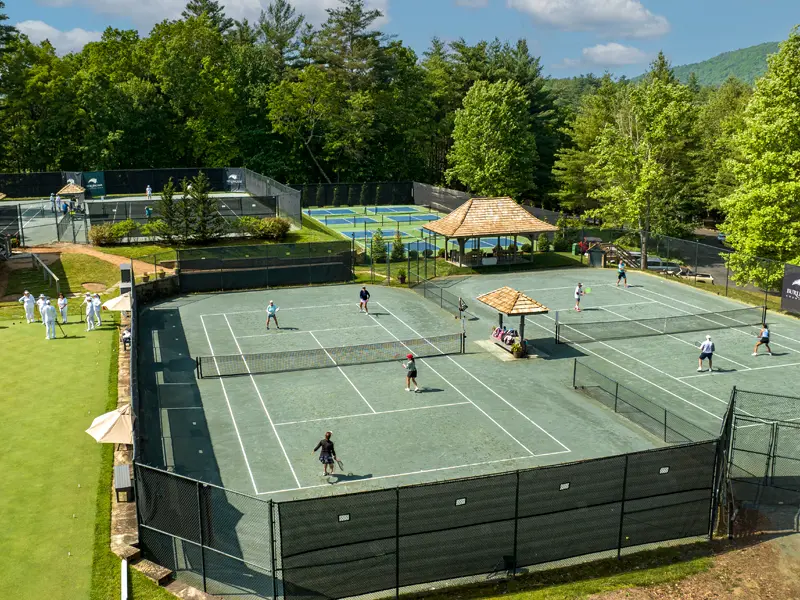
The Highlands golf experience extends beyond the 18 holes. Course amenities, dining options, and post-round activities contribute significantly to the overall experience.
Burlingame exemplifies this comprehensive approach with six distinct dining venues offering everything from quick bites to multi-course dinners featuring seasonal ingredients and regional inspirations. The Outdoor Dining Deck provides mountain views while you relive the round’s highlights over lunch or dinner.
Wellness facilities at clubs like Burlingame recognize that golf is part of a broader active lifestyle. Spa services, therapeutic massage, and fitness centers help golfers recover from their rounds while enjoying the mountain setting. The pool complex offers refreshing relaxation after warm-weather rounds.
Traditional clubhouses at courses like Highlands Country Club provide classic 19th-hole experiences—comfortable spaces to gather with playing partners, recount the round’s memorable moments, and soak in the atmosphere that comes with decades of golf tradition.
Golf-Focused Lodging Options
Where you stay influences your golf experience, particularly if you’re playing multiple courses over several days. Several options serve different preferences and budgets:
Staying in Highlands: Puts you closest to Highlands Country Club and central to the downtown area’s restaurants and shops. Multiple inns and rental properties provide options ranging from budget-conscious to luxury. You’re 20-30 minutes from Burlingame and other Sapphire Valley courses.
Staying in Cashiers: Centers you between Highlands and Sapphire Valley, with easy access to High Hampton and Wade Hampton (if you have access). The area offers rental homes and small inns with mountain character.
Staying in Sapphire Valley: Ideal if Burlingame is your primary golf focus or if you’re playing multiple rounds there. Rental properties near the club facilities put you minutes from the first tee and all club amenities. You’re still within 20 minutes of Highlands and Cashiers courses.
Resort Stays: High Hampton and other resort properties bundle lodging with golf, simplifying logistics and often providing package savings. The all-in-one approach works well for families or groups where not everyone golfs all day.
Making Tee Time Reservations: Best Practices
Booking procedures vary by course type, but several general principles apply across the Highlands area:
Plan Ahead: During peak season (July-August), popular courses book tee times 30-60 days in advance. If you’re planning a specific trip date, start making tee time reservations as soon as courses will accept them.
Call Directly: While some courses offer online booking, calling pro shops directly often provides better information about availability, current conditions, and any package options that might not be advertised online.
Be Flexible: If your schedule allows flexibility, you’ll find more options. Afternoon times generally book last, and weekdays see less demand than weekends during peak season.
Ask About Policies: Cancellation policies, weather procedures, and pace-of-play expectations vary by course. Understanding these upfront prevents surprises and helps you plan appropriately.
Confirm Before You Go: Mountain weather can be unpredictable. Calling the pro shop the morning of your tee time confirms the course is open and conditions are playable. Course closures due to weather or maintenance do happen, and you don’t want to drive 30 minutes only to find the course closed.
What to Bring for Mountain Golf
Packing properly for mountain golf differs from packing for lowland rounds:
Layered Clothing: Even in summer, bring a light jacket or vest. Morning temperatures can be 20 degrees cooler than afternoon highs, and clouds rolling in can drop temperatures quickly.
Rain Gear: Afternoon thunderstorms are common during summer months. Quality rain gear (jacket and pants) should be in your bag.
Extra Balls: Mountain golf can be penal. The terrain, forests, and water hazards mean you’ll lose more balls than on typical parkland courses. Bring extras so you’re not buying overpriced pro shop balls mid-round.
Comfortable Shoes: Whether walking or riding, you’ll encounter uneven terrain getting to and from shots. Golf shoes with good traction and ankle support work better than lightweight spikeless models on mountain courses.
Sunscreen: The higher elevation means increased UV exposure. Even on cloudy days, the sun is stronger than at sea level.
FAQ
How much does it cost to play golf in the Highlands NC area?
Daily green fees range from $60-$200+ depending on the course, season, and membership status. Resort courses like High Hampton typically charge $75-$125, semi-private clubs like Highlands Country Club run $75-$150, and private clubs require membership or member sponsorship. Peak summer rates run higher than spring and fall shoulder season rates.
Do I need to be a member to play Highlands Ranch golf courses?
No, several courses offer public or semi-private access. High Hampton operates as a resort course open to all players, Highlands Country Club and Sky Valley offer semi-private access with designated public play times, while Burlingame Country Club operates primarily as a member facility with guest play opportunities through member sponsorship or various membership levels.
How far in advance should I book Highlands golf tee times?
Book 30-60 days in advance during peak season (July-August) for popular courses, especially weekend times. Shoulder season (April-May, September-October) offers more flexibility, often allowing bookings just a few days ahead. Call pro shops directly for current availability and booking windows.
What makes Burlingame Country Club different from other Highlands courses?
Burlingame features Tom Jackson’s championship design in Sapphire Valley at 3,000-3,500 feet elevation, combining strategic mountain golf with comprehensive country club amenities including six dining venues, tennis and pickleball courts, and a full spa and wellness complex. The 600+ member community emphasizes both challenging golf and the complete mountain lifestyle experience.
What is the best time of year to play golf in the Highlands area?
May-June and September-October provide optimal conditions with comfortable temperatures, spectacular scenery (spring blooms or fall colors), and less crowding than peak summer months. July-August offers the coolest weather but brings more visitors requiring advance booking. Most courses operate April through October with some winter play when conditions allow.
Can beginners enjoy Highlands Ranch golf courses?
Yes, though beginners should choose appropriate courses. High Hampton offers the most forgiving layout with manageable terrain, while championship courses like Burlingame provide multiple tee options that bring yardage down to beginner-friendly distances. The elevation and terrain require reasonable fitness levels and willingness to accept challenging lies.