
If you’re searching for information about the University of Denver Golf Club at Highlands Ranch, you’re likely looking for details about DU’s collegiate golf facility in the Denver suburbs. However, it’s worth noting that “Highlands Ranch” in this context refers to the Colorado community, not the mountain golf region of Highlands, North Carolina.
This guide clarifies the distinction between these two very different golf destinations and provides information for those who may have been searching for mountain golf experiences in the Highlands area of Western North Carolina.
Understanding the Geographic Confusion
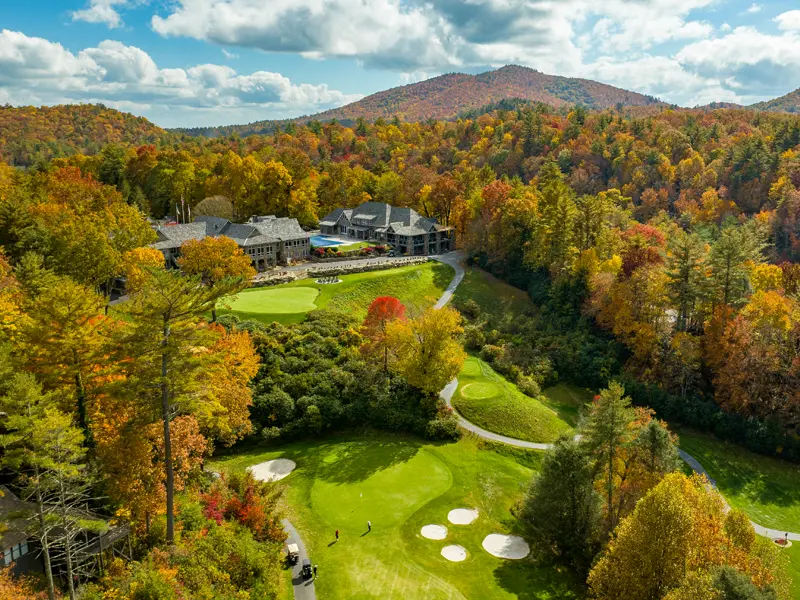
The name “Highlands Ranch” creates understandable confusion for golfers researching mountain golf destinations. Two completely separate communities share similar names:
Highlands Ranch, Colorado is a planned community in the Denver metro area, home to the University of Denver Golf Club. This facility sits at approximately 5,900 feet elevation in the Front Range foothills, serving as the practice and competition venue for DU’s men’s and women’s golf teams.
Highlands, North Carolina is a mountain resort town at over 4,000 feet elevation in the Blue Ridge Mountains of Western North Carolina. The surrounding region—including nearby Cashiers and Sapphire Valley—forms a premier golf destination known for challenging mountain courses and cool summer temperatures.
When people search for “University of Denver Golf Club at Highlands Ranch,” they’re typically looking for information about the Colorado facility. However, some searchers may be confused about whether there’s a University of Denver facility in the North Carolina mountains, or they may be looking for mountain golf and inadvertently using the wrong geographic terminology.
The University of Denver Golf Club in Colorado
Located in Highlands Ranch, Colorado (a suburb south of Denver), the University of Denver Golf Club serves primarily as a collegiate athletic facility. The course was designed by Pete and Perry Dye and opened in 2005, providing the university’s golf teams with a home course for practice and competition.
The facility features an 18-hole championship layout measuring over 7,400 yards from the championship tees. The design incorporates the rolling terrain of the Front Range foothills, with elevation changes, strategic bunkering, and water features that create a challenging test for collegiate competition.
Access to the University of Denver Golf Club is limited primarily to university athletic programs, though the facility may offer limited public play during certain times of year. Those interested in playing should contact the facility directly to inquire about availability and rates.
The course sits at high elevation (approximately 5,900 feet), which affects how the ball flies—similar to other high-altitude golf destinations. Players need to adjust for the thinner air, which typically adds distance to shots compared to sea-level conditions.
Mountain Golf in the Actual Highlands Region
For those who were searching for mountain golf experiences in a place called “Highlands,” the Western North Carolina destination offers a completely different but equally compelling golf experience. The Highlands area, encompassing the towns of Highlands, Cashiers, and Sapphire Valley, has been a summer retreat since the late 1800s.
Golf in this region combines challenging courses with spectacular mountain scenery. Unlike the Front Range terrain around Denver, these Blue Ridge Mountain courses work with dramatically steep topography—deep valleys, creek crossings, and elevation changes that create strategic interest on virtually every hole.
The courses here aren’t at quite the extreme elevation of Colorado golf (3,000-4,500 feet versus 5,900+ feet), but the terrain is far more dramatic. Where Colorado courses often feature rolling hills and open views, North Carolina mountain courses route through mature forests, across mountainsides, and along rivers that have carved deep gorges through ancient rock.
Burlingame Country Club: Championship Mountain Golf
In Sapphire Valley, just minutes from Highlands, Burlingame Country Club represents what mountain golf looks like when design excellence meets pristine natural terrain. Tom Jackson’s 18-hole championship course works with elevations ranging from 3,000 to 3,500 feet, creating a layout that’s fundamentally different from anything you’ll find in Colorado or at sea level.
Jackson’s design philosophy embraced the natural character of the land. The course follows the contours of mountainsides, incorporates the Horsepasture River, and uses old-growth forests as strategic elements rather than obstacles to be cleared. The result is golf that feels like it belongs in these mountains—not imposed upon them, but grown from them.
The course measures approximately 6,800 yards from the championship tees, though the mountain terrain makes it play differently than a flat course of similar yardage. The elevation changes affect club selection constantly—a 150-yard approach shot might need anything from a 7-iron to a wedge depending on whether you’re hitting uphill or downhill and how much the mountain slopes.
What distinguishes Burlingame from a university golf facility is the comprehensive country club experience surrounding the course. Six dining venues offer everything from quick lunches to multi-course dinners featuring seasonal ingredients. The Rejuvenate Spa and Wellness complex provides state-of-the-art fitness facilities, therapeutic massage, and spa services. Tennis, pickleball, and croquet give members additional recreation options beyond golf.
The 600+ member community at Burlingame balances exclusivity with genuine mountain warmth. Members don’t just share a golf course—they share traditions, seasonal celebrations, and appreciation for the natural beauty that surrounds them in Sapphire Valley.
Comparing Mountain Golf: Colorado vs. North Carolina

Both Colorado’s Front Range and North Carolina’s Blue Ridge Mountains offer mountain golf, but the experiences differ significantly:
Terrain: Colorado courses typically feature rolling hills with more open terrain and long views. North Carolina mountain courses work with steeper topography, mature forests, and more dramatic elevation changes on individual holes.
Climate: Colorado golf deals with afternoon thunderstorms, intense sun at high altitude, and a shorter season due to winter weather. North Carolina mountain golf enjoys a longer season (April-October typically) with more moderate temperatures and the famous cool summer conditions that make the region popular.
Vegetation: The arid climate of Colorado’s Front Range creates a different aesthetic than the lush forests of the Southern Appalachians. North Carolina courses play through rhododendron thickets, oak and maple forests, and along mountain streams that run year-round.
Golf Character: Both create interesting golf, but in different ways. Colorado courses often emphasize strategy around water features and wind. North Carolina mountain courses demand constant adjustment for elevation changes and reward accuracy over pure distance.
What Makes North Carolina Mountain Golf Special
The Highlands area has cultivated a golf tradition stretching back to 1929, when Highlands Country Club opened as the region’s first course. That nearly century-old tradition has evolved into a destination known for quality golf in spectacular settings.
The elevation here—generally 3,000 to 4,500 feet—creates comfortable playing conditions even during peak summer heat. While courses across the Carolinas and Georgia swelter in 90-degree temperatures, Highlands area courses enjoy highs in the 70s and low 80s. You can play 36 holes comfortably, something difficult to manage at lower elevations during summer months.
The courses themselves reflect decades of learning how to build great golf in challenging mountain terrain. Early courses worked minimally with the land because they had to—equipment was limited. Modern courses work minimally with the land because designers have learned that preserving natural character creates better golf than heavy earthmoving.
Burlingame’s design exemplifies this philosophy. Jackson didn’t force a traditional golf course onto mountain land. He found the natural corridors, the places where fairways wanted to run, the sites where greens could sit comfortably. The result looks effortless but required tremendous skill to route and construct.
Access and Membership Considerations
Unlike a university golf facility primarily serving collegiate athletes, clubs like Burlingame operate as member communities. Several membership categories provide access appropriate to how frequently you’ll use the facilities and which amenities matter most to you.
For those considering a permanent or seasonal connection to mountain golf, membership provides not just course access but integration into a community. The social aspects of club life—dining, events, and connections with other members who share appreciation for mountain living—become as important as the golf itself.
Contact Burlingame to discuss membership options, tour the facilities, and experience firsthand what distinguishes a true mountain country club from other golf options. The professional staff can answer questions about membership structure, playing privileges, and how golf fits into the broader country club lifestyle.
Planning Your Mountain Golf Experience
Whether you initially searched for information about the University of Denver facility or you’ve been researching mountain golf options, visiting the Highlands region offers the chance to experience golf in one of the Southeast’s most beautiful settings.
The area’s accessibility makes it attractive for both day trips and extended stays. Asheville’s airport sits about 90 minutes away, while Charlotte and Greenville are 2-3 hours depending on traffic. The drive itself becomes part of the experience as you climb from the piedmont into the mountains, watching the landscape change with elevation.
The golf season runs roughly April through October, with some courses open longer depending on weather. Peak season (July-August) brings the most visitors but also the most comfortable weather. Shoulder season (May-June and September-October) offers equally good conditions with fewer crowds and often dramatic seasonal color.
Playing multiple courses over several days gives you the full scope of mountain golf variety. You might experience the championship challenge at Burlingame, the historic character of Highlands Country Club, and the resort accessibility of High Hampton—three different expressions of what mountain golf means.
Beyond Golf: The Mountain Lifestyle

What makes mountain country clubs particularly appealing is how golf integrates with broader mountain living. After your round at Burlingame, you’re minutes from wellness facilities where you can ease muscles that might not be accustomed to mountain terrain. The pool complex offers refreshing relaxation with mountain views.
The dining options extend far beyond typical golf club fare. Multiple venues provide different experiences—quick bites after your round, casual dinners on the outdoor deck, or more formal multi-course meals featuring seasonal ingredients and regional inspirations.
The surrounding area offers hiking, fly fishing, and exploration of mountain waterfalls and natural areas. You can play 18 holes in the morning and spend the afternoon casting for trout in mountain streams or hiking to viewpoints that reveal layer after layer of mountain ridges extending to the horizon.
This integration of golf with mountain lifestyle is what members value about clubs like Burlingame. Golf is the centerpiece, but it’s surrounded by amenities and experiences that create a complete mountain retreat.
FAQ
Is there really a University of Denver golf course in Highlands Ranch North Carolina?
No, the University of Denver Golf Club is located in Highlands Ranch, Colorado (a Denver suburb), not in Highlands, North Carolina. The name similarity creates confusion, but these are completely separate locations approximately 1,400 miles apart with no connection between them.
What’s the difference between Highlands Ranch Colorado golf and Highlands NC mountain golf?
Highlands Ranch, Colorado features the University of Denver Golf Club at 5,900 feet elevation with rolling Front Range terrain, while Highlands, North Carolina offers multiple courses at 3,000-4,500 feet with dramatic Blue Ridge Mountain topography, mature forests, and courses like Burlingame Country Club that work with steep elevation changes and river valleys.
Can the public play at Burlingame Country Club like at a university course?
Burlingame operates as a member country club rather than a public or university facility, with access through various membership levels or member-sponsored guest play. Contact the club directly at (828) 966-9200 to discuss membership options and playing opportunities.
Why would someone search for DU golf at Highlands Ranch when looking for NC mountain golf?
The geographic confusion stems from similar names—Highlands Ranch, Colorado versus Highlands, North Carolina. Searchers may inadvertently use the wrong location name, or they may be unclear about which “Highlands” region they’re researching when looking for mountain golf experiences.
What elevation is Burlingame Country Club compared to Denver courses?
Burlingame sits at 3,000-3,500 feet elevation in Western North Carolina’s Blue Ridge Mountains, while Denver-area courses like the University of Denver Golf Club sit around 5,900 feet. Both are high-altitude golf, but the North Carolina terrain is more dramatic with steeper slopes and deeper valleys.