
There’s something about croquet that keeps pulling people back to it. The game looks unhurried from the outside, almost casual, with players moving across a manicured lawn with mallets in hand. But anyone who has played seriously knows the game running underneath that calm surface: the geometry, the positioning, the long-game thinking. Croquet is chess on grass, and it has been for a very long time.
The history of croquet is longer and more interesting than most people expect. It reaches back to 13th-century France, travels through Ireland and Victorian England, falls nearly out of fashion, and then comes back stronger than before. Today, competitive croquet is played across six continents, and communities like Burlingame Country Club in Sapphire Valley, Western North Carolina, are part of a genuine resurgence in the sport’s popularity.
This is where croquet came from, where it went, and why it’s still worth playing.
The Origins of Croquet: Medieval France 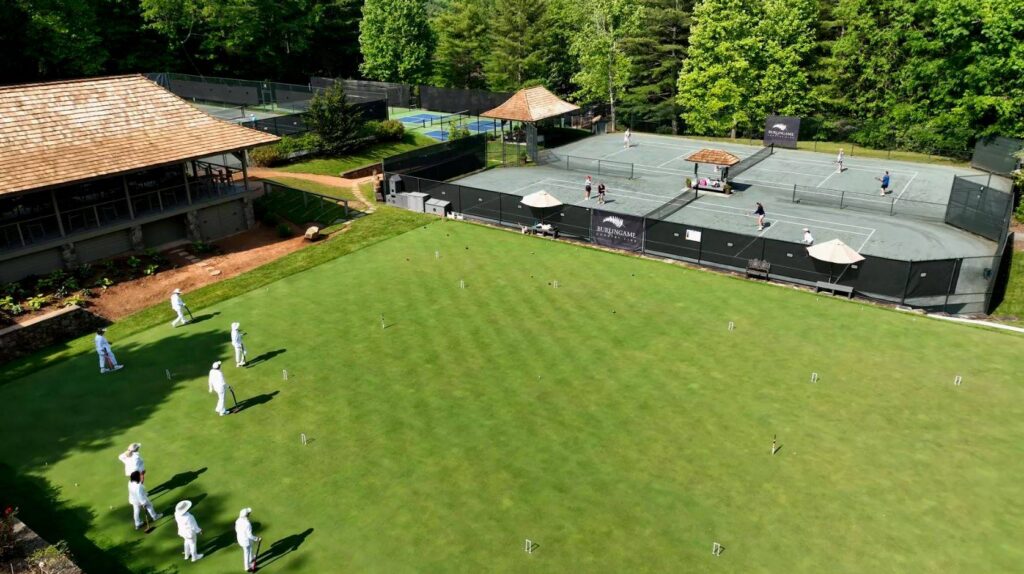
The earliest recorded chapter in the history of croquet dates back to France in the 13th century. The game played then bore little resemblance to the structured, rule-governed sport we know today, but the essential idea was already there: players used wooden mallets to drive balls through hoops set into the ground.
The French called this early form “paille-maille,” a name that roughly translates to “ball-mallet.” It was a popular outdoor pastime among rural communities, played across fields and village greens with whatever hoops could be fashioned from willow branches or bent wood. The game spread broadly through French society and eventually into neighboring countries, carried along trade routes and through the movements of soldiers and travelers.
The French origins of the history of croquet also produced a direct ancestor in “jeu de mail,” a game popular in southern France and later in parts of Italy. Equipment, rules, and court configurations varied from region to region, but the core mechanic of propelling a ball through a target with a mallet was consistent across all these early forms.
The Irish Chapter: Croquet Finds Its Modern Form
The history of croquet takes a decisive turn in Ireland in the mid-19th century. By most accounts, a game called “crooky” was being played on Irish lawns by the 1830s and 1840s, and this version introduced several elements that would become permanent features of the sport: a defined court with specific wicket placement, a consistent ball size, and rules governing turn order and scoring.
The Irish contribution to croquet is significant precisely because it moved the game from casual outdoor pastime toward structured sport. Croquet in Ireland was played by both men and women on the country estates and manor lawns of the Anglo-Irish gentry. The social setting, a well-maintained lawn, a gathering of players from the same community, and a game that rewarded skill and patience over physical power proved to be the right formula for the game’s rapid spread.
From Ireland, croquet crossed to England, where it landed in exactly the right social environment to flourish.
Croquet in England: Victorian Society’s Favorite Lawn Game
The chapter of the croquet set in Victorian England is the one that established the game’s character and reputation most durably. By the 1850s, croquet was spreading rapidly through English country houses and public gardens, and within a decade it had become the most fashionable outdoor game in Britain.
Several factors made Victorian England such a fertile ground for the history of croquet’s growth. The game required a proper lawn, which had become a symbol of wealth and good taste. It could be played by both sexes at the same time, on equal terms, which was genuinely unusual for sporting activities in that era. And it provided a socially acceptable setting for young men and women to interact outside the house and away from chaperones, a fact not lost on the Victorian social commentators who wrote about it with varying degrees of alarm and enthusiasm.
John Jaques and the Commercialization of Croquet
No name is more important to the commercial history of croquet than John Jaques. His sporting goods firm, Jaques London, began producing and selling standardized croquet sets in 1851, and the timing was perfect. The sets were well-made, consistent, and available to a growing middle class with disposable income and lawns to play on.
Jaques London’s involvement in the history of croquet went beyond manufacturing. The company helped establish the rules, published playing guides, and created the equipment specifications that clubs and players could follow. By standardizing what croquet looked like and how it was played, Jaques gave the game the infrastructure it needed to grow beyond informal social play into organized competition.
The company is still operating today, still producing croquet equipment, still directly connected to the formal history that it helped create more than 170 years ago.
The First Croquet Clubs and Tournaments
The late 1860s saw the history of croquet enter its competitive phase in England. The first recognized all-England croquet championship was held at Evesham in 1867, drawing players from clubs that had formed across the country. The All England Croquet Club was founded at Wimbledon in 1868, establishing the sport’s first governing body and a permanent home for competitive play.
That address, Wimbledon, is worth noting. The All England Croquet Club would later add lawn tennis to its activities, eventually becoming the All England Lawn Tennis and Croquet Club, which still hosts the Wimbledon Championships today. The croquet name was retained. The history of croquet and the history of tennis are intertwined at the most famous grass court venue in the world.
The Rise of Lawn Tennis and Croquet’s First Decline
By the 1870s, lawn tennis had arrived as a competing attraction for the same lawns, the same social settings, and the same demographic that had made croquet so popular. Lawn tennis was faster, more physically demanding, and quickly became fashionable in ways that pushed croquet toward the margins.
Croquet clubs converted their lawns. Croquet equipment collected dust. The game that had dominated English outdoor social life for two decades found itself eclipsed within a single generation.
But it didn’t disappear. A core of serious players maintained the competitive game through the lean years, and their commitment to the six-wicket form, with its deeper strategic demands and its requirement for real positional thinking, kept a viable competitive version of croquet alive.
This distinction between the backyard recreational form and the competitive six-wicket game became more pronounced during this period. The casual players left for tennis. The ones who stayed were the ones who had found in croquet something that tennis couldn’t offer: a game of pure strategy, where physical fitness was irrelevant and patience and positional mastery determined who won.
The 20th Century: Quiet Survival and the Seeds of Revival
For most of the first half of the 20th century, the history of croquet in Britain was a story of quiet endurance. The Croquet Association, formed in 1897 from the earlier governing bodies, maintained the game’s rules, organized competitions, and kept the competitive structure intact through the World Wars and the social upheavals that followed them.
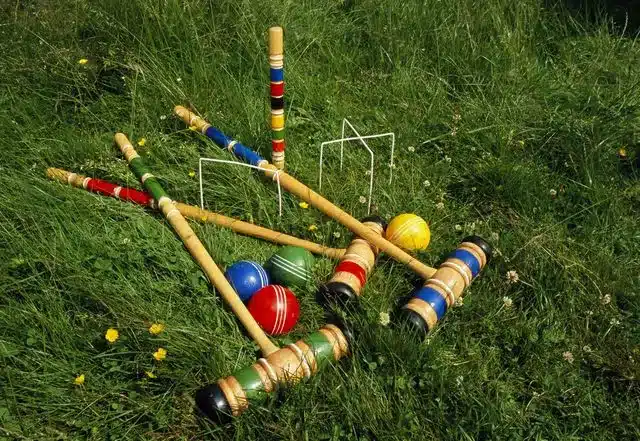
In the United States, croquet followed a somewhat different path. American nine-wicket “backyard” croquet had been popular since the late 19th century, but it remained largely an informal recreational activity. The nine-wicket version is a more casual game, played on whatever lawn is available with whatever configuration fits the space. It built a broad recreational base for the sport in America but didn’t develop the competitive infrastructure that the English game maintained.
The United States Croquet Association and the American Revival
The founding of the United States Croquet Association in 1977 is the pivotal moment in the modern American history of croquet. The USCA brought the six-wicket competitive game to the United States in a structured, organized form, established national tournament circuits, and began building the club and membership base that the sport needed to grow.
The USCA’s formation represented a deliberate choice to bring American croquet into alignment with the international competitive game rather than simply formalizing the nine-wicket backyard version. This decision had lasting consequences for the history of croquet in America. It connected American players to the global competitive community, created a standard that clubs and facilities could build to, and gave the sport a legitimate organizational home.
The USCA today sets equipment standards, certifies playing surfaces, runs national championships, and supports the network of clubs and courts that has grown significantly since the association’s founding. Any club maintaining a USCA regulation lawn, as Burlingame Country Club does in Sapphire Valley, NC, is building on the infrastructure the USCA created.
The World Croquet Federation and Global Competition
Parallel to the American revival, the international history was taking shape through the formation of the World Croquet Federation in 1986. The WCF brought together the national croquet associations of countries across Europe, the Americas, Australia, New Zealand, and beyond, establishing a global governing body for the sport.
The WCF created the framework for international competition, standardized rules across its member associations, and launched the World Croquet Championship. The first World Championship was held in 1989, and the event has run continuously since then, growing in both participation and competitive depth.
Today, croquet includes competitive play in more than 20 countries, with the strongest national programs in England, New Zealand, Australia, and the United States. New Zealand and Australia have produced particularly dominant competitive players over the past three decades, consistently challenging and often defeating English players who once considered themselves the sport’s unquestioned leaders.
The global expansion of the history of croquet has also driven equipment development. Modern competition croquet balls, mallets, and hoops are precision-engineered to tolerances that would be unrecognizable to the Victorian players who first formalized the game’s rules. As a result, many manufacturers are now offering croquet mallets for beginner players, focusing on user-friendly designs and lightweight materials. This accessibility encourages new enthusiasts to pick up the sport, fostering a new generation of croquet players. With the right equipment, even those unfamiliar with the game can enjoy a fun and engaging experience on the lawn. Understanding croquet court construction essentials is crucial for both amateur and professional players looking to establish their own playing spaces. Factors such as proper turf types, court dimensions, and drainage systems can significantly affect gameplay quality. As enthusiasts continue to invest in their passion, the demand for high-quality construction materials and expert advice increases, fostering a vibrant community around the sport.
The Three Forms of Croquet: Understanding What You’re Playing
One reason croquet is sometimes confusing to newcomers is that the word “croquet” covers several distinct games with different rules, equipment, and strategic depth. Understanding croquet terminology for beginners is essential to grasping the nuances of the game. From terms like “mallet” and “ball” to phrases such as “roquet” and “croquet stroke,” familiarizing oneself with this vocabulary can enhance your gameplay experience. As you learn these concepts, you’ll find it easier to communicate with fellow players and strategize effectively on the court.
Association Croquet (six-wicket) is the primary competitive form with the deepest strategic complexity. Players can score for themselves and for their partner ball, and the game’s tactical possibilities are extensive. This is the form governed by the USCA and WCF at the competitive level. For those looking to host competitive matches, adhering to tournamentready croquet court specifications is essential. Ensuring that the dimensions and surface quality meet these standards can significantly enhance gameplay. Proper maintenance and setup of the courts will not only attract serious players but also elevate the overall experience for spectators.
Golf Croquet is a simpler, faster form that has grown significantly in popularity as an entry point to the game. Each wicket is contested by all players in a single round, and the first ball through scores the point. There’s no continuation play, which makes the game more immediately accessible without sacrificing the precision and shot-making that make croquet satisfying to play. Many clubs, including Burlingame, teach Golf Croquet first precisely because new players can get on the lawn and play real games immediately. For those eager to learn the sport, a golf croquet game setup for beginners involves a straightforward arrangement of hoops and balls that facilitate quick games. Using just two balls and an easy-to-understand scoring system, beginners can grasp the fundamentals while enjoying a friendly match. With the right setup, players can develop their skills and confidence, paving the way to more advanced croquet play.
Nine-Wicket American Backyard Croquet is the most widely played recreational form in the United States. It uses a different wicket layout, different rules, and typically less precise equipment than the competitive forms. It’s where most Americans first encounter the history of croquet, even if they don’t know it as such.
The rise of Golf Croquet within the competitive community has been one of the more interesting recent chapters in croquet. What was once considered a simplified training tool is now recognized as a genuine competitive discipline with its own world championship events.
Why Croquet’s Social Character Is Part of Its Durability
Any honest account of croquet has to reckon with the fact that the game has survived several periods of declining popularity, been eclipsed by faster and more physically spectacular sports, and still managed to find its way back to a growing audience in the 21st century.
Part of that durability is structural. Croquet’s combination of physical accessibility and genuine strategic depth means it can be played meaningfully by people across a very wide age and fitness range. Men and women compete together on equal terms. Beginners can enjoy a game of Golf Croquet within an hour of picking up a mallet. At the same time, competitive Association Croquet provides enough strategic complexity to engage serious players for a lifetime.
But the social character of the history of croquet is equally important. The game’s pace encourages conversation. The turn structure means players are engaged even when they’re not hitting. And the lawn setting, the unhurried outdoor environment with its sight lines and good company, creates the kind of social experience that keeps people coming back not just for the game but for everything that surrounds it.
This is why lawn sports programs at private clubs consistently find that croquet builds stronger member engagement than many other activities. It’s not just a game. It’s a reason to be outside together.
Burlingame Country Club and the Living History of Croquet
The history today isn’t being written only at championship venues and national associations. It’s being written on regulation lawns at clubs across the country where members are discovering the game for the first time, learning its nuances, competing in interclub play, and building the community around the sport that has always been central to its appeal.
Burlingame Country Club in Sapphire Valley, Western North Carolina, sits at about 3,000 feet of elevation in the Blue Ridge Mountains, and its USCA regulation croquet lawn is one of the finest-maintained playing surfaces in the region. The program is led by Tom Tyler, Burlingame’s Lawn Sports Professional, who is certified in tennis, pickleball, and croquet, and brings genuine expertise to every aspect of the club’s outdoor sports programming.
For members at Burlingame, croquet is part of a broader outdoor lifestyle that includes tennis, pickleball, championship golf, and miles of hiking trails through the surrounding mountains. The game sits naturally within that context, offering something distinct from the other activities: strategic depth, social pleasure, and a direct connection to a form of outdoor play that has engaged people for seven centuries.
The Ongoing Story: Croquet in the 21st Century
The contemporary history of croquet is one of steady, genuine growth. Participation numbers in the United States have increased consistently since the USCA’s founding, driven by a combination of aging demographics looking for athletic activities that don’t demand physical intensity, younger players attracted by the game’s strategic depth, and a growing recognition that well-maintained croquet facilities are a meaningful differentiator for club and community properties.
The sport’s international competitive scene continues to develop. National programs in Egypt, South Africa, and several Asian countries have grown significantly, broadening the global competitive croquet beyond its traditional English-speaking strongholds.
Equipment technology has advanced alongside the game’s growth. Modern hoops, balls, and mallets are precision instruments, and serious competitive players invest in equipment with the same intentionality that golfers bring to club selection.
Perhaps most tellingly, the history of croquet today includes growing youth participation. Junior programs at clubs and through national association initiatives are introducing the game to a new generation of players, some of whom will likely be competing at the highest levels within the next decade.
The game that French peasants played with bent wood and wooden balls in the 13th century is still evolving. That’s not a small thing.
Frequently Asked Questions
Where did croquet originally come from?
The history of croquet begins in 13th-century France, where a game called paille-maille involved hitting wooden balls through ground hoops with mallets. The game spread through Europe over several centuries, evolving significantly in Ireland in the 1830s and 1840s before crossing to England, where it became the formal sport recognizable today.
When did croquet become an organized competitive sport?
The competitive history began taking shape in England in the 1860s. The first all-England croquet championship was held in 1867, and the All England Croquet Club was founded at Wimbledon in 1868. The first modern governing body, the Croquet Association, was formed in 1897.
What is the USCA, and when was it founded?
The United States Croquet Association was founded in 1977 and is the primary governing body for competitive croquet in the United States. The USCA sets equipment standards, certifies playing surfaces, runs national championships, and manages the framework of club and tournament competition that has driven the American history revival since the late 20th century.
How many countries play competitive croquet today?
Competitive croquet is played in more than 20 countries, governed internationally by the World Croquet Federation, which was founded in 1986. The strongest national programs are in England, New Zealand, Australia, and the United States, though the history of croquet is actively expanding in Africa, Asia, and South America.
What are the main forms of croquet played today?
Three primary forms make up the contemporary history of croquet: Association Croquet (six-wicket), which is the most strategically complex competitive form; Golf Croquet, a faster and more accessible game that has grown significantly in competitive standing; and nine-wicket American backyard croquet, the most broadly played recreational form in the United States.
Seven Centuries, One Lawn
The history of croquet is the story of a game that keeps finding new audiences because it offers something most sports can’t: genuine strategic depth in a setting that’s naturally social, physically accessible, and beautiful to play in.
From 13th-century French fields to Victorian English country houses, from the founding of the USCA to the World Croquet Federation’s global championships, the game has survived fashion, war, the rise of competing sports, and the constant churn of what’s popular in a given decade. It has survived because it’s genuinely good.
At Burlingame Country Club in Sapphire Valley, NC, the history of croquet continues on a regulation lawn set against the Blue Ridge Mountains, where members at every level of experience come to learn the game, sharpen their skills, and enjoy everything the sport has always been best at. Whether you’re picking up a mallet for the first time or returning to a game you’ve loved for years, the welcome is the same.
To learn more about the croquet program and membership at Burlingame, reach out to Jennifer Webb, Membership Director, at 828.966.9200.