Reading Mountain Greens: How Elevation Changes Everything About Your Putting Game

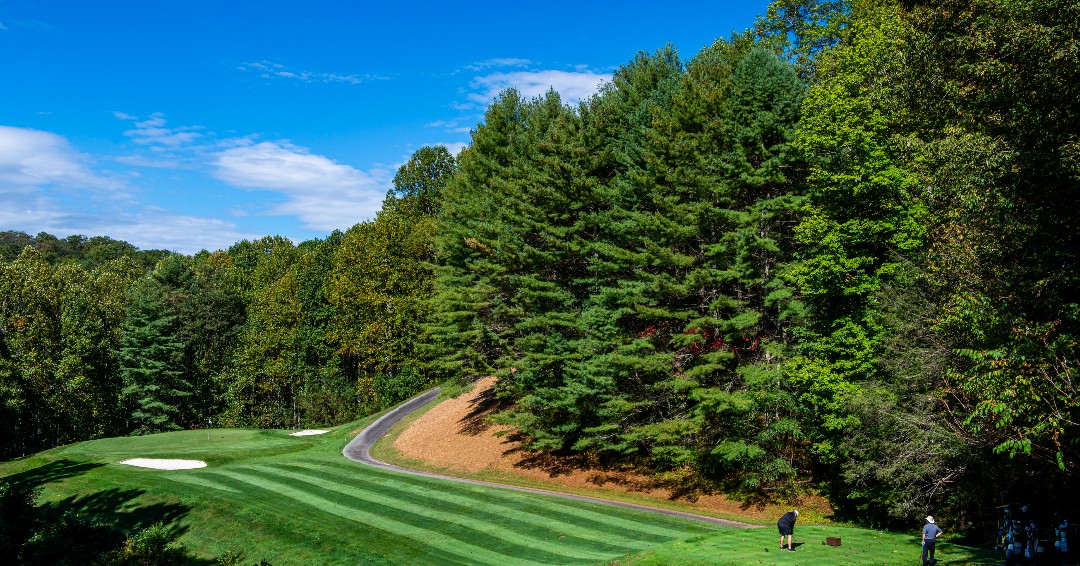
Mountain golf at 3,000 feet brings a whole new dimension to the game—and nowhere is that more apparent than on the greens. At Burlingame Country Club, where Tom Jackson’s masterful design works in harmony with Western North Carolina’s natural terrain, reading greens becomes an art form that requires understanding both the visible and invisible forces at play.
If you’ve played golf at sea level and then stepped onto Burlingame’s championship course, you’ve likely noticed something immediately: the ball doesn’t behave quite the same way. The greens here tell a different story, one written by elevation, mountain weather patterns, and terrain that refuses to be tamed.
The Altitude Factor: Why Your Ball Rolls Differently
Playing at elevation changes the fundamental physics of your golf ball. At 3,000+ feet, the air is thinner, which affects not just your full shots but your putting as well. While the difference isn’t as dramatic as with a driver, it’s enough to matter when you’re trying to sink that crucial birdie putt.
The reduced air resistance means your ball maintains momentum longer. A putt that would die two feet past the hole at sea level might roll three or four feet beyond it here. This isn’t about hitting it softer—it’s about recalibrating your sense of speed and distance.
Your eyes will lie to you for the first few rounds. The slopes that look gentle often have more bite than you expect, and the break you think you see might be amplified by conditions you can’t see. Mountain greens demand respect and attention.
Reading Slope and Contour in Mountainous Terrain
Burlingame’s greens follow the natural contours of the land, which means you’re rarely looking at a simple slope. The terrain here creates complex, multi-directional breaks that can turn a seemingly straightforward putt into a puzzle.
Stand behind your ball and look at the big picture first. Mountain greens tend to drain toward valleys and away from ridges—that’s basic geography. But the subtleties matter just as much. A green that appears to slope from left to right might actually have a false front that funnels balls back toward you, or a hidden swale that grabs your ball mid-roll.
Walk around the hole and look from multiple angles. What seems like a straight putt from behind the ball might reveal a significant break when viewed from the side. The mountain light, especially in early morning and late afternoon, can cast shadows that either highlight or hide contours. Use those shadows to your advantage—they’re showing you the terrain your ball will travel.
Pay attention to the surrounding landscape. If there’s a mountain ridge to your right, chances are the green slopes away from it. Water features, valleys, and elevation changes beyond the green all provide clues about which way your ball wants to roll.
Grass Types and Growing Patterns at Mountain Courses
The bent grass on Burlingame’s greens behaves differently than bermuda or poa annua you might play on at lower elevations. Bent grass thrives in the cooler mountain climate, creating a smoother, more consistent putting surface—but it also creates its own challenges.
Grain matters here, though not as dramatically as on bermuda. Look for the sheen on the grass. If it looks shiny, you’re putting downgrain and the ball will roll faster. If it looks dull or darker, you’re putting into the grain and need more speed. In the mountains, grass typically grows toward the valleys and away from higher elevations, following water drainage patterns.
Morning and evening dew affect mountain greens differently too. The cooler temperatures and higher humidity mean dew lingers longer, slowing early-round putts significantly. If you’re teeing off at first light, add speed to your putts. By mid-morning, as the dew burns off and the greens firm up, you’ll need to adjust again.
Seasonal changes are more pronounced at this elevation. Spring greens are softer and slower, with new growth creating more friction. Summer brings faster, firmer conditions. Fall offers some of the best putting surfaces of the year—firm enough for true roll but not so fast you can’t be aggressive.
Wind and Weather: The Invisible Variables
On a calm day, you can focus purely on slope and speed. But mountain weather rarely cooperates that beautifully. Wind is a constant companion at Burlingame, and it affects your putting more than most golfers realize.
A strong wind can actually move your ball on longer putts, especially on elevated greens or exposed holes. You’ll feel silly the first time a gust nudges your ball off line, but it happens. On particularly windy days, take a slightly wider stance and grip down on your putter for more stability.
Temperature swings matter too. A green that putts true at 70 degrees will feel noticeably different at 50 degrees. Cooler temperatures slow the greens down—not dramatically, but enough to leave putts short if you’re not paying attention. Conversely, on those rare hot summer days, greens firm up and speed up considerably.
Rain changes everything. Mountain storms can blow through quickly, leaving greens temporarily soft and slow. Give those conditions at least an hour to stabilize before you trust your normal read. The ground here drains well, but fresh rain will absolutely affect your putting stroke and speed.
Speed Control: The Most Critical Skill
You can misread a break by a few inches and still make the putt if your speed is perfect. But get the speed wrong, and even a perfect line won’t save you. At Burlingame, speed control separates the good putters from the great ones.
The ideal speed is one that reaches the hole with just enough momentum to drop in—the ball would roll 12-18 inches past if it missed. This “die speed” gives your ball the maximum chance to catch the edge of the cup while minimizing how much break affects the putt. Hit it too soft and the ball takes every bit of break; hit it too firm and it powers through subtle slopes.
Practice your distance control relentlessly. Spend time on the practice green hitting putts to different distances without even aiming at a hole. Can you consistently land your ball within two feet of a target from 20, 30, or 40 feet? That skill translates directly to scoring.
Use the “Goldilocks” principle: not too hard, not too soft, but just right. On mountain greens with their complex contours, too-hard almost always leads to trouble. Give yourself a chance to make it, but don’t be so aggressive that a miss leaves you with a knee-knocker coming back.
Breaking Down Common Mountain Green Scenarios
The Downhill Slider: These are the scary ones. From above the hole with the slope running away from you, your goal is simple—don’t three-putt. Take extra time to read the line, play significantly more break than you think you need, and hit it soft enough that a miss doesn’t race past. Pride says go for it; wisdom says lag it close.
The Uphill Climb: These putts are your friends. You can be more aggressive because the slope will help slow the ball down. Play slightly less break than you see, and don’t be afraid to give it a chance. The worst-case scenario—a short miss—is much easier to handle than a downhill comeback.
The Side-Hill Breaker: This is where green-reading skill really shows. Stand perpendicular to the slope and look for the apex—the highest point your ball will reach before it starts breaking hard toward the hole. Aim for that spot with enough speed to get there, then trust gravity to do its work.
The Double-Breaker: These multi-directional putts are Burlingame’s signature. Your ball might move left for the first half, then right for the second. Break these down into segments. Where’s the first break’s apex? Where does the second break take over? Pick intermediate targets and commit to the line.
The Mental Game of Mountain Putting
Trust is everything. Once you’ve read the putt, picked your line, and judged the speed, you have to commit completely. Doubt causes deceleration, and deceleration on mountain greens is death. The ball won’t hold its line if you ease off at impact.
Accept that you won’t drain every putt. Mountain greens are difficult by design, and even tour professionals would struggle here. Focus on process, not outcome. Did you go through your routine? Did you commit to your read? Did you execute your stroke? That’s all you can control.
Build a consistent pre-putt routine. Walk the putt from multiple angles, pick your line, take a practice stroke while visualizing the ball’s path, then step up and go. Routine breeds confidence, and confidence breeds better putting.
Practice Drills for Mountain Green Mastery
The Circle Drill: Place balls at 3, 6, 9, and 12 feet around a hole, creating a complete circle. Putt each ball, working around the circle. This helps you experience every type of break and slope from the same distance, building your intuition for how putts react.
The Distance Ladder: Hit putts to targets at 10, 20, 30, and 40 feet without worrying about holing them. Focus entirely on speed control. Can you consistently get within the 3-foot circle? That’s the skill that prevents three-putts.
The One-Ball Challenge: Play nine holes on the practice green using just one ball. You have to make each putt before moving to the next hole. This creates pressure and forces you to focus on both line and speed—miss, and you’re stuck.
Slope Reading: Spend 15 minutes on the practice green just reading putts without hitting them. Call your read out loud, then walk the line to see how accurate you were. Over time, you’ll develop an eye for how breaks really work.
Adjusting Your Equipment for Mountain Conditions
Consider your putter weight. Heavier putters can help in windy conditions, providing more stability through impact. If you’re fighting gusts regularly at Burlingame, adding weight to your putter head or using a heavier grip might help.
Ball choice matters too. A softer ball will grab the green better and hold lines in wind, while a firmer ball might roll a bit farther on fast greens. Experiment to find what works best for your stroke and the conditions you typically play in.
Grip pressure should be light enough to feel the putter head but firm enough to maintain control in wind. Think of holding a small bird—you don’t want to hurt it, but you can’t let it fly away either.
Reading Greens During Different Seasons
Spring brings softer, slower greens as the grass wakes up from winter dormancy. You can be more aggressive, but be ready for inconsistent speeds as some areas get more sun and dry out faster than shaded spots.
Summer offers the fastest, firmest conditions. This is when green-reading skills really matter because the ball will take every bit of break you give it. Pay close attention to early-round putts to gauge speed, then adjust accordingly.
Fall provides Burlingame’s finest putting surfaces. The grass is mature, the greens are firm but not rock-hard, and the ball rolls true. This is when you should score your best rounds—the conditions are as fair as they’ll ever be.
Winter requires patience. Greens are slower, sometimes bumpy, and generally less predictable. Focus on solid contact and accept that you might not hole as many putts. Getting close consistently is a victory.
When to Putt Aggressively vs. Defensively
Uphill putts with no significant break: Attack these. The slope protects you, and the worst-case scenario is manageable.
Downhill putts or severe side-hill sliders: Play defensive. Focus on leaving yourself an uphill putt for your second attempt. Two-putting these successfully is a win.
First putt on a new green: Gather information. Your first putt tells you about green speed and break. Don’t waste that learning opportunity by being reckless.
When you’re on a hot streak: Trust it. If you’ve made three putts in a row, your speed is dialed in. This is when you can be slightly more aggressive because your touch is working.

Just Listen…
Reading mountain greens at Burlingame isn’t about having a perfect eye for break or supernatural speed control. It’s about gathering information, making an informed decision, and committing to your read. The elevation, terrain, weather, and grass all tell you stories—you just need to listen.
The best putters here aren’t necessarily the ones with the prettiest stroke. They’re the ones who pay attention, adapt to conditions, and trust their preparation. They understand that mountain putting is a conversation between player and landscape, and they’ve learned to speak the language fluently.
Your putting will improve dramatically once you stop fighting the mountain and start working with it. Respect the slopes, read the terrain, judge the speed, and commit to your line. Do that consistently, and you’ll find yourself sinking more putts and enjoying the challenge rather than fearing it.
Ready to test your putting skills on some of the most challenging and beautiful greens in Western North Carolina? Burlingame Country Club’s championship course offers the perfect setting to refine your game and embrace the art of mountain putting. Call us at (828) 966-9200 to schedule your visit and discover why our members call this “The Best of Times.”