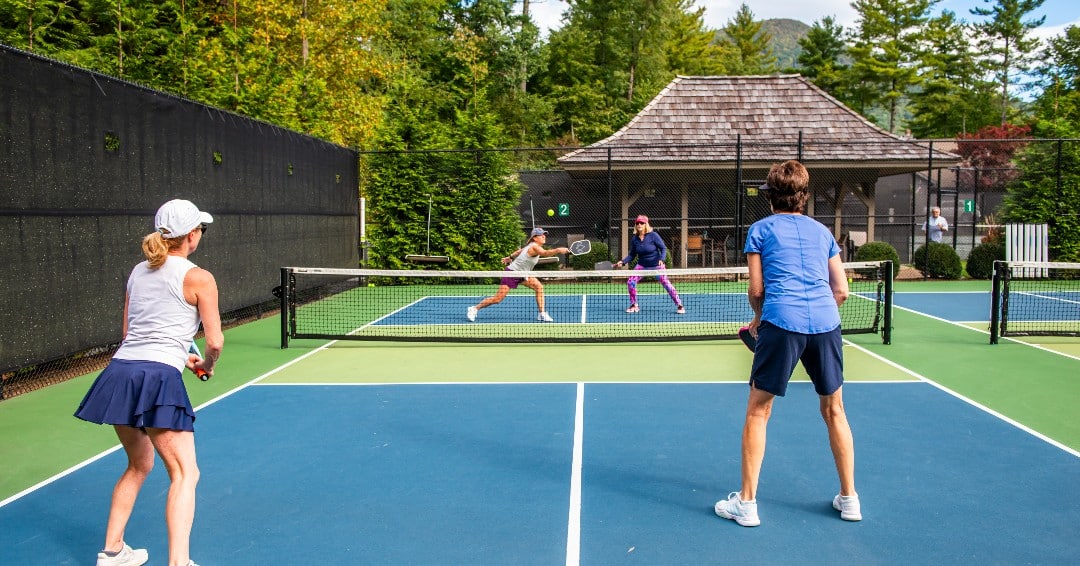
You’ve played tennis for years at Burlingame Country Club’s beautiful Har-Tru courts. Now you’re curious about pickleball—the sport taking over courts across America. The good news: your tennis background gives you massive advantages. The challenge: some habits that work brilliantly in tennis will sabotage your pickleball game.
Making the transition successfully requires understanding which skills transfer and which need complete recalibration. Let’s break down what you bring from tennis and what you need to leave behind.
Skills That Transfer Beautifully
Hand-Eye Coordination: Years of tracking a tennis ball translate directly. Pickleball’s wiffle ball behaves differently, but your ability to track moving objects and time contact is already developed.
Court Awareness: Understanding angles, reading opponents’ positioning, and spatial awareness all carry over. A good tennis player intuitively knows where gaps in court coverage exist—same principle applies in pickleball.
Competitive Mindset: The mental side transfers completely. Staying focused, managing pressure, working with doubles partners—these are the same in both sports.
Fitness Base: Your tennis fitness gives you an edge in pickleball, even though pickleball is less cardiovascularly demanding. Your leg strength, agility, and endurance all help.
Net Skills (Partially): Your volleys, particularly your soft hands and ability to block balls, translate. However, pickleball volleys are hit closer to your body with different technique.
Skills That Need Significant Adjustment
Power Hitting: Tennis rewards power. Pickleball punishes it. That big forehand that overpowers tennis opponents will send balls sailing long in pickleball. You need to learn touch and control, not pace.
Serve Motion: Your tennis serve—with its full windup, toss, and overhead motion—is illegal in pickleball. Serves must be hit underhand with paddle below waist. This is perhaps the hardest adjustment for tennis players.
Backswing Length: Tennis groundstrokes involve significant backswings to generate pace. In pickleball, compact swings with minimal backswing work best. The shorter court and lighter ball don’t require or reward big swings.
Footwork Patterns: Tennis footwork emphasizes getting behind the ball, setting up with room to swing. Pickleball requires getting up to the kitchen line quickly and being comfortable hitting balls close to your body.
Spin Application: While topspin exists in pickleball, it’s applied differently and less dramatically than in tennis. Your heavy topspin forehand needs dialing back significantly.
The Kitchen: Tennis Has Nothing Like This
The non-volley zone (the kitchen) is pickleball’s most unique element. You cannot volley while standing in this 7-foot zone on either side of the net.
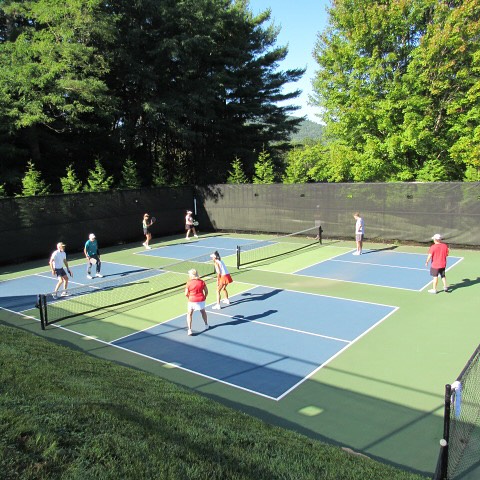
For tennis players accustomed to moving forward to the net freely, this takes major adjustment. You must learn to position yourself just outside the kitchen line, not on it or in it. Volleys happen from behind the line or while jumping over it.
The strategic implications: you can’t simply charge the net after a good shot like in tennis. You must respect the kitchen, which changes approach shots, volleys, and overall net play entirely.
Practice standing at the kitchen line and volleying without stepping in. This feels unnatural at first—tennis teaches you to move forward through volleys. Pickleball requires you to stay back or jump over.
Serve and Return Differences
In tennis, the serve is a weapon—you’re trying to ace opponents or force weak returns. In pickleball, the serve is simply a way to start the point. It must be hit underhand, from behind the baseline, diagonally into the opponent’s service court. That’s it. No power serves, no spin serves that kick high.
The return is actually more important. After returning, you must stay back at the baseline until the ball is hit a third time (the “two-bounce rule”). Then you move forward. This rhythm—serve, return, third shot, then advance—takes adjustment.
Tennis players often struggle with the underhand serve initially. Practice it extensively. Stand sideways, drop the ball in front of your body, and swing through with a low-to-high motion. Aim for depth and consistency, not speed.
The Dink: Tennis Doesn’t Prepare You for This
The dink—a soft shot that barely clears the net and lands in the opponent’s kitchen—has no tennis equivalent. It’s the most important shot in pickleball, yet tennis players initially hate it because it requires all touch, no power.
You must learn to stand at the kitchen line and hit soft, controlled dinks back and forth with opponents, sometimes for 10-20 shots in a rally. This patience and precision doesn’t exist in tennis, where you’re looking to end points decisively.
Practice dinking extensively. It feels tedious at first, but mastering the dink separates good pickleball players from beginners. Your tennis instinct to end points quickly works against you here—patience wins in pickleball dink rallies.
Paddle vs. Racquet
A pickleball paddle is smaller, heavier (relative to its size), and has no strings. The solid surface creates different ball contact feel and response.
Your tennis racquet’s string bed cushions impact and generates spin through friction. The paddle’s solid surface doesn’t provide this—balls respond more like hitting with a table tennis paddle. Less spin generation, more direct ball control.
Choose a paddle weight that feels comfortable. Tennis players often gravitate toward heavier paddles (8.5+ ounces) because the weight feels familiar, but don’t assume heavier is better. Try various weights and find what works for your style.
Court Positioning Strategy
In tennis doubles, you typically start with one partner at net and one back. In pickleball, both partners want to get to the kitchen line together as quickly as possible. The team that controls the kitchen usually wins.
This means aggressive forward movement after the return of serve and third shot. Tennis teaches measured net approaches; pickleball rewards getting forward fast whenever possible.
Stay parallel with your partner—if they’re at the kitchen line, you should be too. If they’re back, you’re back. Moving together is crucial. Tennis players sometimes struggle with this because tennis allows more asymmetric positioning.
Shot Selection Mentality
Tennis players default to hitting winners. Pickleball defaults to consistency and placement.
In pickleball, you’re often trying NOT to give your opponent something attackable rather than trying to hit an outright winner. Keep balls low, hit to open court, force opponents to hit up—this creates opportunities.
Trying to blast winners from baseline positions (a tennis instinct) leads to errors. The kitchen rule means you can’t approach and put balls away like in tennis. Patience and construction of points is key.
Common Tennis Player Mistakes in Pickleball
Hitting Too Hard: Everyone does this initially. Your tennis power is too much for pickleball’s smaller court. Dial it back by 50%.
Standing Too Far Back: Tennis players stay back out of habit. In pickleball, you want to be forward at the kitchen line whenever possible.
Overrunning Balls: Tennis footwork gets you behind balls with space to swing. Pickleball requires getting TO balls quickly and hitting from tight positions.
Impatience: Tennis points often end quickly. Pickleball points, especially at higher levels, can extend for 20+ shots. Don’t force it.
Neglecting the Dink: Tennis players want to drive and volley. You must embrace the dink as your primary tool.
Timeline for Transition
Most tennis players can learn pickleball basics in a few sessions. Really integrating proper technique and strategy takes longer.
Weeks 1-4: Learning rules, legal serves, kitchen awareness, basic shots. You’ll be playable but making lots of tennis-style mistakes.
Months 2-3: Developing dink consistency, proper court positioning, understanding strategy. You’re becoming a legitimate pickleball player.
Months 4-6: Refining all shots, playing comfortably at the kitchen line, good court awareness. You’re now thinking in pickleball terms, not tennis terms.
Year 1+: If you’re dedicated, you can reach competitive levels by this point, perhaps rating 3.5-4.0 depending on natural ability and practice.
The Benefits of Playing Both
Don’t abandon tennis for pickleball—play both! They complement each other nicely.
Pickleball improves your tennis touch and volleys. The close-quarters volleying and dinking develop soft hands that benefit tennis net play.
Tennis maintains your fitness for pickleball. The conditioning and footwork demanded by tennis keeps you sharp for pickleball’s quick movements.
Both sports share similar social aspects. At Burlingame, you can enjoy tennis one day, pickleball the next, and benefit from both communities.
Getting Started at Burlingame
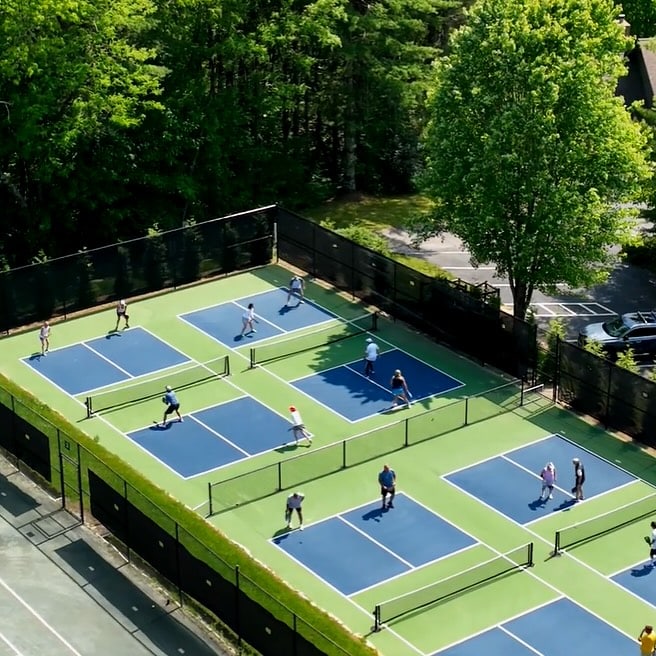
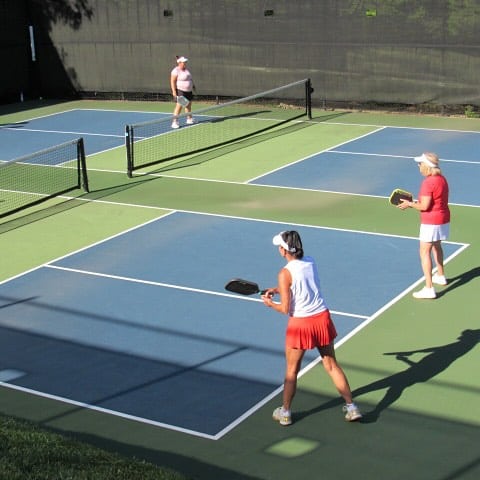
If you’re a tennis player ready to explore pickleball, Burlingame’s four pickleball courts provide the perfect training ground. Take a lesson from our experienced professional who understands how to help tennis players transition effectively.
Play with other tennis-to-pickleball converts initially. They understand your challenges and won’t be frustrated by your tennis habits.
Be patient with yourself. You’re bringing athletic ability and court sense, but the specifics are different. Give yourself grace during the learning curve.
The transition from tennis to pickleball is easier than learning either sport from scratch, but it requires conscious adjustment of habits developed over years on the tennis court. Embrace the differences, practice the new skills, and you’ll find pickleball to be an excellent addition to your racquet sports repertoire.
Ready to make the transition from tennis to pickleball? Burlingame Country Club offers instruction that specifically addresses tennis players learning pickleball, helping you leverage your strengths while correcting habits that don’t translate. Call (828) 966-9200 to learn more.