

Late-Afternoon Rounds
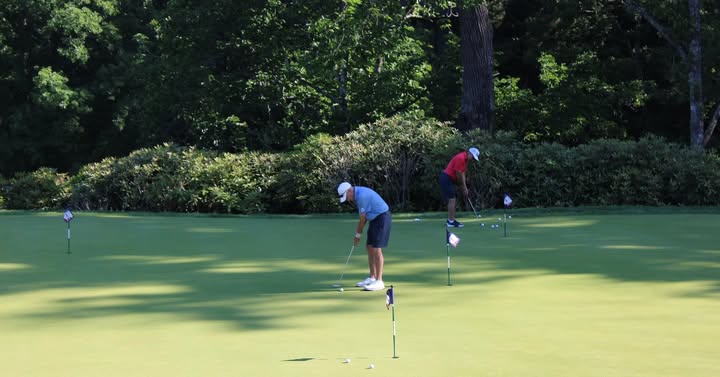
There’s a window of time at Burlingame Country Club, usually somewhere around 5 o’clock on a summer evening, when the mountain light goes amber and the course turns quiet. The morning crowd has finished up. The afternoon heat has backed off. The Horsepasture River catches the last of the sun through the trees, and you’ve got the back nine largely to yourself.
If you haven’t played a twilight round at Burlingame, you’re missing one of the better things this club has to offer.

What Makes Twilight Golf Different
The obvious draw is pace. Fewer players on the course means you’re not waiting on every tee box, not watching the group ahead of you spend four minutes finding a ball in the rough. You walk up, you play, you move on. A round that might take four and a half hours in the morning can come in under three in the evening.
But it’s more than just speed.
The light at 3,000 feet in late afternoon does something that’s hard to describe until you’ve seen it. The shadows get long and sharp across the fairways. The ridgelines pick up a blue-gray tint. The greens look almost luminescent against the darker tree lines behind them. You’re playing the same holes you’ve played a hundred times, but they look completely different.
Temperature is another thing entirely. Burlingame runs cool compared to the flatlands even in July, but by 5 or 6 in the evening, you’ve dropped another five to ten degrees. A light layer is often welcome by the time you finish. That’s not a complaint.
How to Adjust Your Game for Evening Conditions
A few things change when you play in the evening that are worth knowing before you tee it up.
Shadows and depth perception. Long shadows running across fairways can mess with your depth perception, especially on approach shots. A shadow cutting across the fairway between you and the green can make a 150-yard shot look shorter or longer than it is. Trust your rangefinder or GPS, not your eyes.
On the greens, shadows can either help or hurt your read. Sometimes the relief in the terrain shows up more clearly in low-angle light, which actually makes green reading easier. Other times, a shadow across the line of your putt creates an optical illusion about break. Pay attention to the actual slope, not the visual line created by shadow.
Green speed tends to pick up. As the temperature drops and the dew hasn’t yet settled, evening greens often run a touch faster than they did at midday. The grass isn’t stressed from heat, and the surface firms up as the day cools. Expect your putts to be slightly quicker, especially downhill.
The wind changes. Mountain evenings bring a consistent downhill flow as cooler air slides off the higher ridges. If you’ve played Burlingame in the morning, you’ll recognize that the wind is often coming from a completely different direction by evening. Check it on the first couple of holes and adjust your club selection accordingly.
Ball flight looks different. This is subtle but real. Against a brighter sky, it can be harder to track your ball in the air. Wear sunglasses if the sun is still in the west and you’re hitting into it. Colored balls, yellow in particular, are easier to track in lower light.
Pacing Yourself Through a Twilight Round
Twilight rounds are usually nine holes, though 18 is sometimes possible depending on the time of year and when you tee off. If you’re playing 18, know your cutoff time and let the pro shop help you plan accordingly. There’s nothing fun about being stuck on 14 when the light is truly gone.
If you’re playing nine, think carefully about which nine. The back nine at Burlingame tends to play more dramatic as the light fades because of the elevation changes and the river holes. A lot of members will tell you the back nine in the evening is as good as golf gets here.
Bring a light jacket in your bag regardless of how warm it feels when you start. You’ll want it by the last few holes.
And slow down a little, even though the course is open. Twilight rounds have a way of getting rushed because you’re watching the light and thinking about finishing. That’s the wrong instinct. The pace is the whole point. Let yourself stand on a tee box and actually look at what’s around you before you hit.
A Few Practical Things to Know
Twilight rates are typically lower than standard green fees, which makes evening rounds an easy choice if you’re already out at the club later in the day. Check with the pro shop on current pricing and available tee times.
Carts are usually still available, though walking a twilight round is genuinely worth trying if your legs are up for it. The quiet of an evening walk on a nearly empty mountain course is one of those simple pleasures that’s hard to replicate.
Keep your eye on the clock. As beautiful as the evening light is, playing in actual darkness isn’t something the course or your scorecard needs. Give yourself enough time to finish comfortably.
The 19th Hole Has a Different Feel After a Twilight Round
There’s something particularly good about coming off the course at dusk, slightly cooler than when you started, and sitting down at the Overlook Lounge or the Deck with the last of the mountain light fading out over the fairways. The course empties, the evening settles in, and the conversation that happens after a good round with good company is exactly what a club is supposed to be for.
Twilight golf at Burlingame isn’t a consolation prize for people who couldn’t get a morning tee time. For a lot of members, it’s the preferred way to play.
Ready to book your next round? Call the pro shop at (828) 966-9200 and ask about twilight availability. You might find it becomes your new favorite time to play.
