
Key Takeaways
Mountain golf retirement living in NC offers retirees something rare: championship golf woven into daily life, surrounded by old-growth forests, cool mountain air, and a community that feels like family. Western North Carolina’s elevation, typically 3,000 to 4,000 feet, keeps summers mild and the fairways green, making year-round outdoor living genuinely possible for those who choose it.
- Mountain courses in Western NC play at elevations between 3,000 and 4,000 feet, with average summer temperatures near 70°F
- Retirement communities centered on golf here often include pickleball, tennis, aquatics, and miles of hiking trails alongside the course
- Multi-generational appeal is strong, with many communities designed so grandchildren and adult children share the same landscape
- Property values near private mountain golf communities have held steady, with some parcels appreciating 15 to 25 percent over the past five years
- A sense of stewardship and belonging, not just amenities, defines the communities people stay in for decades
Where the Mountains Invite You to Stay
There is a moment, usually somewhere around the third or fourth visit to Western North Carolina, when the idea of leaving stops making sense. The air is cool even in July. The rhododendron lines the roads like a procession welcoming you back. And the mountains, those old blue ridges, sit so still and so certain that something in the chest quiets down and stays quiet. That is when mountain golf retirement living in NC stops being a concept and becomes a calling.
Western North Carolina, and particularly the Cashiers and Sapphire Valley region, has become one of the most sought-after retirement destinations in the American Southeast. The region sits at elevations that push summer highs into the low 70s Fahrenheit, a full 10 to 15 degrees cooler than Charlotte or Atlanta on a typical August afternoon. That temperature difference is not a small thing when you are thinking about where to spend the next 20 or 30 years of your life. It means golf in the morning without wilting. It means sitting on a porch in the evening without retreating inside. It means a body that feels restored rather than worn down by the season.
Burlingame Country Club in Cashiers, NC sits inside this landscape not as an imposition on it, but as something grown from it. The course follows the contours of the hills rather than fighting them. The fairways open onto views that stop you mid-swing. And the community that has gathered here over the years carries the same quality as the land: unhurried, genuine, worth staying for. For complete coverage of what the broader region offers, see our Western NC Retirement Communities: Mountain Living Guide resource on western NC retirement communities.
What Golf Actually Looks Like at 3,500 Feet
Mountain golf is its own language. It is not the flat, manicured predictability of a coastal resort course. Here, the ball flies a little farther because the air is thinner. A shot that would carry 170 yards at sea level might carry 175 or 180 at 3,500 feet. Club selection becomes a conversation you have with the mountain rather than a calculation you run on a chart. Experienced golfers find this thrilling. Newer players find it humbling at first, then addictive.
How does elevation change the way you play golf?
At elevations above 3,000 feet, the reduced air density affects ball flight in measurable ways. Players typically see 5 to 8 percent more carry distance compared to sea level rounds. This changes approach shots, changes how you think about par 3s playing across a valley, and changes the mental game in ways that keep the sport fresh even after decades of play. The mountain courses in Western NC also run cooler and hold moisture differently, which means greens often play slower in the mornings and firm up by afternoon. Reading mountain greens is an art form that takes a season or two to learn and a lifetime to love.
What does a typical golf retirement day look like here?
A morning round might begin at 8 a.m. when mist still sits in the low places between fairways. By the time you finish 18 holes, the sun has burned it off and the mountains are sharp and clear. Lunch follows with the kind of easy conversation that happens when people are not in a hurry. Afternoons open up for a swim, a walk on one of the many scenic trails threading through the property, or simply sitting with a book and the sound of moving water nearby. These are not scheduled amenities. They are the rhythm of a life that has found its pace.
The Community That Forms Around Shared Ground
Retirement communities built around golf tend to self-select for a certain kind of person. Not a status-conscious one, but a curious one. Someone who still wants to get better at something. Someone who enjoys the particular friendship that forms between playing partners who have watched each other hit bad shots and good ones and kept walking together either way. In Western NC, that community has a texture all its own.
What makes mountain golf communities different from resort communities?
Resort communities see people come and go with the seasons. They are designed for turnover, for the guest who needs everything explained. Mountain golf retirement communities in Western NC are designed for permanence. The people who settle here tend to stay, and they build the kind of relationships that accumulate over years: shared meals, shared memories on the course, the comfort of knowing your neighbors by name and by their iron swing. According to the U.S. Census Bureau, adults 65 and older who report strong community ties show measurably higher rates of life satisfaction, a figure that holds across income levels and geography.
How do families fit into this picture?
The most enduring mountain communities are the ones where grandchildren can visit and feel like they belong too. When the course is ringed by hiking trails, when there is a pool and a tennis court and enough open land for children to run in, a visit becomes something the whole family counts down to. Several families at communities in the Cashiers and Sapphire Valley area have described the experience as a family reunion where everybody actually wants to be there. That is not a small thing to build. It takes land that holds people, and a community that welcomes them in. Those who want to understand how this lifestyle compares to other settings will find useful context in our look at why mountain club living is different from traditional lowland country clubs.
The Land Itself as the Amenity
Western North Carolina holds more species of trees than all of northern Europe. The Appalachian Mountains are old, some of the oldest exposed rock on earth, and they carry that age with a quiet authority. When you walk the edge of a fairway here and look into the forest, you are looking at an ecosystem that has been building itself for thousands of years. That is the land you are choosing to live inside.
Why do retirees specifically seek mountain environments?
Cool temperatures are part of it. So is air quality. The Blue Ridge region consistently records air quality index numbers in the good to moderate range during most of the year, a meaningful consideration for anyone managing cardiovascular or respiratory health. Beyond the physical, there is something psychological that happens when a person lives close to forests and moving water. Research published through the National Institutes of Health has found that regular exposure to natural environments correlates with lower cortisol levels and reduced markers of chronic stress. The mountain living health benefits in Western NC extend well beyond aesthetics and into measurable physiological outcomes.
How does Burlingame Country Club relate to its natural setting?
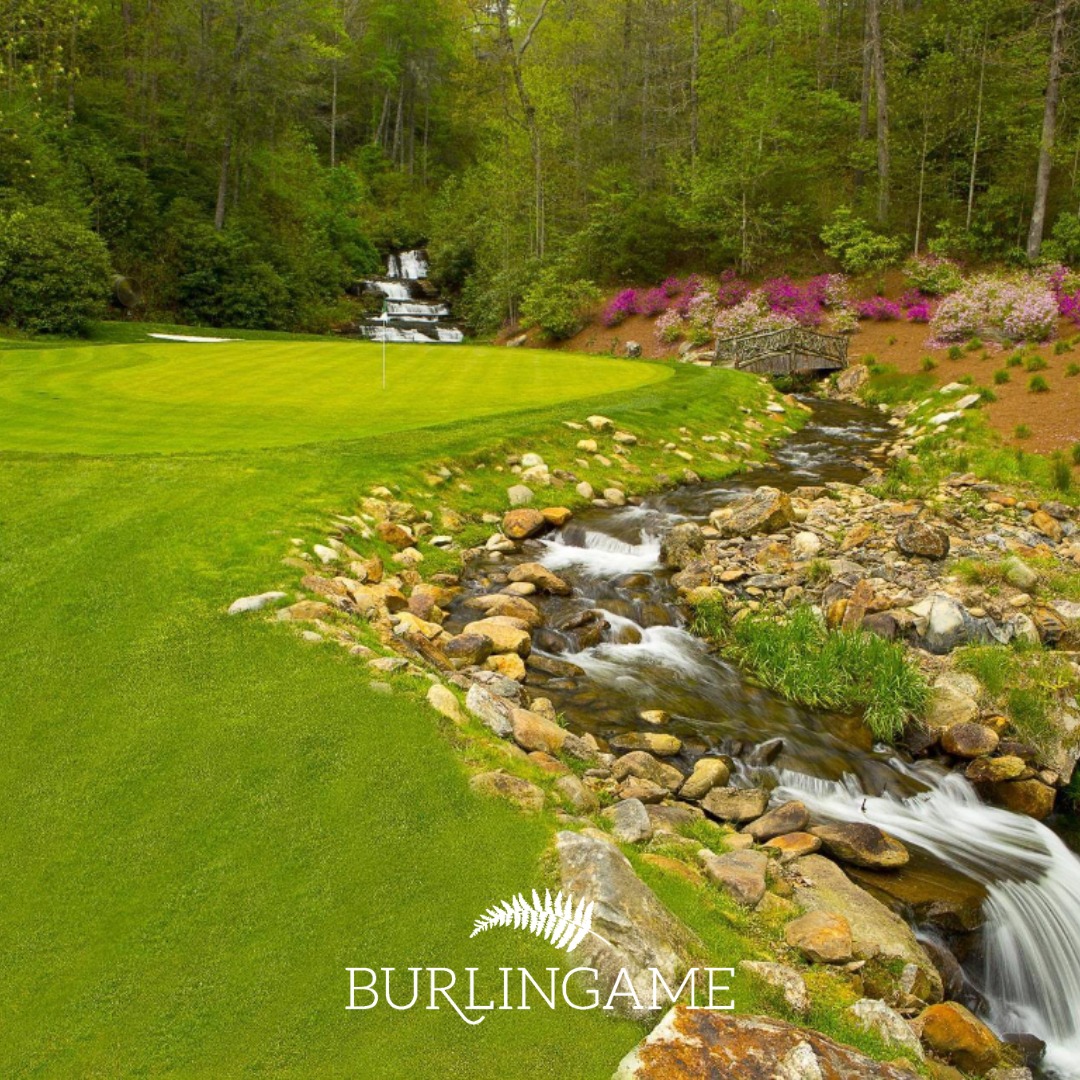
Burlingame Country Club was designed to sit within its landscape rather than dominate it. The golf course follows natural contours. Tree lines are preserved. The water features on several holes connect to the watershed rather than interrupting it. This kind of design philosophy, sometimes called environmental golf architecture, has become more common in the past two decades as designers and communities recognize that the land is the product, not just the backdrop.
What Retirement Actually Costs in This Corner of NC
North Carolina as a whole carries a lower cost of living than many comparable mountain states. Property taxes in Jackson County, where Cashiers sits, run lower than national averages, with effective rates typically around 0.6 to 0.7 percent of assessed value. For a home valued at $800,000, that translates to roughly $5,000 to $5,600 in annual property taxes, a figure that compares favorably to similar mountain communities in Colorado or Vermont.
What does membership in a private mountain golf community typically involve?
Private club membership structures vary, but in the Western NC mountain region, initiation fees for full golf membership typically range from $20,000 to $60,000 depending on the club and the tier of membership. Annual dues for full golf access generally run between $8,000 and $18,000 per year. These figures include access to the course and usually to additional amenities like tennis, fitness facilities, and pool access. For a closer look at exactly what is covered, our guide on what’s included in a Cashiers country club membership breaks down the details. The range is wide because each club builds its structure around its own land, its own history, and its own community size.
Is North Carolina tax-friendly for retirees?
North Carolina does not tax Social Security income. The state offers a standard deduction for retirement income from public pensions, and the flat income tax rate sits at 4.75 percent as of recent legislative changes, lower than many states retirees consider. According to the North Carolina General Assembly, the state has made several retirement-related tax adjustments in recent sessions, generally trending toward lower burdens for fixed-income retirees. These policy conditions, combined with the physical environment, make Western NC a genuinely practical choice alongside a romantic one.
Golf, Health, and the Long Game of Retirement Wellness
A round of golf covers four to five miles on foot if you walk the course. At a mountain course with elevation changes, that walk engages muscles and cardiovascular systems in ways a flat course does not. Playing three or four rounds per week, a realistic schedule for a retired golfer with open mornings, adds up to 12 to 20 miles of walking with meaningful incline and decline. That is not a trivial health benefit. It is a lifestyle that keeps the body moving without feeling like exercise. A good pre-round warmup for mountain golf makes a meaningful difference in how the body holds up across those miles.
Can older players continue to enjoy mountain golf?
Yes, and many do well into their 70s and 80s. Cart availability means that players who need it can ride, and the social dimensions of the game, the conversation, the competition, the camaraderie, do not depend on playing from the championship tees. Most private mountain clubs offer multiple tee options that let players calibrate the course to their current physical level without giving up the game itself. The United States Golf Association has published guidelines on adaptive golf formats that allow players with physical limitations to continue participating in organized play.
What other wellness amenities do mountain golf communities typically offer?
Beyond the course itself, most full-service mountain communities in Western NC include swimming pools designed for fitness as much as leisure, tennis and pickleball courts, fitness centers, and trail ne