
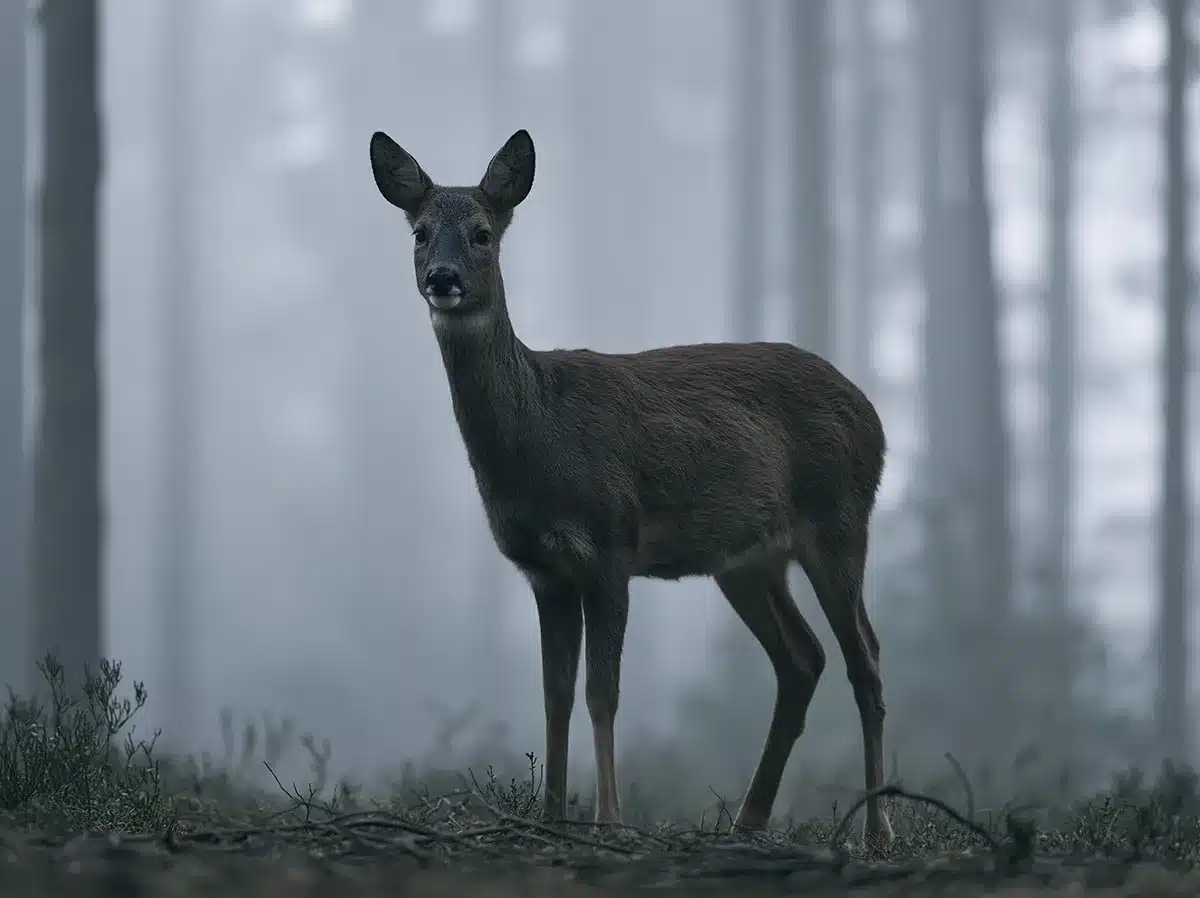
Late one morning on the back nine, a doe walked out of the old-growth forest along the 12th fairway and stood there long enough for the group behind her to stop their carts and watch. She wasn’t particularly concerned. She moved off eventually, unhurried, back into the hemlocks. Nobody talked about their round for a few minutes after that.
This is the kind of thing that happens at Burlingame Country Club, and it happens regularly enough that long-time members have their own catalog of encounters. The bear that sat in the rough on 7 one September morning. The red fox that trotted across the first fairway as the sun came up. The great blue heron that stands in the same bend of the Horsepasture River so reliably that members treat it like a landmark.
The land at Burlingame was chosen and developed with a specific philosophy of stewardship, of paying attention to what was already here and building around it rather than over it. The wildlife that lives on and around the property is one of the more direct results of that approach.

The Animals You’re Likely to See
White-tailed deer are the most frequently encountered mammals on the property. They move through the course early and late in the day, feeding along the fairway edges and in the open spaces between tree lines. During the rut in October and November, bucks become more visible and less cautious than usual. Fawns in late spring are a regular sight along the quieter holes.
Black bears are present in the mountains throughout Western North Carolina, and Burlingame is no exception. Most bear sightings are brief. The bear is doing something, it notices you, and it moves away. Black bears are not aggressive toward humans by nature, and the encounters members typically describe amount to a mutual acknowledgment and a quick departure in opposite directions.
The thing to understand about bears is that they’re opportunistic rather than threatening. An unsecured trash can or a food source left in a cart is far more interesting to them than a person. They’re not coming toward you. They’re going toward something they want.
Wild turkey move in flocks, often a dozen or more birds crossing a fairway or trail in single file with a kind of unhurried dignity. They’re more common than people expect before they’ve spent time in the mountains. Toms in the spring, displaying and calling in the early morning, are one of the more striking wildlife displays the property offers.
Coyotes are present but not often seen. They move mostly at night and are genuinely shy. You’re more likely to hear one calling in the evening than to see one during daylight hours.
Foxes, both red and gray, appear occasionally on the course and trails. They’re quick and quiet and don’t often linger. The red fox in particular, with its rust-colored coat against green fairways, has an appearance that stops golfers mid-swing.
The Bird Life
The Horsepasture River corridor and the old-growth forest sections of the property support a diversity of bird life that serious birders recognize as genuinely special.
The great blue heron is almost certainly the most watched individual bird on the property. It fishes the same stretches of the Horsepasture consistently and stands still long enough that you can approach to a respectful distance and actually observe its behavior. It’s a big bird, easily four feet tall when standing, and it moves with the kind of unhurried patience that distinguishes animals that are very good at what they do.
Belted kingfishers work the river too. They’re smaller than the heron, more dramatic in flight, and announce themselves with a distinctive rattling call before they arrive. Watch for them hovering over a pool and then plunging straight down.
Wood ducks are among the most visually striking birds in North America, and the wooded waterways near the Horsepasture hold them well. The males in breeding plumage are almost unreasonably colorful.
Wild turkey, mentioned above as ground wildlife, are also worth noting as birds specifically because of the spring gobbler behavior. Males display with fanned tails and calling that carries a long distance in mountain air.
Pileated woodpeckers work the larger dead trees on the property, and their scale surprises people who haven’t seen one. They’re crow-sized birds with a red crest, and the excavations they create in dead wood are substantial. You’re more likely to find one by hearing the hammering before you see the bird.
Songbirds in migration use Burlingame’s tree cover as stopover habitat. Spring and fall bring species that aren’t present in summer, and mornings during peak migration can produce a surprising variety of warblers, thrushes, and other small birds moving through.
Raptors
Broad-winged hawks gather over the mountains during fall migration in numbers that occasionally produce visible kettles, groups of dozens or hundreds of birds riding thermals overhead. The migration peaks in mid-September, and in good years it’s visible from the course and the trails with no special equipment.
Red-tailed hawks are present year-round and visible from the open areas of the course, hunting the rough edges for small mammals. Sharp-shinned hawks and Cooper’s hawks move through during migration. Ospreys appear occasionally along the river.
Barred owls are common at Burlingame and often call during daylight hours in autumn. Their call is the classic “who cooks for you” pattern that’s recognizable once you’ve heard it.
Coexisting Thoughtfully
The wildlife at Burlingame is part of what the property is, and most members think of it that way. A few habits help maintain that relationship.
Don’t approach nesting birds or animals with young. A doe with a fawn is not a danger, but getting between her and the fawn is a situation worth avoiding. The same applies to any wild animal with offspring.
Don’t feed anything. This is the rule that protects wildlife most directly. Animals that associate humans with food change their behavior in ways that eventually require intervention. The deer and bears and foxes at Burlingame are wild, and keeping them that way requires that they remain uninterested in people as a food source.
Keep trash secured, particularly around the clubhouse and in carts. This applies specifically to bears. The easiest way to avoid bear encounters near buildings is to give them no reason to be there.
If you encounter a black bear on the course or trail, give it space and let it move away on its own. Don’t run. Don’t make sudden movements. Talk in a calm, normal voice so it identifies you as a human. It will leave.
Slow down on property roads and cart paths in low-light hours. Deer in particular move most actively at dawn and dusk and will cross paths unexpectedly.

What the Land Stewardship Philosophy Actually Means
Burlingame was built with a stated commitment to nature and a respect for the land it sits on. The language in the club’s own materials about stewardship for future generations isn’t just phrasing. It describes a genuine orientation toward the property.
Maintaining the Horsepasture River corridor in a natural state gives the fishery and the wildlife that depend on it what they need to thrive. Preserving the old-growth sections of the forest provides habitat that younger stands can’t replicate. The trails and the parks within the community create corridors that allow wildlife to move.
The result is that Burlingame holds a richness of wildlife that you don’t find on properties that were developed differently. The doe on the 12th fairway isn’t an accident. She’s there because the land around her supports her.
That’s worth protecting, and most members who spend time on the course and trails understand it instinctively.
For trail maps and information about Burlingame’s outdoor offerings, call (828) 966-9200.