Recovery and Regeneration: Post-Round Spa Treatments for Athletes
Public Golf Courses in Highlands NC: Complete Access Guide

The Performance Secret Tour Pros Won’t Tell You

You’ve just finished 18 holes at Burlingame. Your legs feel the elevation changes. Your shoulders are tight from 70+ swings. Your lower back reminds you that golf, despite what non-golfers think, is genuinely athletic. What you do in the next few hours determines how you feel tomorrow, and more importantly, how well you play your next round.

Tour professionals understand something that most amateur golfers overlook: recovery is part of performance. The players who consistently perform at the highest level don’t just practice more; they recover better. And while you might not have a traveling massage therapist on staff, Burlingame’s Rejuvenate Spa offers professional treatments designed specifically for athletic recovery.
Cashiers Golf & Country Club Membership: Options, Benefits & Application Process

Why Recovery Matters for Golfers

Golf creates repetitive stress on specific muscle groups and joints. Every swing generates rotational forces through your spine. Every putt requires sustained focus and fine motor control. Walking the course, especially on mountain terrain, challenges your cardiovascular system and lower body.

Without proper recovery, your body accumulates micro-damage faster than it can repair. This leads to chronic tightness, reduced range of motion, and eventually injury. More immediately, inadequate recovery means you’re starting each round at less than 100%, handicapping your performance before you even tee off.

The science is clear: structured recovery accelerates adaptation, reduces injury risk, and maintains the physical capacity necessary for consistent performance. For golfers who play multiple rounds per week, recovery isn’t optional; it’s essential.

Therapeutic Massage: More Than Just Relaxation

The centerpiece of any athletic recovery protocol is therapeutic massage. This isn’t the leisurely spa experience you might imagine; it’s a targeted treatment designed to address the specific stresses that golf places on your body.

Deep Tissue Work for Golfers

Golf creates predictable patterns of muscle tightness. Your trail-side hip flexor shortens from the address position. Your lead-side lat tightens from pulling through impact. Your shoulder stabilizers fatigue from maintaining posture throughout the swing.

A skilled therapist identifies these patterns and works systematically to release tension, restore normal muscle length, and break up adhesions that limit movement. The treatment might be momentarily uncomfortable, but the improvement in movement quality is immediate and significant.

At Burlingame’s Rejuvenate Spa, our therapists understand golf biomechanics and tailor treatments to address the specific demands of the sport. They know where golfers carry tension and how to restore optimal function.

Sports Massage for Active Recovery

Where deep tissue work breaks down chronic tension, sports massage facilitates active recovery between rounds. This lighter-pressure treatment increases circulation, promotes lymphatic drainage, and accelerates the removal of metabolic waste products that accumulate during play.

Schedule a sports massage 24-48 hours after a particularly challenging round or tournament. The increased blood flow delivers nutrients to fatigued muscles while clearing out the byproducts of exertion that cause soreness and stiffness.

The Bellanina Facelift Facial Massage

This might sound like vanity, but stay with me. The Bellanina technique addresses facial muscle tension that many athletes never consider but that directly impacts performance.

Jaw clenching, brow furrowing, and facial tension are common responses to competitive stress. This tension radiates down into your neck and shoulders, creating a cascade of tightness that affects your swing. By releasing tension in the face and jaw, you address the source of upper body tightness that many golfers fight through their entire round.

The treatment is particularly valuable for golfers who notice their shoulders climbing toward their ears under pressure, or who finish rounds with tension headaches. It’s not about looking good; it’s about releasing tension patterns that interfere with athletic movement.

Timing Your Treatments for Maximum Benefit

The timing of recovery treatments matters as much as the treatments themselves. Your body goes through predictable physiological responses after athletic exertion, and aligning treatments with these phases maximizes their effectiveness.

Immediate Post-Round (0-2 hours) Focus on active recovery: light stretching, hydration, and nutrition. This isn’t the time for deep tissue work; your body is still in an inflammatory state from exertion. A light sports massage is acceptable, but aggressive treatment can actually impair recovery.

Next-Day Recovery (12-24 hours) This is prime time for therapeutic massage. The acute inflammation has subsided, but muscle soreness and stiffness are building. Deep tissue work and targeted stretching break this pattern before it becomes chronic tightness.

48-Hour Mark If you’re playing back-to-back competitive rounds, schedule a maintenance massage 48 hours after the first round. This keeps your muscles responsive and maintains range of motion through multiple days of play.

Weekly Maintenance For regular players, a weekly massage during peak season maintains optimal muscle function and prevents the accumulation of chronic tightness that gradually degrades swing quality and increases injury risk.

Complementary Recovery Protocols

Professional treatment is crucial, but what you do between spa visits matters just as much. A comprehensive recovery approach combines professional care with self-management techniques.

Contrast Therapy Alternating between hot and cold treatments stimulates circulation and reduces inflammation. At home, this can be as simple as a hot shower followed by 30 seconds of cold water, repeated 3-4 times. The temperature changes cause blood vessels to constrict and dilate, pumping fresh blood through fatigued muscles.

Our spa facilities can guide you through more sophisticated contrast protocols using hot tubs and cold plunge pools, maximizing the cardiovascular response that accelerates recovery.

Compression Therapy Compression garments or devices increase venous return, reducing swelling and accelerating the removal of metabolic waste. Many touring professionals sleep in compression gear after competitive rounds, particularly when traveling.

Strategic Stretching Post-round stretching isn’t about increasing flexibility; it’s about returning muscles to their resting length after hours of repetitive contraction. Focus on hip flexors, shoulder rotators, and trunk rotators—the primary movers in your golf swing.

Hold each stretch for 30-60 seconds, breathing deeply and allowing muscles to release gradually. Forcing stretches when muscles are fatigued creates micro-trauma rather than promoting recovery.

Nutrition and Hydration: The Foundation

No amount of massage can compensate for poor nutrition and hydration. Your body needs specific raw materials to repair tissue and replenish energy stores after golf.

Immediate Post-Round Window Within 30 minutes of finishing, consume a combination of protein and carbohydrates. This could be a protein shake, a turkey sandwich, or chocolate milk. The specific source matters less than the timing; this window is when your body is most receptive to nutrients.

Hydration Strategy By the time you feel thirsty, you’re already dehydrated. For every hour of golf, you’re losing 16-32 ounces of fluid depending on temperature and humidity. Mountain altitude accelerates fluid loss further.

Weigh yourself before and after rounds. For every pound lost, drink 16-20 ounces of fluid over the next few hours. Simple hydration monitoring tells you exactly what your body needs.

Sleep: The Ultimate Recovery Tool

All the massage and nutrition in the world can’t replace quality sleep. During deep sleep, your body releases growth hormone, repairs damaged tissue, and consolidates motor learning from your practice sessions.

Aim for 7-9 hours of quality sleep, particularly after competitive rounds or intensive practice. Keep your room cool and dark, avoid screens for an hour before bed, and maintain consistent sleep and wake times even on weekends.

If you struggle with sleep after competitive rounds, consider scheduling an evening massage. The parasympathetic activation from massage promotes relaxation and can help transition your nervous system from competitive arousal to recovery mode.

The Role of Rejuvenate Spa in Your Golf Performance

Burlingame’s Rejuvenate Spa isn’t a luxury; it’s a performance center. Our therapeutic services are designed with athletes in mind, addressing the specific recovery needs that golfers face in the mountain environment.

Our therapists receive ongoing training in sports massage techniques and golf-specific treatment protocols. They understand the biomechanics of the golf swing and can identify compensation patterns that lead to injury. More importantly, they know how to address these patterns before they become chronic problems.

The spa’s location within the club creates convenience that promotes consistent recovery habits. You can finish your round, grab lunch, and schedule a treatment without leaving the property. This accessibility transforms recovery from an occasional indulgence to a regular part of your golf routine.

Building a Personalized Recovery Protocol

Every golfer’s recovery needs are unique, influenced by age, fitness level, frequency of play, and individual biomechanics. The most effective recovery protocol is one tailored to your specific situation.

During your first spa visit, communicate openly about your goals, current issues, and typical playing schedule. A skilled therapist uses this information to develop a treatment plan that addresses your immediate needs while building toward long-term improvements in movement quality and injury resistance.

Track your response to treatments. If you notice improved range of motion, reduced soreness, or better performance after specific treatments, build these into your regular routine. If something doesn’t help, communicate that and try a different approach.

The Competitive Advantage of Recovery

Here’s what separates the golfers who steadily improve from those who plateau: the ones who improve understand that training and recovery are equal partners in development.

You can’t practice your way out of chronic tightness. You can’t improve when accumulated fatigue prevents quality movement. The golfer who plays three rounds a week and prioritizes recovery will outperform the golfer who plays five rounds with no recovery plan.

At Burlingame, where the course demands both length and finesse, maintaining peak physical condition throughout the season determines who’s still playing their best golf in October and who’s nursing injuries and compensations by July.

Making Recovery Part of Your Routine

Start small. Schedule one post-round massage and pay attention to how you feel and perform in your next round. Most golfers notice the difference immediately and wonder why they waited so long to prioritize recovery.

As recovery becomes part of your routine, you’ll develop an intuition for what your body needs. You’ll recognize when tight hips are stealing distance from your drives, or when fatigued shoulders are causing poor ball striking. You’ll know when to schedule treatment rather than pushing through and risking injury.

Public Golf Courses in Highlands NC: Complete Access Guide

Your Body, Your Investment

Every golfer invests in their equipment. The best players also invest in their bodies. The return on that investment appears in lower scores, fewer injuries, and the ability to enjoy the game at a high level for decades.

At Burlingame Country Club, we’re committed to helping our members play their best golf through every stage of life. Our Rejuvenate Spa offers the professional recovery services that keep you on the course, playing well, and enjoying every round.

Ready to experience the difference that professional recovery makes? Call us at (828) 966-9200 to schedule your first treatment and discover how therapeutic massage can transform your golf game.

Tennis Elbow Prevention: Conditioning and Recovery for Mountain Club Players

Tennis Elbow Prevention at Burlingame

Tennis elbow—the dreaded lateral epicondylitis that can sideline even the most dedicated players—doesn’t have to be an inevitable part of your game. At Burlingame Country Club, where our four Har-Tru courts invite year-round play in the beautiful Western North Carolina mountains, smart players know that preventing tennis elbow is far easier than treating it.

The good news: most cases of tennis elbow are preventable through proper technique, smart conditioning, and attention to recovery. Whether you’re a competitive player logging hours on the court every week or a recreational player enjoying social matches, understanding how to protect your elbow keeps you playing the game you love.

Tennis Elbow Prevention - Burlingame

Understanding Tennis Elbow

Tennis elbow is an overuse injury affecting the tendons that connect your forearm muscles to the outside of your elbow. Despite the name, you don’t have to play tennis to get it—any repetitive gripping or wrist extension can cause the condition. But tennis players are particularly vulnerable because of the repetitive nature of groundstrokes, especially one-handed backhands.

The pain typically starts as a dull ache on the outside of your elbow and can progress to sharp pain that radiates down your forearm. Gripping a racquet, shaking hands, or even lifting a coffee cup can become painful. Left untreated, tennis elbow can persist for months or even years.

The root cause is usually a combination of factors: poor technique that stresses the elbow joint, inadequate conditioning of the forearm muscles, equipment issues, and insufficient recovery time between sessions. Address these factors proactively, and you significantly reduce your risk.

Technique: Your First Line of Defense

Most tennis elbow cases stem from improper stroke mechanics that put excessive stress on the elbow joint and forearm muscles.

The Backhand Culprit: The one-handed backhand is the primary offender, especially when players “arm” the shot rather than using proper body rotation. If your backhand relies heavily on wrist and forearm strength instead of core rotation and shoulder turn, you’re asking for trouble.

Fix it by ensuring your backhand swing starts with shoulder rotation, not arm extension. Your upper body should coil and uncoil, with your arm acting as a connection point rather than the power source. The hitting arm should stay relatively relaxed throughout the stroke.

Late Contact Points: Hitting balls behind your body—late contact—forces your arm to compensate with additional stress on the elbow. This happens when you’re rushed or positioning poorly.

Work on footwork and court positioning so you’re set up early for shots. Better positioning allows proper contact points where your body mechanics work efficiently rather than forcing your arm to save balls.

Tense Grip: Squeezing the racquet too tightly throughout points exhausts forearm muscles and increases injury risk. Many players don’t realize how tightly they’re gripping until they consciously pay attention.

Practice a relaxed grip between shots and only tightening at impact. Your grip pressure should vary—loose during setup, firm at contact, relaxed again during follow-through. This reduces cumulative stress on forearm muscles.

Equipment Choices That Protect Your Elbow

Your racquet and strings significantly affect elbow stress.

Racquet Selection: Heavier, head-light racquets generally cause less elbow stress than light, head-heavy ones. The extra mass absorbs shock better. If you’re prone to elbow issues, consider a racquet in the 11-11.5 ounce range (strung weight) with a balance point that’s 4-6 points head-light.

Modern racquets with “comfort” or “arm-friendly” designs incorporate vibration dampening technology. Brands like Wilson Pro Staff, Yonex EZONE, and Head Radical are known for comfort. Test different frames to find one that feels solid without jarring your arm on impact.

String Selection: This matters enormously. Natural gut and multifilament synthetic strings are softer and more arm-friendly than polyester strings. Polyester strings (used by pros for maximum spin) are stiff and transmit more shock to your arm. Unless you’re an advanced player who absolutely needs polyester’s control, avoid them.

Consider natural gut or premium multifilament strings like Tecnifibre NRG2 or Wilson NXT. Yes, they cost more and break faster, but protecting your elbow is worth the investment.

String Tension: Lower tension (50-55 pounds) is more comfortable than higher tension (60+ pounds). The looser strings create more of a trampoline effect, absorbing shock and reducing stress on your arm. Don’t believe the myth that you need tight strings for control—proper technique provides control, not tight strings.

Grip Size: An incorrect grip size forces you to squeeze harder to maintain control. Too small is worse than too large. Your grip should allow you to hold the racquet comfortably without excessive squeezing. A general test: when holding the racquet in your Eastern forehand grip, you should be able to fit your other hand’s index finger in the gap between your fingers and palm.

Conditioning Exercises for Elbow Health

Strong, flexible forearm muscles support your elbow joint and distribute stress more evenly.

Wrist Curls and Extensions: Use a light dumbbell (2-5 pounds). Sit with your forearm resting on your thigh, palm up, and curl the weight toward you by flexing your wrist. Do 15 reps, then flip your hand over (palm down) and extend your wrist upward for 15 reps. Do 3 sets for each position. This strengthens the muscles that support your elbow.

Reverse Wrist Curls: Hold a light dumbbell with your palm facing down, forearm supported on your thigh or table. Slowly lift the weight by extending your wrist upward, then lower with control. This targets the extensor muscles most vulnerable to tennis elbow. Start with 3 sets of 12-15 reps.

Eccentric Wrist Extensions: These are particularly effective for rehab and prevention. Hold a light weight, palm down. Use your other hand to help lift the weight (wrist extension), then slowly lower it down using only the working hand. The slow, controlled lowering (eccentric contraction) strengthens the tendon. Do 3 sets of 15 reps.

Forearm Squeezes: Use a tennis ball or therapy putty. Squeeze firmly for 5 seconds, release, and repeat 10-15 times. This builds grip strength and forearm endurance. You can do this anywhere—watching TV, sitting at your desk, or waiting for a court.

Forearm Twists: Hold a light dumbbell or hammer by the end of the handle. Slowly rotate your forearm from palm-down to palm-up position and back. This works the rotational strength crucial for tennis strokes. Do 3 sets of 12 reps.

Finger Extensions: Place a rubber band around your fingers and thumb. Spread your fingers against the resistance, then relax. This strengthens the extensor muscles often neglected in training. Do 3 sets of 15-20 reps.

Perform these exercises 3-4 times per week on non-playing days or as part of your warmup routine. Start with light weights and progress gradually. These exercises should never cause pain—if they do, reduce the weight or stop.

Stretching and Flexibility Work

Flexible forearm muscles resist injury better than tight ones.

Wrist Flexor Stretch: Extend your arm in front of you, palm up. Use your other hand to gently pull your fingers back toward your body. Hold for 30 seconds, feeling the stretch along your inner forearm. Repeat 3 times per arm.

Wrist Extensor Stretch: Extend your arm in front, palm down. Use your other hand to gently pull your fingers down toward the floor. Hold for 30 seconds, stretching the outer forearm and elbow area. Repeat 3 times per arm.

Forearm Rotation Stretch: Hold your arm out with elbow bent 90 degrees. Slowly rotate your forearm so your palm faces up, then down, feeling the stretch throughout your forearm. Do 10 slow rotations in each direction.

Prayer Stretch: Place your palms together in front of your chest, fingers pointing up. Slowly lower your hands (keeping palms together) until you feel a stretch in your wrists and forearms. Hold for 30 seconds.

Do these stretches before playing (as part of your warmup) and after playing (as part of your cooldown). Also stretch on non-playing days to maintain flexibility.

Recovery Strategies

Adequate recovery between sessions prevents overuse injuries.

Rest Days: Don’t play tennis every single day. Your tendons need recovery time to repair micro-damage from play. Schedule at least 1-2 rest days per week where you don’t play tennis or do heavy forearm work.

Ice After Play: Apply ice to your elbow for 15-20 minutes after playing, especially if you feel any discomfort. This reduces inflammation and promotes healing. Don’t apply ice directly to skin—use a towel or ice pack wrap.

Listen to Your Body: If your elbow feels sore before a session, consider skipping that day or playing very lightly. Pushing through pain leads to chronic issues that take months to resolve. One missed session beats six months of forced rest due to injury.

Gradual Volume Increases: If you’re returning from time off or increasing your playing frequency, do it gradually. Don’t jump from once-a-week casual play to daily tournament preparation. Your tendons need time to adapt to increased stress. Increase playing time by no more than 10-15% per week.

Treatment Options When Pain Starts

Catching tennis elbow early makes treatment much easier.

RICE Protocol: Rest, Ice, Compression, Elevation. At the first sign of elbow pain, take a few days off, ice regularly, use a compression sleeve if helpful, and avoid activities that aggravate the pain.

Counterforce Bracing: A tennis elbow strap or brace worn just below the elbow can help by redistributing stress away from the painful area. Many players find these helpful for both prevention and treatment. Position the brace about an inch below the point of pain.

Physical Therapy: If self-care doesn’t resolve the issue within a couple weeks, see a physical therapist who specializes in sports injuries. They can assess your specific situation, identify contributing factors, and design a personalized treatment plan.

Professional Coaching: Sometimes the root cause is technical. A session with Burlingame’s tennis professional can identify stroke flaws contributing to your elbow stress. Fixing technique is often the permanent solution.

Playing Through Mild Discomfort (Carefully)

If you must play with mild elbow discomfort, take precautions:

Warm up extra thoroughly. Spend 15-20 minutes on dynamic stretching and gentle ball-hitting before playing seriously.

Reduce your playing time. Cut your normal session length in half. It’s better to play three 45-minute sessions per week than try to power through two 2-hour sessions.

Modify your strokes temporarily. If your backhand hurts, slice more—the slice uses different muscles and often causes less pain. Use two hands on your backhand if you normally hit with one.

Avoid hitting with topspin-heavy or powerful hitters. The increased pace and spin force you to work harder, stressing your elbow more.

Ice immediately after playing, and take the next day off completely.

Long-Term Elbow Health

Prevention is a lifestyle, not a one-time fix.

Make conditioning exercises part of your regular routine. Five minutes of forearm work 3-4 times per week prevents most tennis elbow issues.

Maintain flexibility with regular stretching. This takes minimal time and offers maximum benefit.

Replace strings regularly. Dead strings transmit more shock to your arm. Restring at least every 40-50 hours of play, or more frequently if you play often.

Stay hydrated and maintain good nutrition. Healthy tendons require proper hydration and nutrients to maintain elasticity and repair micro-damage.

Cross-train with activities that don’t stress your elbow. Swimming, cycling, and walking keep you fit without repetitive arm stress.

When to See a Doctor

Most tennis elbow cases resolve with conservative treatment, but see a doctor if:

  • Pain persists despite rest and self-care for more than 2-3 weeks
  • Pain is severe or suddenly worsens
  • You have numbness or tingling in your forearm or hand
  • Your elbow is swollen, red, or warm to the touch
  • You can’t fully extend your arm or grip objects

These symptoms might indicate a more serious issue requiring professional medical evaluation.

Using Proactive Prevention

Tennis elbow doesn’t have to end your playing days at Burlingame. With proper technique, smart equipment choices, dedicated conditioning, and adequate recovery, you can play tennis for years without elbow problems.

The key is proactive prevention. Don’t wait until you’re in pain to address these factors. Make elbow health part of your regular tennis routine, and you’ll spend more time enjoying Burlingame’s beautiful courts and less time sitting on the sidelines.

Your elbow is asking you to play smarter, not harder. Listen to it, take care of it, and it will serve you well for many seasons to come.

Ready to refine your technique and prevent tennis elbow on premier Har-Tru courts? Burlingame Country Club’s tennis professionals can help you develop proper mechanics and create a personalized prevention program. Call (828) 966-9200 to schedule your lesson.

Reading Mountain Greens: How Elevation Changes Everything About Your Putting Game

Reading Mountain Greens

Mountain golf at 3,000 feet brings a whole new dimension to the game—and nowhere is that more apparent than on the greens. At Burlingame Country Club, where Tom Jackson’s masterful design works in harmony with Western North Carolina’s natural terrain, reading greens becomes an art form that requires understanding both the visible and invisible forces at play.

If you’ve played golf at sea level and then stepped onto Burlingame’s championship course, you’ve likely noticed something immediately: the ball doesn’t behave quite the same way. The greens here tell a different story, one written by elevation, mountain weather patterns, and terrain that refuses to be tamed.

Reading Mountain Greens - Burlingame

The Altitude Factor: Why Your Ball Rolls Differently

Playing at elevation changes the fundamental physics of your golf ball. At 3,000+ feet, the air is thinner, which affects not just your full shots but your putting as well. While the difference isn’t as dramatic as with a driver, it’s enough to matter when you’re trying to sink that crucial birdie putt.

The reduced air resistance means your ball maintains momentum longer. A putt that would die two feet past the hole at sea level might roll three or four feet beyond it here. This isn’t about hitting it softer—it’s about recalibrating your sense of speed and distance.

Your eyes will lie to you for the first few rounds. The slopes that look gentle often have more bite than you expect, and the break you think you see might be amplified by conditions you can’t see. Mountain greens demand respect and attention.

Reading Slope and Contour in Mountainous Terrain

Burlingame’s greens follow the natural contours of the land, which means you’re rarely looking at a simple slope. The terrain here creates complex, multi-directional breaks that can turn a seemingly straightforward putt into a puzzle.

Stand behind your ball and look at the big picture first. Mountain greens tend to drain toward valleys and away from ridges—that’s basic geography. But the subtleties matter just as much. A green that appears to slope from left to right might actually have a false front that funnels balls back toward you, or a hidden swale that grabs your ball mid-roll.

Walk around the hole and look from multiple angles. What seems like a straight putt from behind the ball might reveal a significant break when viewed from the side. The mountain light, especially in early morning and late afternoon, can cast shadows that either highlight or hide contours. Use those shadows to your advantage—they’re showing you the terrain your ball will travel.

Pay attention to the surrounding landscape. If there’s a mountain ridge to your right, chances are the green slopes away from it. Water features, valleys, and elevation changes beyond the green all provide clues about which way your ball wants to roll.

Grass Types and Growing Patterns at Mountain Courses

The bent grass on Burlingame’s greens behaves differently than bermuda or poa annua you might play on at lower elevations. Bent grass thrives in the cooler mountain climate, creating a smoother, more consistent putting surface—but it also creates its own challenges.

Grain matters here, though not as dramatically as on bermuda. Look for the sheen on the grass. If it looks shiny, you’re putting downgrain and the ball will roll faster. If it looks dull or darker, you’re putting into the grain and need more speed. In the mountains, grass typically grows toward the valleys and away from higher elevations, following water drainage patterns.

Morning and evening dew affect mountain greens differently too. The cooler temperatures and higher humidity mean dew lingers longer, slowing early-round putts significantly. If you’re teeing off at first light, add speed to your putts. By mid-morning, as the dew burns off and the greens firm up, you’ll need to adjust again.

Seasonal changes are more pronounced at this elevation. Spring greens are softer and slower, with new growth creating more friction. Summer brings faster, firmer conditions. Fall offers some of the best putting surfaces of the year—firm enough for true roll but not so fast you can’t be aggressive.

Wind and Weather: The Invisible Variables

On a calm day, you can focus purely on slope and speed. But mountain weather rarely cooperates that beautifully. Wind is a constant companion at Burlingame, and it affects your putting more than most golfers realize.

A strong wind can actually move your ball on longer putts, especially on elevated greens or exposed holes. You’ll feel silly the first time a gust nudges your ball off line, but it happens. On particularly windy days, take a slightly wider stance and grip down on your putter for more stability.

Temperature swings matter too. A green that putts true at 70 degrees will feel noticeably different at 50 degrees. Cooler temperatures slow the greens down—not dramatically, but enough to leave putts short if you’re not paying attention. Conversely, on those rare hot summer days, greens firm up and speed up considerably.

Rain changes everything. Mountain storms can blow through quickly, leaving greens temporarily soft and slow. Give those conditions at least an hour to stabilize before you trust your normal read. The ground here drains well, but fresh rain will absolutely affect your putting stroke and speed.

Speed Control: The Most Critical Skill

You can misread a break by a few inches and still make the putt if your speed is perfect. But get the speed wrong, and even a perfect line won’t save you. At Burlingame, speed control separates the good putters from the great ones.

The ideal speed is one that reaches the hole with just enough momentum to drop in—the ball would roll 12-18 inches past if it missed. This “die speed” gives your ball the maximum chance to catch the edge of the cup while minimizing how much break affects the putt. Hit it too soft and the ball takes every bit of break; hit it too firm and it powers through subtle slopes.

Practice your distance control relentlessly. Spend time on the practice green hitting putts to different distances without even aiming at a hole. Can you consistently land your ball within two feet of a target from 20, 30, or 40 feet? That skill translates directly to scoring.

Use the “Goldilocks” principle: not too hard, not too soft, but just right. On mountain greens with their complex contours, too-hard almost always leads to trouble. Give yourself a chance to make it, but don’t be so aggressive that a miss leaves you with a knee-knocker coming back.

Breaking Down Common Mountain Green Scenarios

The Downhill Slider: These are the scary ones. From above the hole with the slope running away from you, your goal is simple—don’t three-putt. Take extra time to read the line, play significantly more break than you think you need, and hit it soft enough that a miss doesn’t race past. Pride says go for it; wisdom says lag it close.

The Uphill Climb: These putts are your friends. You can be more aggressive because the slope will help slow the ball down. Play slightly less break than you see, and don’t be afraid to give it a chance. The worst-case scenario—a short miss—is much easier to handle than a downhill comeback.

The Side-Hill Breaker: This is where green-reading skill really shows. Stand perpendicular to the slope and look for the apex—the highest point your ball will reach before it starts breaking hard toward the hole. Aim for that spot with enough speed to get there, then trust gravity to do its work.

The Double-Breaker: These multi-directional putts are Burlingame’s signature. Your ball might move left for the first half, then right for the second. Break these down into segments. Where’s the first break’s apex? Where does the second break take over? Pick intermediate targets and commit to the line.

The Mental Game of Mountain Putting

Trust is everything. Once you’ve read the putt, picked your line, and judged the speed, you have to commit completely. Doubt causes deceleration, and deceleration on mountain greens is death. The ball won’t hold its line if you ease off at impact.

Accept that you won’t drain every putt. Mountain greens are difficult by design, and even tour professionals would struggle here. Focus on process, not outcome. Did you go through your routine? Did you commit to your read? Did you execute your stroke? That’s all you can control.

Build a consistent pre-putt routine. Walk the putt from multiple angles, pick your line, take a practice stroke while visualizing the ball’s path, then step up and go. Routine breeds confidence, and confidence breeds better putting.

Practice Drills for Mountain Green Mastery

The Circle Drill: Place balls at 3, 6, 9, and 12 feet around a hole, creating a complete circle. Putt each ball, working around the circle. This helps you experience every type of break and slope from the same distance, building your intuition for how putts react.

The Distance Ladder: Hit putts to targets at 10, 20, 30, and 40 feet without worrying about holing them. Focus entirely on speed control. Can you consistently get within the 3-foot circle? That’s the skill that prevents three-putts.

The One-Ball Challenge: Play nine holes on the practice green using just one ball. You have to make each putt before moving to the next hole. This creates pressure and forces you to focus on both line and speed—miss, and you’re stuck.

Slope Reading: Spend 15 minutes on the practice green just reading putts without hitting them. Call your read out loud, then walk the line to see how accurate you were. Over time, you’ll develop an eye for how breaks really work.

Adjusting Your Equipment for Mountain Conditions

Consider your putter weight. Heavier putters can help in windy conditions, providing more stability through impact. If you’re fighting gusts regularly at Burlingame, adding weight to your putter head or using a heavier grip might help.

Ball choice matters too. A softer ball will grab the green better and hold lines in wind, while a firmer ball might roll a bit farther on fast greens. Experiment to find what works best for your stroke and the conditions you typically play in.

Grip pressure should be light enough to feel the putter head but firm enough to maintain control in wind. Think of holding a small bird—you don’t want to hurt it, but you can’t let it fly away either.

Reading Greens During Different Seasons

Spring brings softer, slower greens as the grass wakes up from winter dormancy. You can be more aggressive, but be ready for inconsistent speeds as some areas get more sun and dry out faster than shaded spots.

Summer offers the fastest, firmest conditions. This is when green-reading skills really matter because the ball will take every bit of break you give it. Pay close attention to early-round putts to gauge speed, then adjust accordingly.

Fall provides Burlingame’s finest putting surfaces. The grass is mature, the greens are firm but not rock-hard, and the ball rolls true. This is when you should score your best rounds—the conditions are as fair as they’ll ever be.

Winter requires patience. Greens are slower, sometimes bumpy, and generally less predictable. Focus on solid contact and accept that you might not hole as many putts. Getting close consistently is a victory.

When to Putt Aggressively vs. Defensively

Uphill putts with no significant break: Attack these. The slope protects you, and the worst-case scenario is manageable.

Downhill putts or severe side-hill sliders: Play defensive. Focus on leaving yourself an uphill putt for your second attempt. Two-putting these successfully is a win.

First putt on a new green: Gather information. Your first putt tells you about green speed and break. Don’t waste that learning opportunity by being reckless.

When you’re on a hot streak: Trust it. If you’ve made three putts in a row, your speed is dialed in. This is when you can be slightly more aggressive because your touch is working.

Just Listen…

Reading mountain greens at Burlingame isn’t about having a perfect eye for break or supernatural speed control. It’s about gathering information, making an informed decision, and committing to your read. The elevation, terrain, weather, and grass all tell you stories—you just need to listen.

The best putters here aren’t necessarily the ones with the prettiest stroke. They’re the ones who pay attention, adapt to conditions, and trust their preparation. They understand that mountain putting is a conversation between player and landscape, and they’ve learned to speak the language fluently.

Your putting will improve dramatically once you stop fighting the mountain and start working with it. Respect the slopes, read the terrain, judge the speed, and commit to your line. Do that consistently, and you’ll find yourself sinking more putts and enjoying the challenge rather than fearing it.

Ready to test your putting skills on some of the most challenging and beautiful greens in Western North Carolina? Burlingame Country Club’s championship course offers the perfect setting to refine your game and embrace the art of mountain putting. Call us at (828) 966-9200 to schedule your visit and discover why our members call this “The Best of Times.”

Pickleball Strategy: When to Attack and When to Reset

Mastering Pickleball - 7 Game-Changing Tips and Tricks to Elevate Your Play

You’ve mastered the basic shots, your dinks are landing consistently in the kitchen, and you’re starting to feel comfortable at the net. But there’s still something missing from your pickleball game. You watch better players and wonder how they always seem to know the perfect moment to go for a winner or when to slow things down and build a point.

The difference between good pickleball players and great ones isn’t just technique. It’s strategy. Specifically, it’s knowing when to attack and when to reset. This tactical awareness separates the 3.5 players from the 4.0+ crowd, and it’s something you can develop with the right approach.

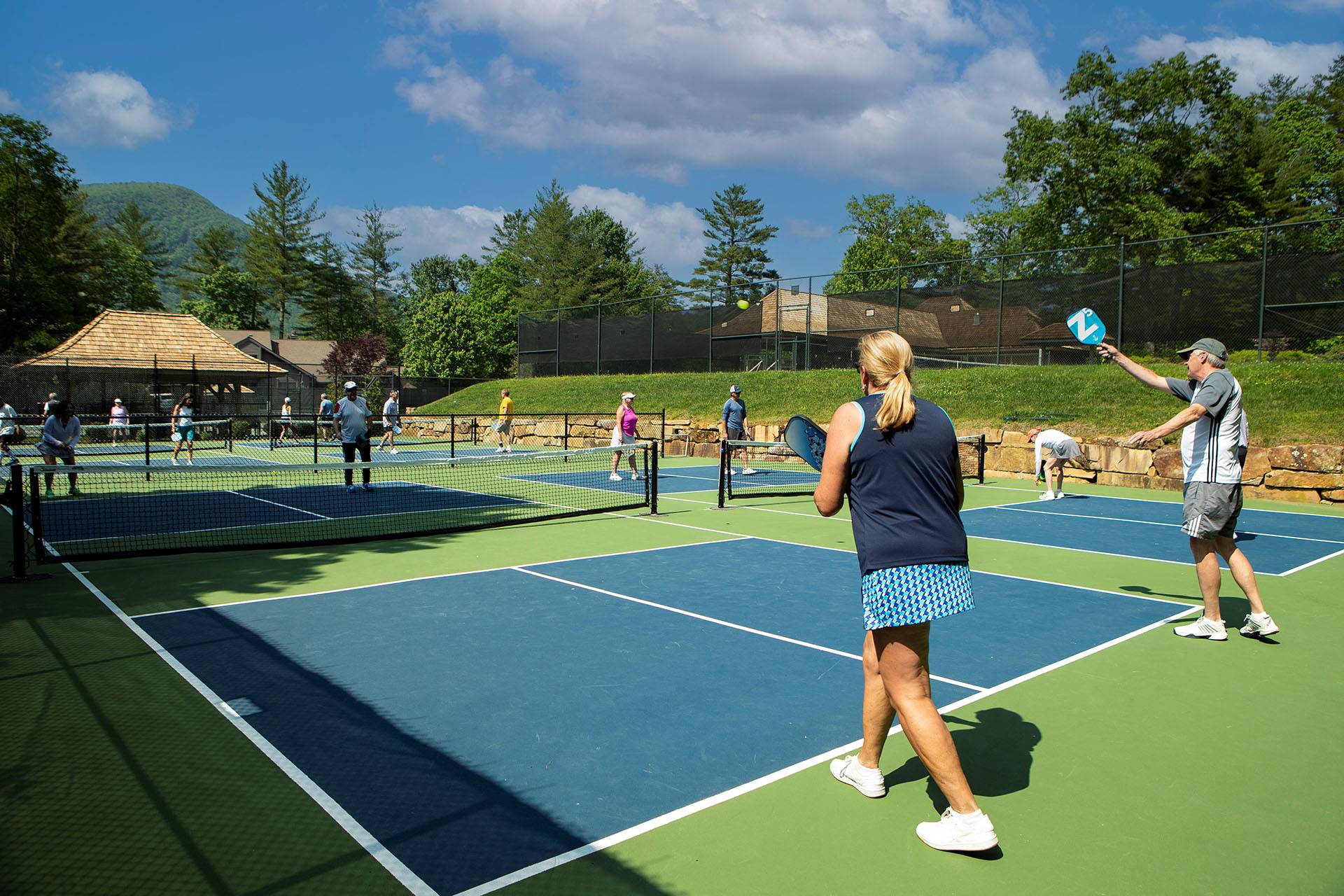
At Burlingame, we see players make this leap all the time on our four courts. The key is learning to read situations, not just react to them.

The Art of the Perfect Serve

Understanding the Reset Shot

Let’s start with resets because they’re probably the most underused shot in recreational pickleball. A reset is essentially a defensive move that takes pace off the ball and brings the point back to neutral. When your opponents hit a hard shot that puts you in trouble, the reset gets you out of that trouble.

Most newer players think pickleball is about hitting winners. But watch any high-level match, and you’ll see players reset far more often than they attack. They understand that patience wins points more consistently than power.

The reset shot typically involves taking a ball that’s coming at you with pace and softly dropping it into the kitchen. This forces your opponents to hit up on their next shot, which puts you back in control of the point. Think of it as buying yourself time to get back into proper position.

Here’s what many players get wrong about resets: they think it’s admitting defeat. Actually, it’s the opposite. A good reset puts pressure back on your opponents to create their own offense rather than feeding off the pace you give them.

When to Reset Points

Reset when you’re pulled wide and out of position. If a good shot forces you to stretch or run, don’t try to do too much with your return. Get the ball back softly and use that time to recover your court position.

Reset when you’re defending at the baseline and your opponents are attacking from the kitchen line. Trying to drive the ball past two players positioned at the net rarely works. Instead, drop the ball soft and short, making them hit up to you.

Reset when the pace of the rally is favoring your opponents. Some players thrive on fast exchanges where they can use their quick hands and reflexes. If you’re not winning those battles, slow the game down. Make them generate their own pace.

Reset when you’re off balance or caught between shots. If you’re not set properly for your shot, don’t try to do something spectacular. Get the ball back in play and wait for a better opportunity.

The reset is also your friend when you’re facing opponents with better offensive skills. You can’t out-attack players who hit harder than you, but you can make them work for their points by constantly neutralizing their advantage.

Recognizing Attack Opportunities

Attacking in pickleball isn’t about hitting the ball as hard as you can. It’s about recognizing when your opponent gives you a ball you can do something with. The best attack opportunities come when your opponents make mistakes, not when you force low-percentage shots.

Look for balls that come up high. Any shot that rises above the net gives you a chance to hit down, which is always an advantage in pickleball. These might be dinks that don’t drop low enough, returns that float, or defensive shots that your opponent pops up under pressure.

Attack when your opponents are out of position. If one player is pulled wide or if both players are back from the kitchen line, you have open court to hit into. But remember, placement beats power. A well-placed shot to an open area wins points more reliably than trying to blast the ball past players who are in position.

Attack when you’re in control of the kitchen line and your opponents are behind the baseline. This positional advantage means any decent shot you hit will be difficult for them to handle. They have to hit up to you, which gives you multiple options for putting the ball away.

Reading Your Opponents

Smart pickleball strategy starts with watching your opponents, not just the ball. Every player has tendencies, weaknesses, and patterns you can exploit if you pay attention.

Some players struggle with backhand dinks and will pop them up when pressured on that side. Others have trouble with balls hit right at their feet or right between them in doubles. Many recreational players can’t handle pace very well and will give you attackable balls if you speed up the game at the right moments.

But here’s the key: you have to be patient enough to wait for those tendencies to show up. If you know your opponent struggles with low backhand shots, don’t try to hit a winner there immediately. Keep dinking to that spot until they give you the ball you want.

Watch how your opponents move too. Players who are slow to recover after wide shots, or who don’t communicate well with their partner, will give you opportunities if you can move them around the court systematically.

The Patience Game

The hardest part about good pickleball strategy is fighting the urge to end points too quickly. Recreational players often attack balls they should reset, simply because they’re tired of the rally or they think they see an opening that isn’t really there.

Great pickleball players are comfortable with long rallies. They understand that most points are won when opponents make mistakes, not when someone hits an unreturnable shot. This patience allows them to wait for genuine opportunities rather than forcing low-percentage attacks.

This doesn’t mean playing passively. It means being selective. When you do choose to attack, you want it to be from a position of strength against a ball that gives you a real chance to win the point.

Building Points Systematically

The best pickleball strategy combines resets and attacks into a systematic approach to building points. You use resets to neutralize your opponents’ advantages and create opportunities. Then you attack when those opportunities present themselves.

For example, you might reset a hard drive back into the kitchen, forcing your opponents forward. Then you reset their next shot as well, but to a different part of the kitchen. Eventually, one of these resets will create the opening you want: a ball that pops up just enough for you to attack, or a weak return that leaves them out of position.

This approach requires discipline because you’re not going for winners on the first or second shot. You’re building toward the winner by controlling the flow of the point.

Practice Applications

On Burlingame’s courts, you can work on this strategic thinking during both drills and games. Set up practice scenarios where one team can only reset for the first four shots of each rally. This forces you to be patient and look for genuine attack opportunities.

Try rallies where you alternate between attack and reset modes. This helps you recognize the difference between the two and develop better decision-making about when to use each approach.

Most importantly, keep track of what works in your games. If you’re losing points by attacking too early, that’s feedback to be more patient. If you’re missing opportunities by resetting balls you should attack, that tells you to be more aggressive in good situations.

The Mental Side of Strategy

Good pickleball strategy is as much mental as it is physical. You have to stay calm during long rallies and trust that patience will create opportunities. You need the confidence to attack when the right ball comes, but also the discipline to reset when it doesn’t.

Many players struggle with this because they worry about what other people think. They don’t want to look passive or defensive. But remember, the goal is winning points, not impressing spectators. Sometimes the smartest shot is the boring shot.

Making It Automatic

Eventually, these strategic decisions need to become instinctive. You can’t be thinking through attack versus reset options while the ball is coming at you. That’s why practice and repetition matter so much.

The more you work on recognizing these situations, the faster your brain will process them during actual play. What feels like a conscious decision now will become an automatic response as your game develops.

Ready to put these strategic concepts into practice? Join us at Burlingame Country Club, where our four premier pickleball courts and experienced coaching staff can help you develop the tactical awareness that takes your game to the next level. Contact us at (828) 966-9200 to learn more about lessons and court time. In addition to pickleball, we also offer insightful workshops that cover the rules of golf for beginners, ensuring that you gain a well-rounded understanding of both sports. Whether you’re a new player or looking to refine your skills, our comprehensive approach will enhance your overall athletic experience. Don’t miss out on the opportunity to elevate your game with personalized instruction and friendly competition.

Mastering Pickleball: 7 Game-Changing Tips and Tricks to Elevate Your Play

Mastering Pickleball - 7 Game-Changing Tips and Tricks to Elevate Your Play

Unlock Your Potential on the Court

Pickleball is more than just a game—it’s a strategic and dynamic sport that requires skill, precision, and smart decision-making, and there’s no better place to enjoy it than at Burlingame. Whether you’re a beginner looking to level up or an experienced player refining your technique, improving your game takes dedication and the right approach. Here are seven essential tips that helped transform my skills from a 3.0 to a 3.5 player, and they can do the same for you.

1. Prioritize Drills Over Games

While playing full matches is undoubtedly more fun, true improvement comes from drilling. The best players dedicate 80-90% of their court time to practice drills, only playing games for the remaining 10-20%. Drilling allows you to focus on repetition and muscle memory, ensuring you master key shots like the third-shot drop much faster than you would in a standard match.

To keep things engaging, turn drills into friendly competitions with your partner by keeping score or setting challenge-based goals. This adds a game-like intensity to your practice while honing essential techniques.

2. Hit with Purpose

Instead of reacting aimlessly, every shot you take should have intention behind it. Before hitting, ask yourself:

  • Am I targeting my opponent’s weakness, like their backhand dink?
  • Can I strategically move them around the court?
  • What’s my highest-percentage shot in this moment?

Training yourself to think ahead will enhance your shot accuracy and decision-making, giving you the upper hand during competitive play.

3. Use Wall Drills for Solo Practice

If you don’t have a practice partner, a simple wall can be your best training tool. Mark a line at about 34-36 inches high and use it as a target for your shots. Start with backhand volleys, focusing on clean contact in the center of your paddle, then switch to forehands.

This drill may seem straightforward, but it’s more challenging than it looks. Maintaining a steady rhythm while keeping the ball in play will push your coordination and reaction time to the next level.

4. Keep Your Eye on the Ball

Many players rely on peripheral vision when hitting, which often results in mishits. Instead, train yourself to track the ball all the way to the point of contact. The ‘sweet spot’ at the center of your paddle offers the best control and power, creating a trampoline effect for a stronger shot.

Losing sight of the ball can lead to errors like hitting too close to the paddle’s edge or missing entirely. Focus, and your precision will dramatically improve.

5. Perfect Your Grip

The right grip makes all the difference. Most players use the ‘continental’ grip, also known as the ‘handshake grip,’ as it offers stability and flexibility for various shots. To achieve this grip, hold your paddle with your non-dominant hand and shake hands with it as if greeting someone. Imagine holding a hammer, and you’ll naturally fall into the proper positioning.

6. Stay Low and Ready

Pickleball is all about quick reflexes and strong defensive positioning. To stay agile, maintain an athletic stance with your feet shoulder-width apart and a slight bend in your knees.

When at the net, lower yourself into a squat to reach those crucial dink shots and prevent the ball from bouncing. If your opponent is preparing for an overhead smash, take a step back, lower your body, and get your paddle into a defensive position to return low shots effectively.

7. Play Smart: High-Percentage Shots Win Games

Pickleball isn’t about flashy, low-percentage shots—it’s about consistency and patience. A solid player only takes shots they can reliably make at least 80% of the time.

Even professional players avoid risky shots unless they’ve mastered them in drills. A lower-rated player can defeat a stronger opponent simply by making fewer mistakes and maintaining a steady, calculated approach.

Take Your Skills to the Next Level at Burlingame Country Club

At Burlingame Country Club, you have the perfect opportunity to put these game-changing pickleball tips into action on our four premier courts. Whether you’re drilling to refine your technique, practicing wall shots for improved control, or honing your grip and stance, these strategies will help you elevate your game. Use these expert-approved techniques to enhance your precision, speed, and decision-mak

Experience Pickleball Excellence at Burlingame Country Club

Whether you’re looking to sharpen your skills, play for fun, or compete in tournaments, Burlingame Country Club offers the perfect setting to enjoy pickleball. With four state-of-the-art courts, you can rally with friends, challenge yourself in competitions, or refine your game with personalized lessons from our experienced Lawn Sports Professional. Click here to learn more and join us and take your pickleball journey to the next level!